Overview
Synopsis: Neurotorium Clinical Education Grants support non-profit educational projects for healthcare professionals in psychiatry and neurology.
Budget: Applicants may request up to 100,000 DKK per year for one to three years.
Eligibility: Projects must use Neurotorium resources, be anchored in an established non-commercial organisation, and include a letter of support.
Timeline: The call is now closed, and will reopen in Spring 2027.
Introduction
Neurotorium is an educational platform providing free and unbiased material for clinicians, educators, researchers, and all who are interested in learning about the brain. All our educational material is developed, reviewed, and regularly updated by leading experts. You can find more information about Neurotorium here.
Neurotorium is offering Clinical Education Grants to support non-profit educational projects aimed at strengthening clinical competencies within the prevention, diagnosis, and treatment of psychiatric and neurological disorders through educational activities aimed at healthcare professionals.
We encourage applications from a diverse pool of applicants and especially encourage projects from, or serving, low-income countries.
What kinds of projects are eligible?
Neurotorium welcomes applications for funding of non-profit educational projects aimed at healthcare professionals.
- The teaching activities must be at the level of vocational or university-level education.
- The projects must aim at improving clinical understanding of the prevention, diagnosis, and / or treatment of psychiatric and neurological disorders and their personal and societal consequences.
- Projects must use, wholly or partially, the educational resources offered on our platform, neurotorium.org.
- The project must be non-profit.
- Projects must have clear support from an established organisation such as a university, hospital, clinic, or NGO.
- Projects can be planned as multiannual activities with recurring teaching programmes, for up to three years.
- The start date of the project must be at least one month after the expected approval of grants.
Who is eligible?
- Applicants and educators must have relevant experience for the proposed project.
- The main applicant can only apply once per year.
- There are no geographical limitations with regards to eligibility for this grant.
Funding information
- Applicants may request up to 100,000 DKK (approx $15,000 USD) per year, for one to three years
- The limit of 100,000 DKK applies to each individual year of the proposed project period and may not be carried over or offset across years. Applications that request more than 100,000 DKK in any project year will be deemed ineligible.
- The budget can only include direct costs.
- Applications for partial project funding are only permitted if other funding sources have been guaranteed.
How to apply
Applications must be submitted through LANAS, available here:
Please see the Guide for Applicants for complete requirements and details:
Applications should include the following:
- Project title and summary, with start dates / end dates.
- Project description.
- The potential of the project to positively impact clinical practice.
- Feasibility of the project.
- How Neurotorium is utilized in the project.
- A (tentative) list of educators.
- Applicant’s (and if relevant, co-applicant’s) CV and publications.
- Detailed budget.
- Letter of support from the host institution, and/or other relevant institutions. Please note that a letter of support is essential, and applications without one will not be considered.
- In case of resubmission of application, comments on feedback from reviewers and description of how comments have been addressed in the revised application.
We kindly request that the use of photos is avoided or limited within the application.
Please note that applications should be completed in English.
Evaluation process
The evaluation will be based on (listed in no particular order):
1) Idea, innovation, and concept, including:
- The quality of the project.
- The level of educational innovation in the project.
2) Potential to positively impact clinical practice, including:
- A description of how the project addresses an important educational need, including a justification of the choice of target audience and activity.
- The project’s potential to improve the clinical understanding of prevention, diagnosis, and / or treatment of psychiatric and neurological disorders, and / or their personal and societal consequences.
- The impact of the project and plans for future continuation of the project after the funding period.
3) Feasibility of the project, including:
- Relevant experience of applicant.
- Choice and relevance of co-applicants/partners and the degree to which the collaboration strengthens the project.
- A description of essential requirements for the project to begin (e.g. a location for teaching, online infrastructure, etc).
4) How Neurotorium is utilized in the project.
- Which specific material from Neurotorium will be used in the project and how.
Applications will be evaluated and decided upon by the Neurotorium Editorial Board.
Timeline
The call is now closed and will reopen in Spring 2027.
Grant conditions
If your application is successful, you and your host institution will be required to accept Lundbeck Foundation’s General Terms and Conditions for Neurotorium Clinical Education Grants. These Terms and Conditions are valid for submissions made on or after 4 July 2026. Previous Terms and Conditions are available here.
Funding can only be paid out to established, non-commercial organisations.
Contact
For questions about eligibility, application requirements, or the call, contact Scientific Programme Manager, Bryn Farnsworth von Cederwald ([email protected]).
Past Recipients
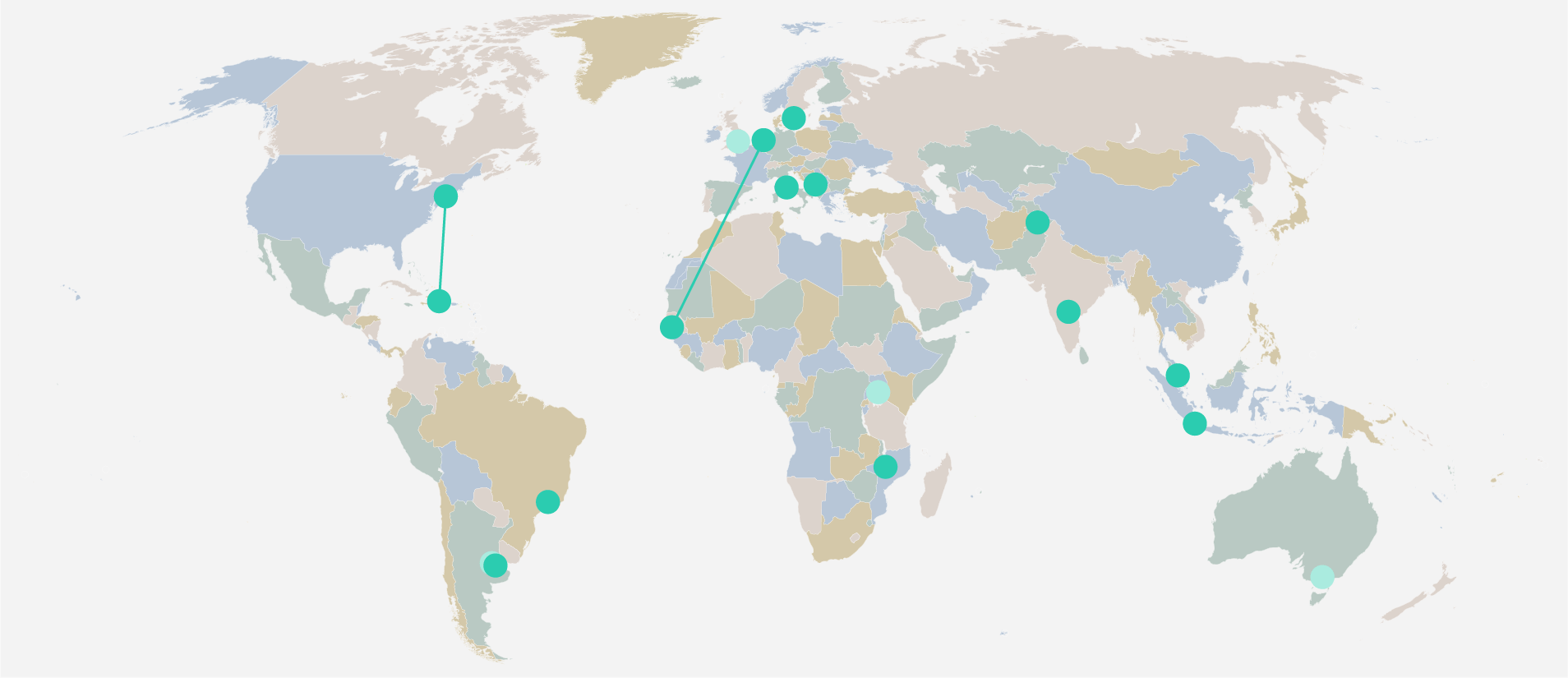
Neurotorium has awarded Clinical Education Grants since 2024, reaching 18 projects across 17 countries.
These projects are all ultimately aiming to support and improve prevention, diagnosis, and treatment within psychiatry and neurology.
The granted initiatives span a range of education formats, from in-person workshops and hands-on training to online tools and hybrid intensive courses. Together, they will reach clinicians across the care pathway, including early-career psychiatrists and neurologists, GPs, residents, emergency medical workers, nursing home caregivers, and community health workers.