

In this video, Professor John Hardy describes two key advances in Alzheimer’s and Parkinson’s disease. First, functionally related risk genes are clarifying the underlying biology. Second, genetics is improving our ability to predict who will develop the disease, which matters because treatment will likely need to begin before symptoms appear.
Early-onset forms appear to be driven by overproduction of amyloid or other damaging proteins. Late-onset forms, by contrast, seem to stem mainly from failure to clear these proteins.
Last reviewed on 16-09-2026.
Related content

Advances in blood biomarkers are transforming the diagnosis and prognosis of Alzheimer’s disease, helping to assess pathology, disease progression, and co-existing pathologies.
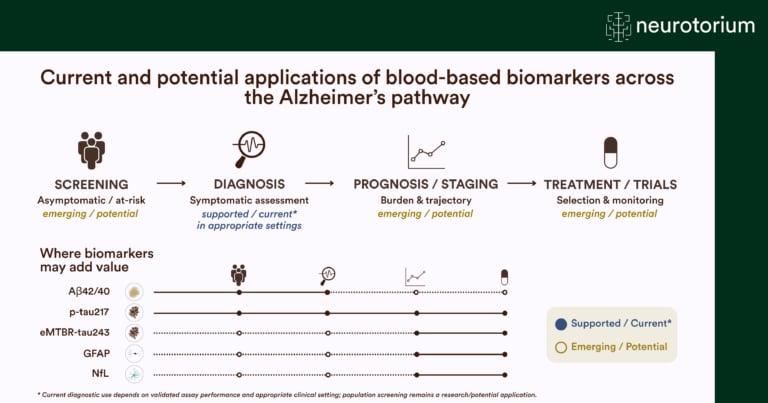
Overview of how blood-based biomarkers may support screening, diagnosis, staging, prognosis, and treatment decisions across the Alzheimer’s disease continuum.
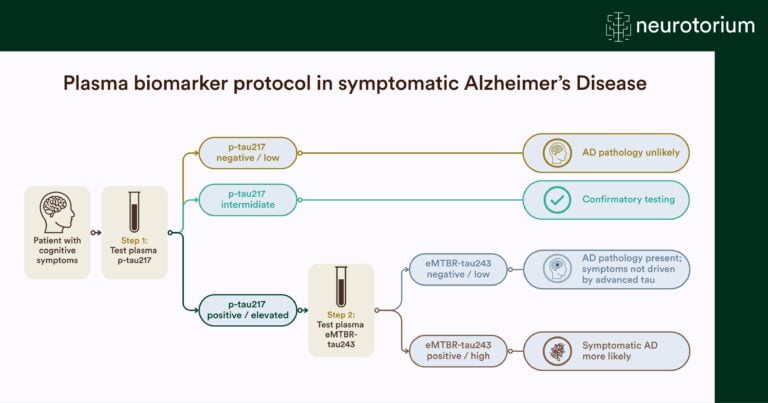
Overview of a plasma biomarker testing pathway for symptomatic Alzheimer’s disease, using p-tau217 and eMTBR-tau243 to guide diagnostic assessment and identify underlying pathology.