

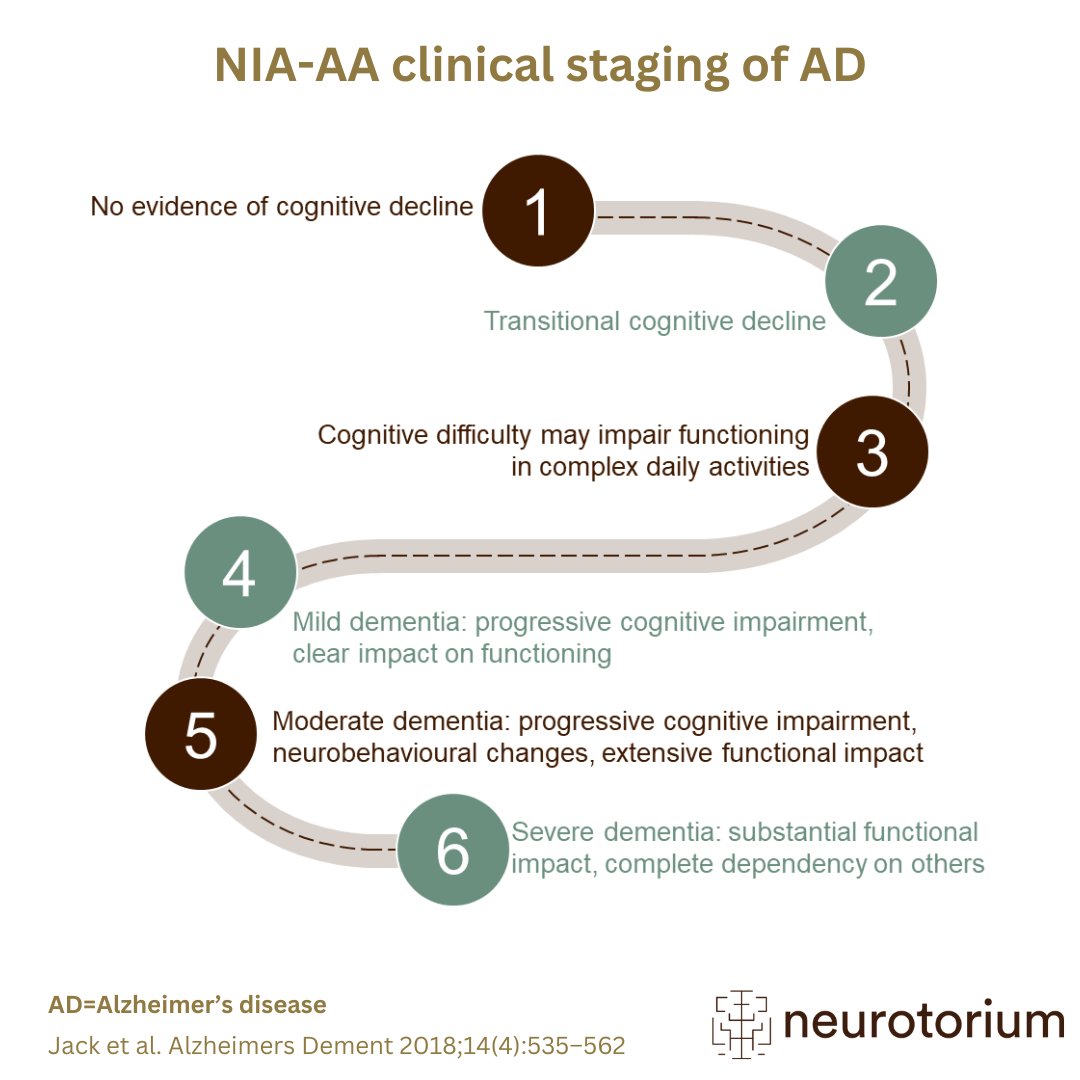
A variation to the clinical staging of AD was proposed by the National Institute on Aging – Alzheimer’s Association (NIA-AA) working group (2018) using six clinical stages for persons who are amyloid positive.
The NIA-AA Research Framework describes AD as a biological construct that can be identified in living persons via Aβ and tau biomarkers.
In the NIA-AA framework, biomarkers are used to identify the presence of AD, with clinical stages used to indicate disease severity.
Read more about New clinical staging of Alzheimer’s disease
Related content

Advances in blood biomarkers are transforming the diagnosis and prognosis of Alzheimer’s disease, helping to assess pathology, disease progression, and co-existing pathologies.
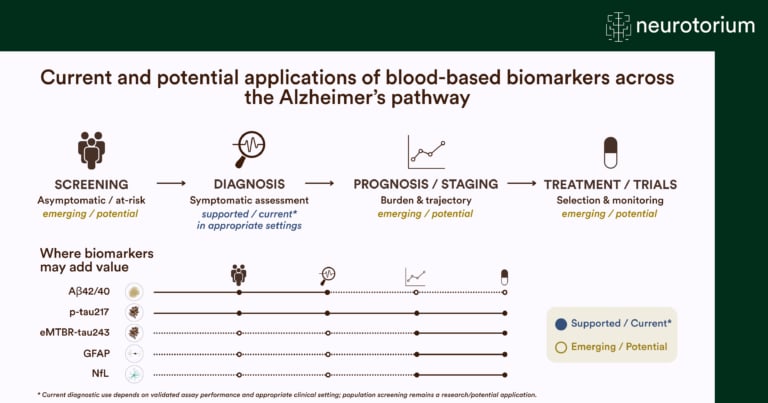
Overview of how blood-based biomarkers may support screening, diagnosis, staging, prognosis, and treatment decisions across the Alzheimer’s disease continuum.
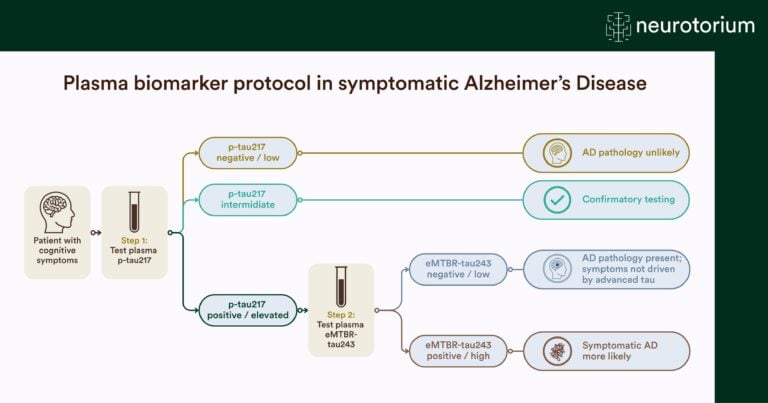
Overview of a plasma biomarker testing pathway for symptomatic Alzheimer’s disease, using p-tau217 and eMTBR-tau243 to guide diagnostic assessment and identify underlying pathology.