

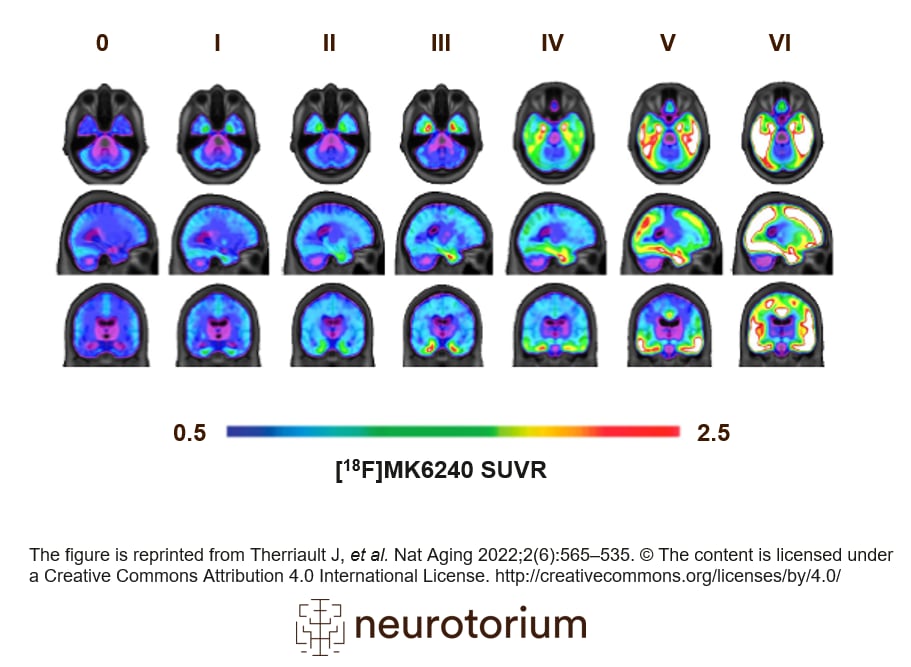
In vivo quantification of tau can be performed using tau-PET (PET: positron emission tomography). Tau-PET binds to insoluble neurofibrillary tangles, another core pathological feature of AD. Six stages that characterize tau pathology have been established through post-mortem studies1,2 and PET brain imaging.3 This illustration represents the stages of tau pathology measured by PET. Early stages are often accompanied by mild memory dysfunction; middle stages are accompanied by mild cognitive impairment; later stages are observed in individuals with AD dementia.
The figure is reprinted from Therriault J, et al. Nat Aging 2022;2(6):565–535. The content is licensed under a Creative Commons Attribution 4.0 International License. https://creativecommons.org/licenses/by/4.0/
Related content

Advances in blood biomarkers are transforming the diagnosis and prognosis of Alzheimer’s disease, helping to assess pathology, disease progression, and co-existing pathologies.
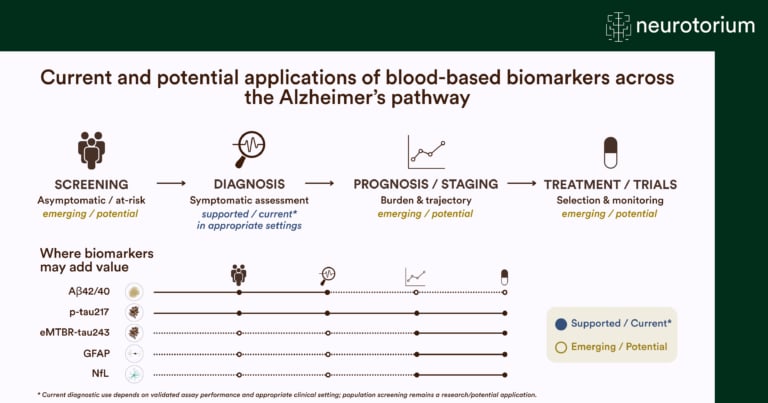
Overview of how blood-based biomarkers may support screening, diagnosis, staging, prognosis, and treatment decisions across the Alzheimer’s disease continuum.
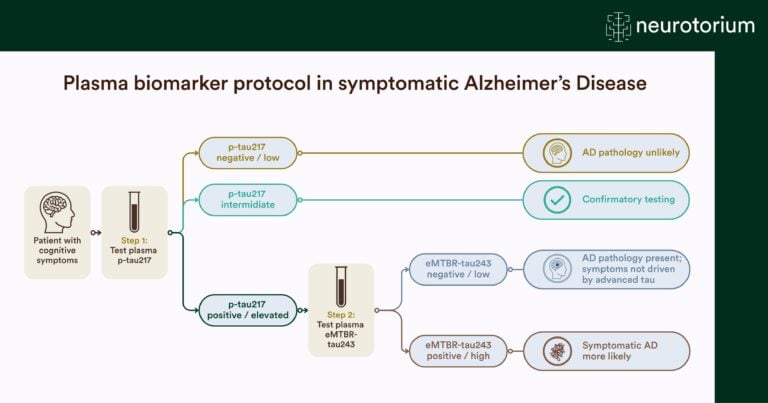
Overview of a plasma biomarker testing pathway for symptomatic Alzheimer’s disease, using p-tau217 and eMTBR-tau243 to guide diagnostic assessment and identify underlying pathology.