

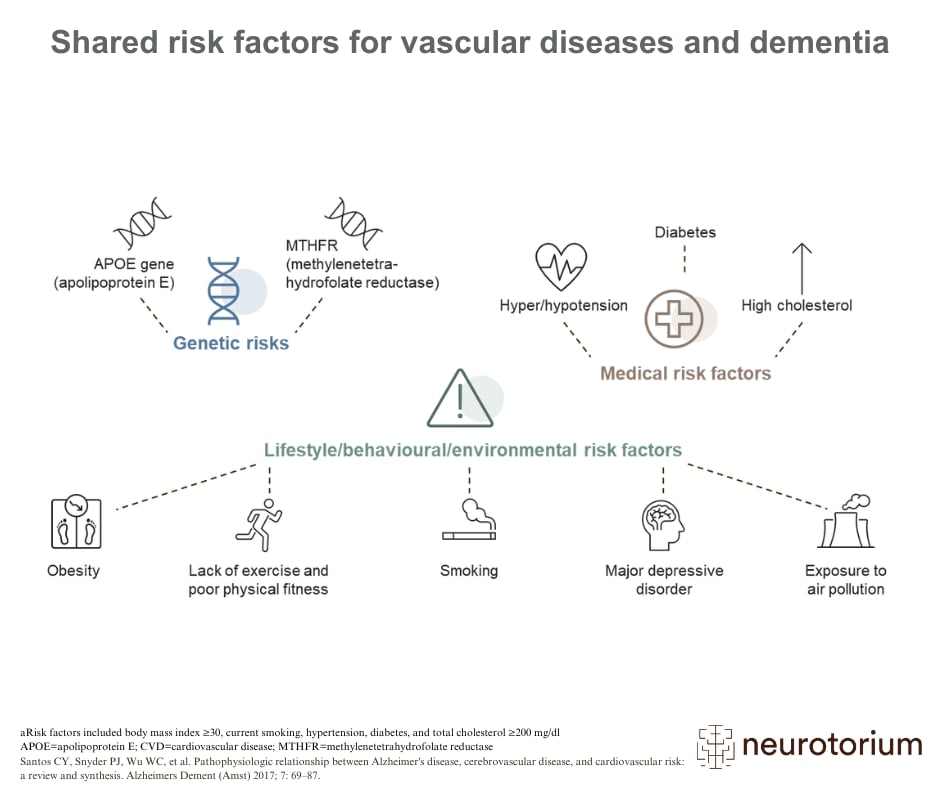
Several risk factors are associated with Alzheimer’s disease (AD) and cardiovascular disease (CVD).1
The apolipoprotein (APOE) e4 allele has been identified as a risk factor for both AD and cardiovascular disease.1 Additionally, two polymorphisms in the methylenetetra-hydrofolate reductase (MTHFR) gene have been found to be associated with AD and vascular contributions to cognitive impairment and dementia (VCID).2,3
Aside from genetics, there are several cardiometabolic and lifestyle risk factors that occur during middle- to late-life.1 AD and CVD are associated with increasing age, and both are among the leading causes of death.1 Other risk factors for AD and CVD include smoking, major depressive disorder (MDD), and environmental exposures, such as pollution.1
Read more about vascular disease, cardiovascular disease, and Alzheimer’s disease
Related content

Advances in blood biomarkers are transforming the diagnosis and prognosis of Alzheimer’s disease, helping to assess pathology, disease progression, and co-existing pathologies.
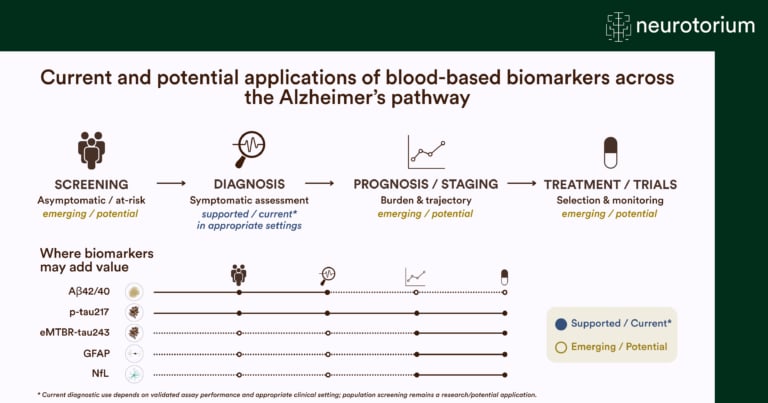
Overview of how blood-based biomarkers may support screening, diagnosis, staging, prognosis, and treatment decisions across the Alzheimer’s disease continuum.
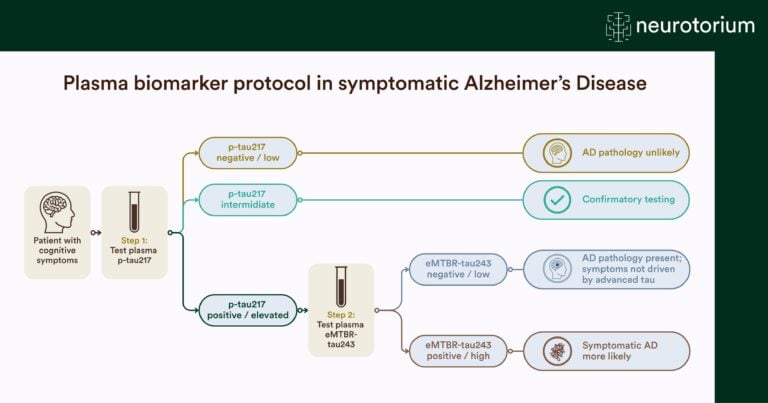
Overview of a plasma biomarker testing pathway for symptomatic Alzheimer’s disease, using p-tau217 and eMTBR-tau243 to guide diagnostic assessment and identify underlying pathology.