


Overstimulation of the NMDA receptors by glutamate is implicated in neurodegenerative disorders, including Alzheimer’s disease (AD) 1
The NMDA receptor antagonist memantine is approved for the treatment of moderate/severe AD alone or in combination with cholinesterase inhibitors2-4
Memantine has been shown to reduce clinical deterioration in moderate/severe AD1
Furthermore, treatment with memantine has been shown to reduce symptoms such as agitation, aggression, irritability,and appetite disturbances5
Acess our Slide Deck on treatment principles of AD and learn more about pharmacological treatment of AD.
Related content

Advances in blood biomarkers are transforming the diagnosis and prognosis of Alzheimer’s disease, helping to assess pathology, disease progression, and co-existing pathologies.
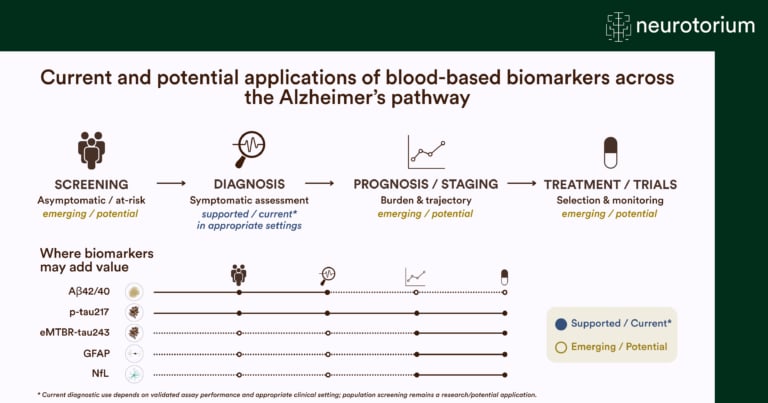
Overview of how blood-based biomarkers may support screening, diagnosis, staging, prognosis, and treatment decisions across the Alzheimer’s disease continuum.
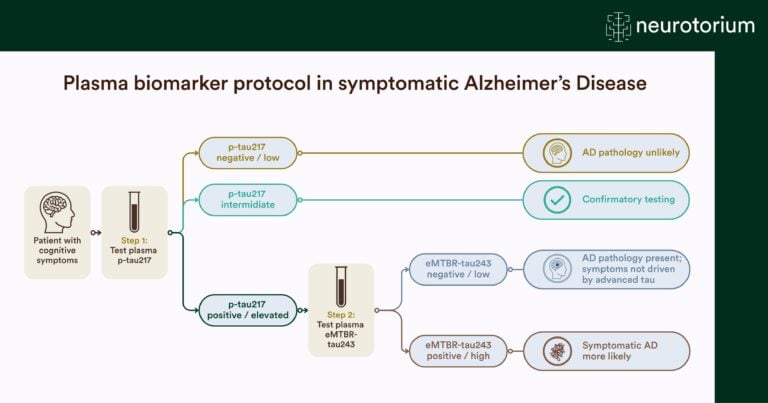
Overview of a plasma biomarker testing pathway for symptomatic Alzheimer’s disease, using p-tau217 and eMTBR-tau243 to guide diagnostic assessment and identify underlying pathology.