

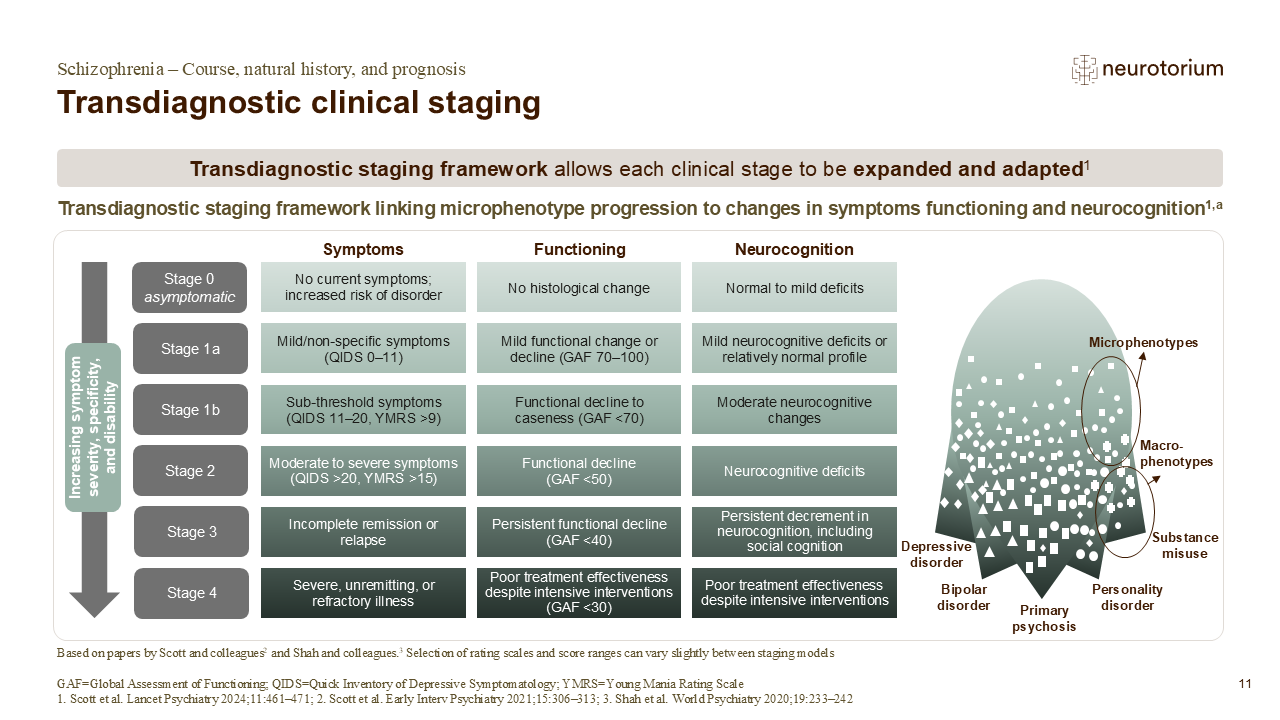
Traditional clinical staging is unidirectional and fails to account for the dynamic course of schizophrenia.1 Dynamic models may enhance prognosis prediction and guide individualized treatment, within and across stages.1
References:
1. Scott J, Iorfino F, Capon W, et al. Staging 2.0: refining transdiagnostic clinical staging frameworks to enhance reliability and utility for youth mental health. Lancet Psychiatry 2024; 11: 461–471.
2. Scott J, Martin N, Parker R, et al. Prevalence of self-reported subthreshold phenotypes of major mental disorders and their association with functional impairment, treatment, and full-threshold syndromes in a community-residing cohort of young adults. Early Interv Psychiatry 2020; 15: 306–313.
3. Shah JL, Scott J, McGorry PD, et al. Transdiagnostic clinical staging in youth mental health: a first international consensus statement. World Psychiatry 2020; 19: 233–242.