


Index for
slide deck
Course, natural history, and prognosis
Course, natural history, and prognosis
Overview of the course and prognosis of schizophrenia
The course and prognosis of schizophrenia
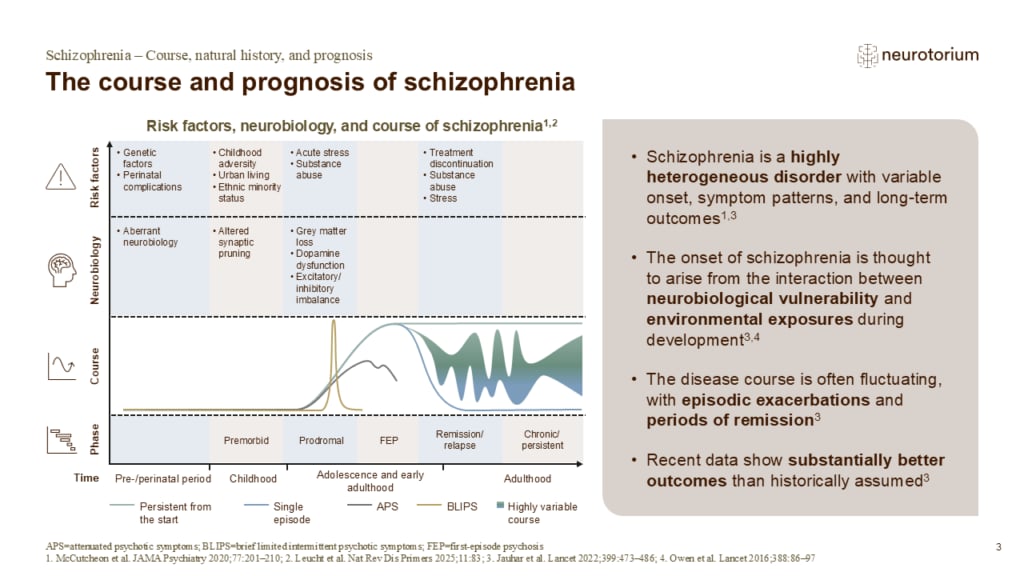
The course and prognosis of schizophrenia
Symptom domains and early development in schizophrenia
Symptom domains and early development in schizophrenia
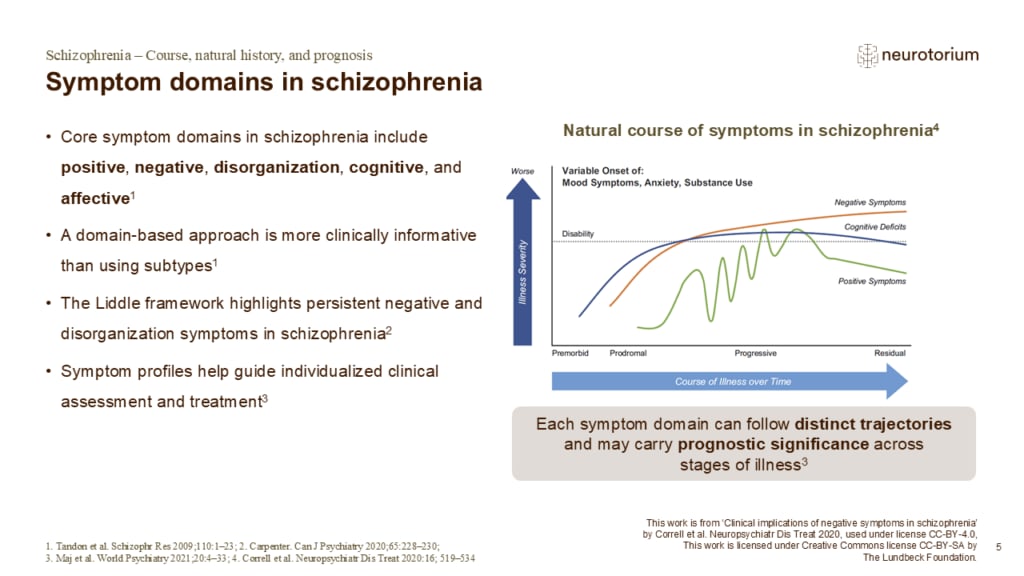
Symptom domains in schizophrenia
The Liddle framework identifies psychomotor poverty (e.g., reduced speech and movement), disorganization (e.g., thought disorder and inappropriate affect), and reality distortion (e.g., delusions and hallucinations) as distinct but related syndromes.2 This model expanded …
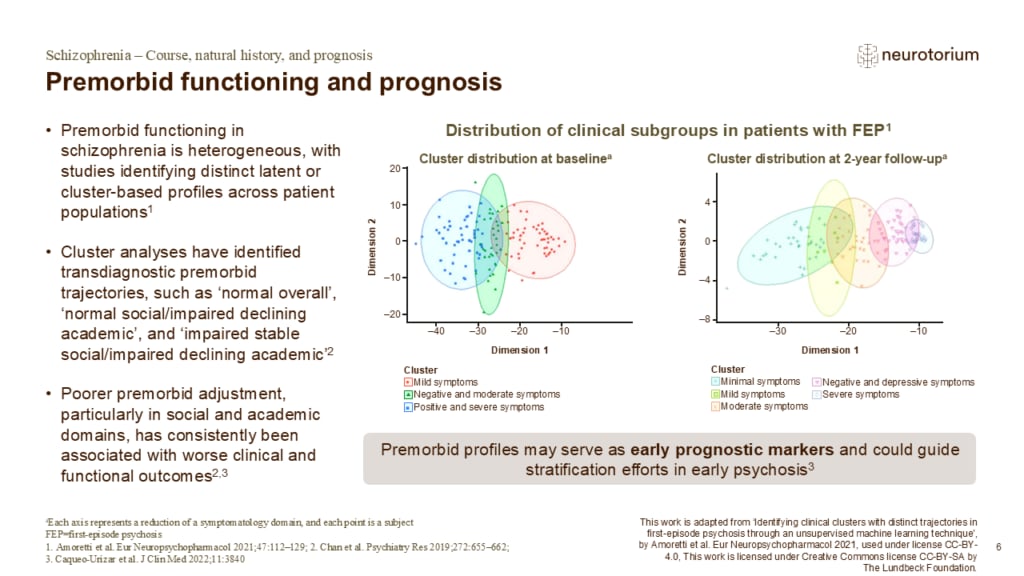
Premorbid functioning and prognosis
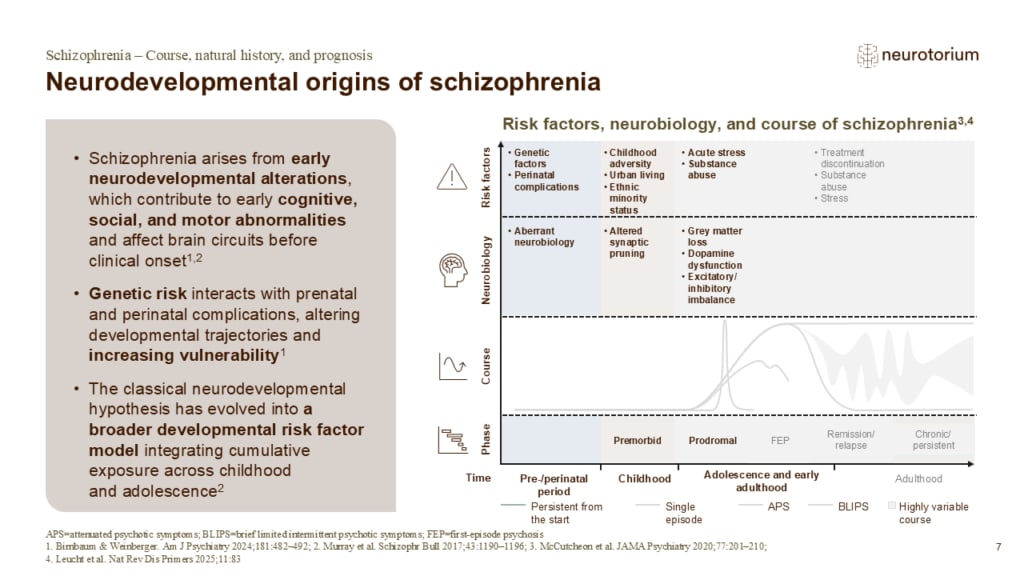
Neurodevelopmental origins of schizophrenia
Early course of schizophrenia
Early course of schizophrenia
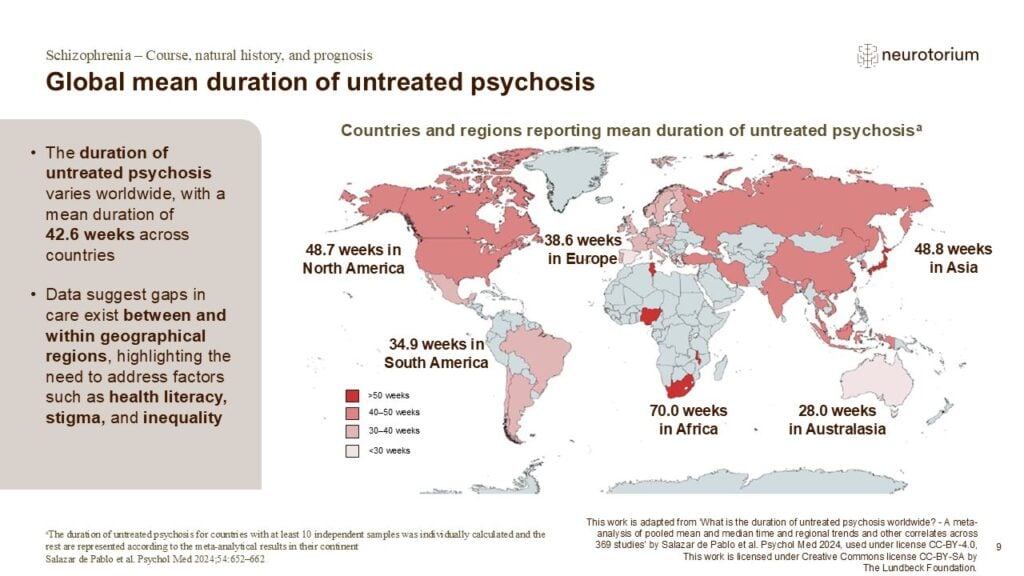
Global mean duration of untreated psychosis
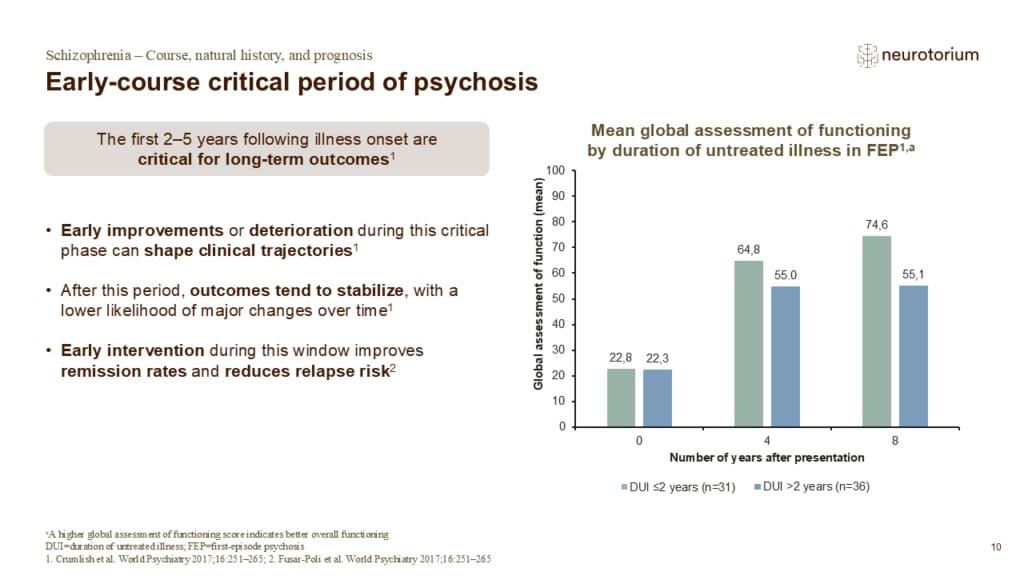
Early-course critical period of psychosis
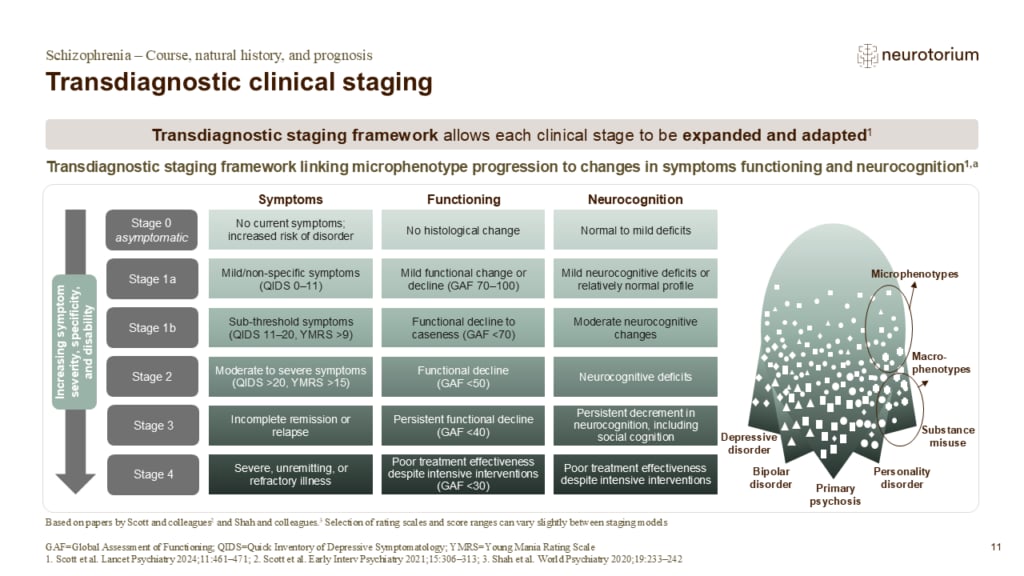
Transdiagnostic clinical staging
Traditional clinical staging is unidirectional and fails to account for the dynamic course of schizophrenia.1 Dynamic models may enhance prognosis prediction and guide individualized treatment, within and across stages.1
References:
1. Scott J, Iorfino F, Capon W, et al. …
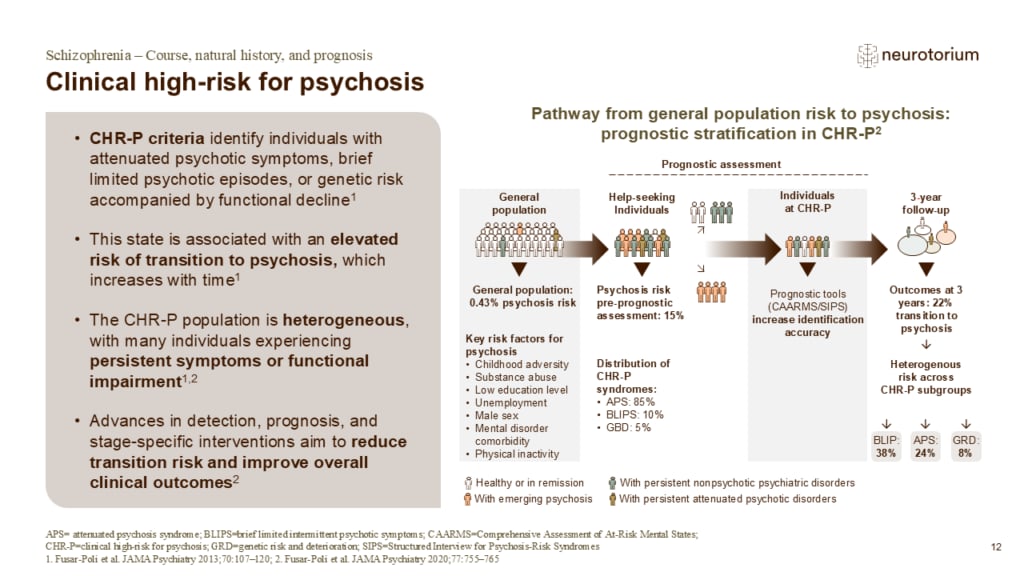
Clinical high-risk for psychosis
Several assessment tools have been developed to identify individuals at clinical high risk for psychosis, particularly in the early stages before a full psychotic disorder emerges. Three key assessment tools are described below.
- The CAARMS is a semi-structured interview …
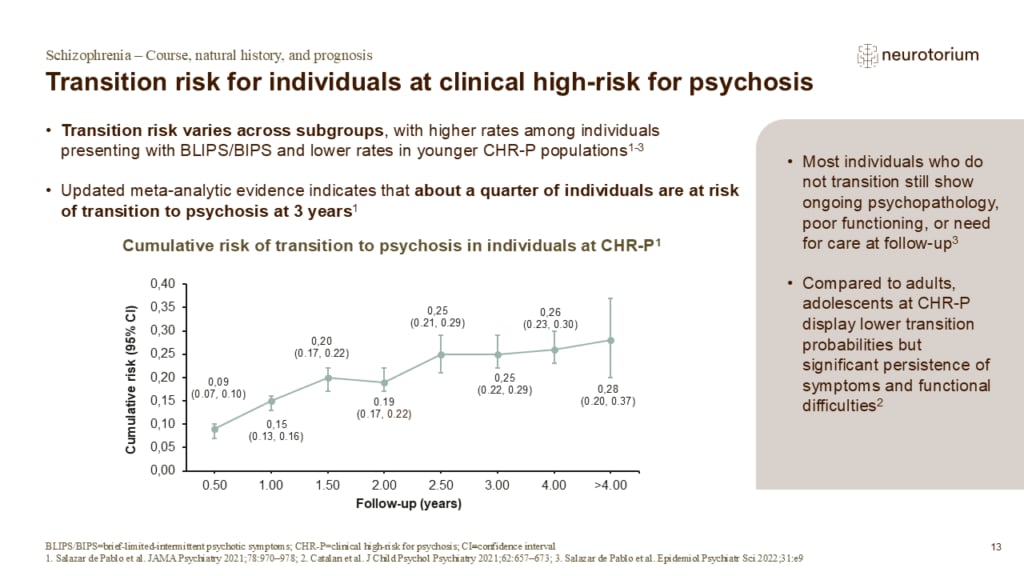
Transition risk for individuals at clinical high-risk for psychosis
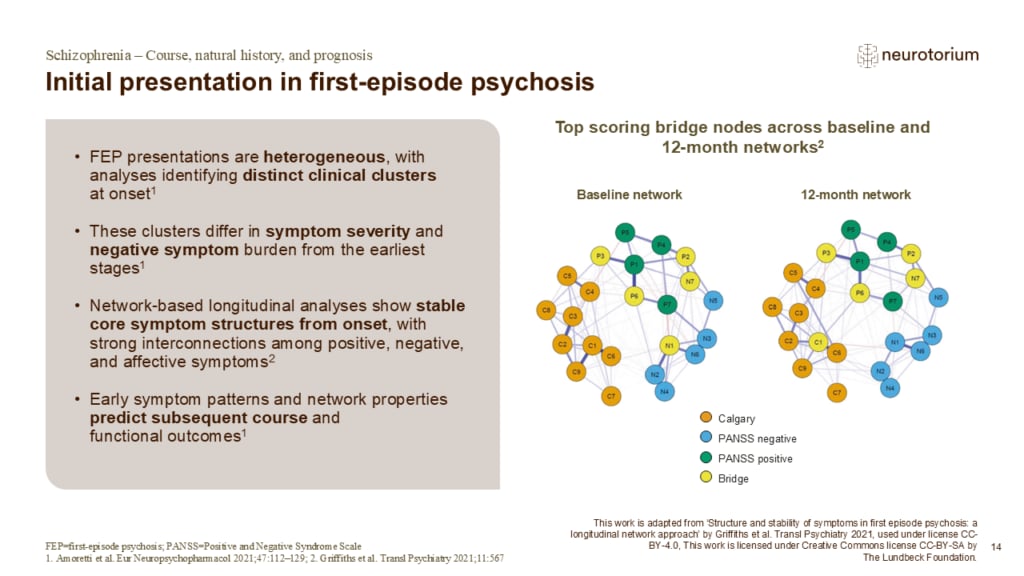
Initial presentation in first-episode psychosis
In the figure, each circle (node) represents a symptom, and the lines between nodes represent statistical associations between symptoms.2 Symptoms are grouped by clinical scale: orange nodes represent depressive symptoms from the CDSS, blue nodes represent negative sympto…
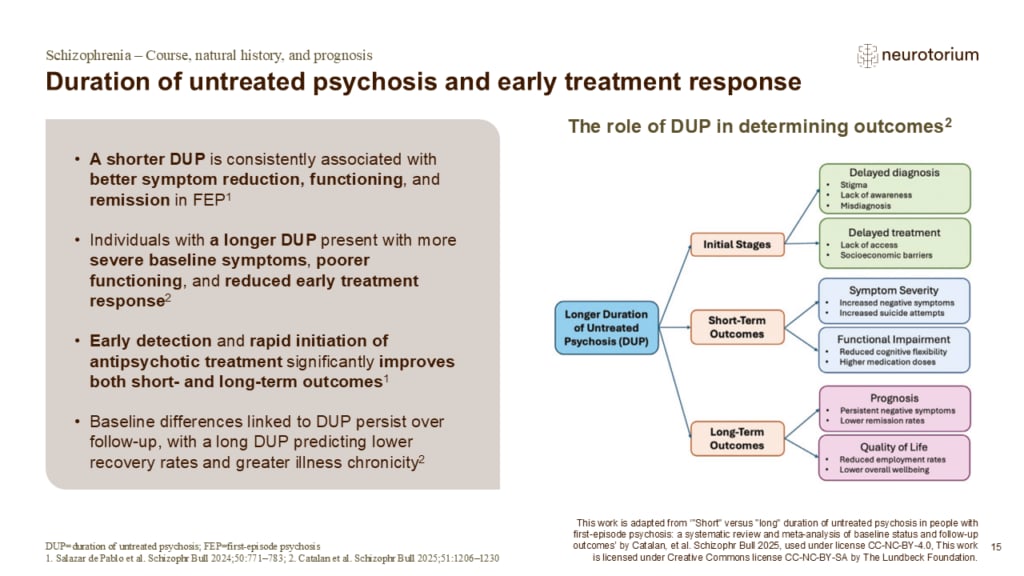
Duration of untreated psychosis and early treatment response
Related content
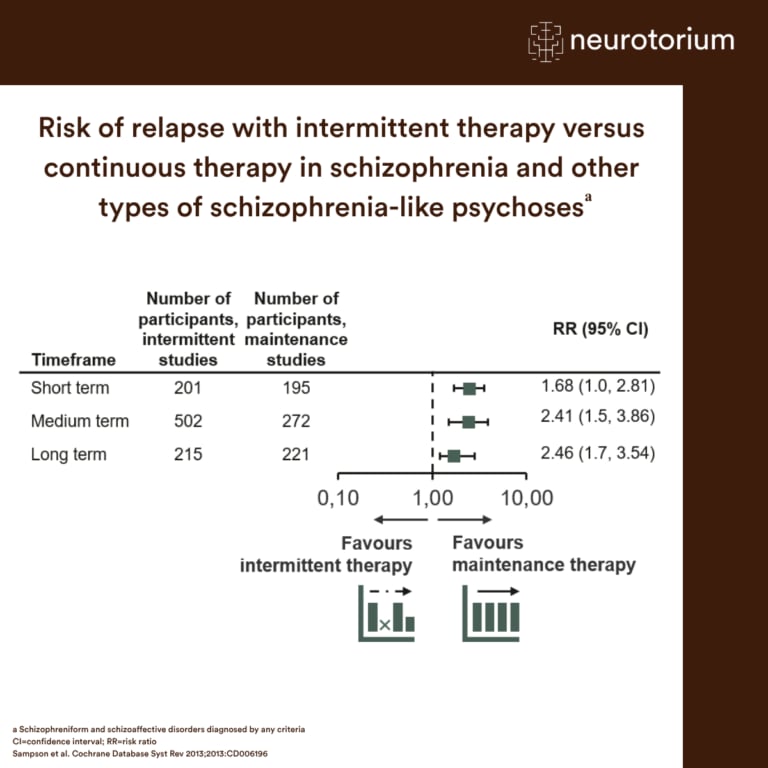
Continuous maintenance therapy is associated with a lower risk of relapse than intermittent treatment, supporting ongoing treatment strategies in schizophrenia and related psychotic disorders.
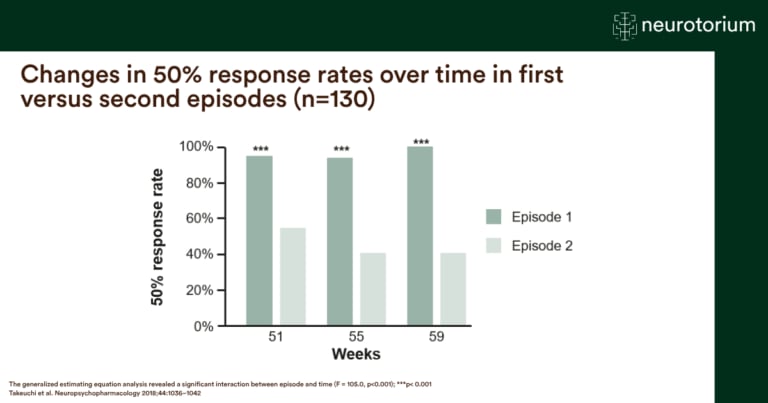
Treatment response tends to be higher during a first episode than during subsequent episodes, emphasizing the importance of early intervention and effective management.
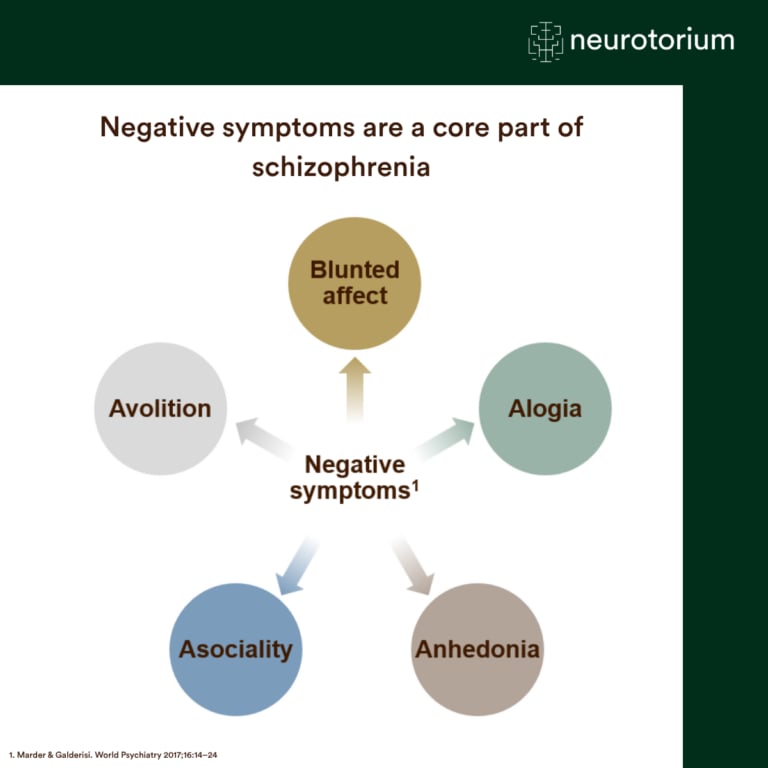
Negative symptoms are a core feature of schizophrenia and can have a profound impact on functioning, social relationships, and quality of life.