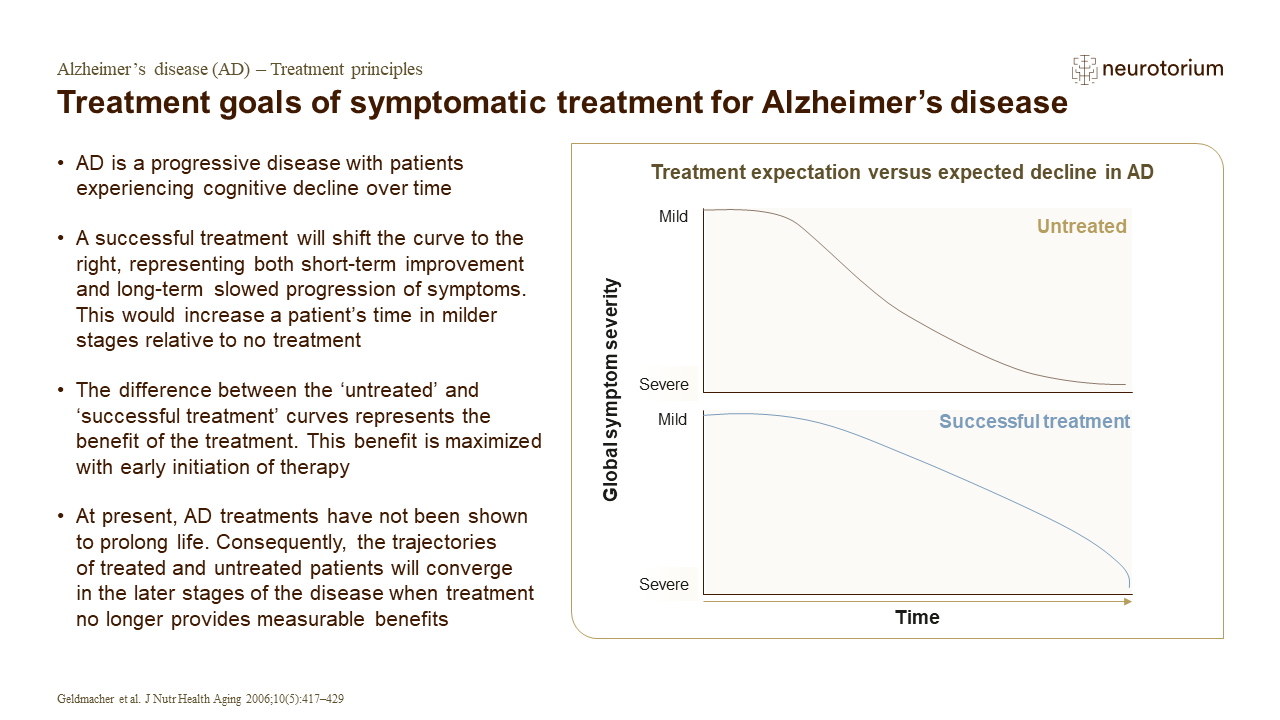
As a key goal for managing cognitive impairment is an improvement in cognition, the availability of symptomatic treatments for AD is important.2 Additionally, improvement of behavioural symptoms can impact the quality of life of patients and caregivers, and may delay time to institutionalization.2 Cholinesterase inhibitors and the N-methyl-D-aspartate (NMDA) receptor antagonist, memantine, improve cognition and global function, while providing temporary stabilization of activities of daily living (ADLs).2 5-HT6 antagonists have been the subject of several recent clinical trials, but have failed to establish a drug-placebo difference on cognitive outcomes.2 The dopaminergic system may also play a role in cognitive function; however, trials of drugs targeting this system have conflicting results.2
Treatment goals of symptomatic treatment for Alzheimer’s disease