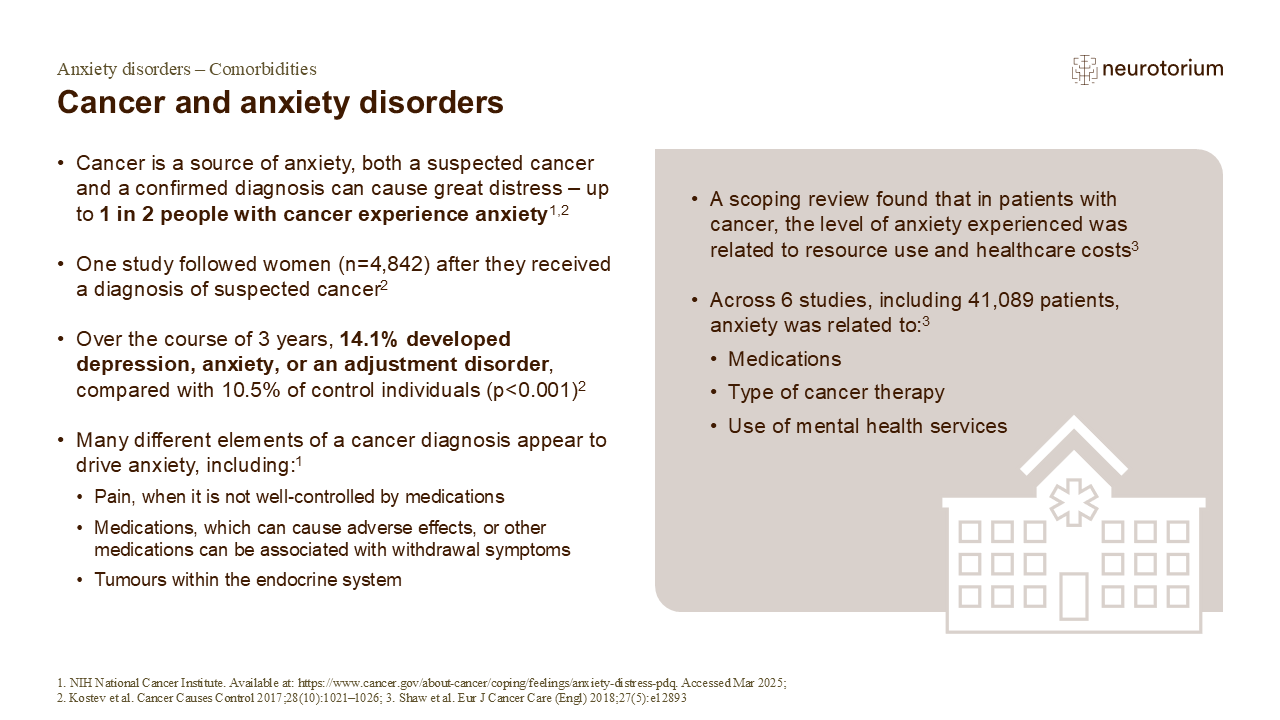
Patients with many different kinds of cancer can feel anxiety during cancer diagnosis or in the period afterwards.1 As outlined on the slide, anxiety is a common response to a diagnosis of cancer.2,3 There is consistent evidence showing that the presence of anxiety in patients with cancer increases the costs of healthcare (e.g., increased resource use); however, despite the prevalence, there is a paucity of good data on the broad economic impact.3
References:
1.National Institutes of Health National Cancer Institute. Adjustment to cancer: anxiety and distress (PDQ®) – patient version. Available at: https://www.cancer.gov/about-cancer/coping/feelings/anxiety-distress-pdq. Accessed March 2025.
2.Kostev K, Jacob L, Kalder M. Risk of depression, anxiety, and adjustment disorders in women with a suspected but unconfirmed diagnosis of breast or genital organ cancer in Germany. Cancer Causes Control 2017; 28 (10): 1021–1026.
3.Shaw J, Pearce A, Lopez AL, Price MA. Clinical anxiety disorders in the context of cancer: a scoping review of impact on resource use and healthcare costs. Eur J Cancer Care (Engl) 2018; 27 (5): e12893.