

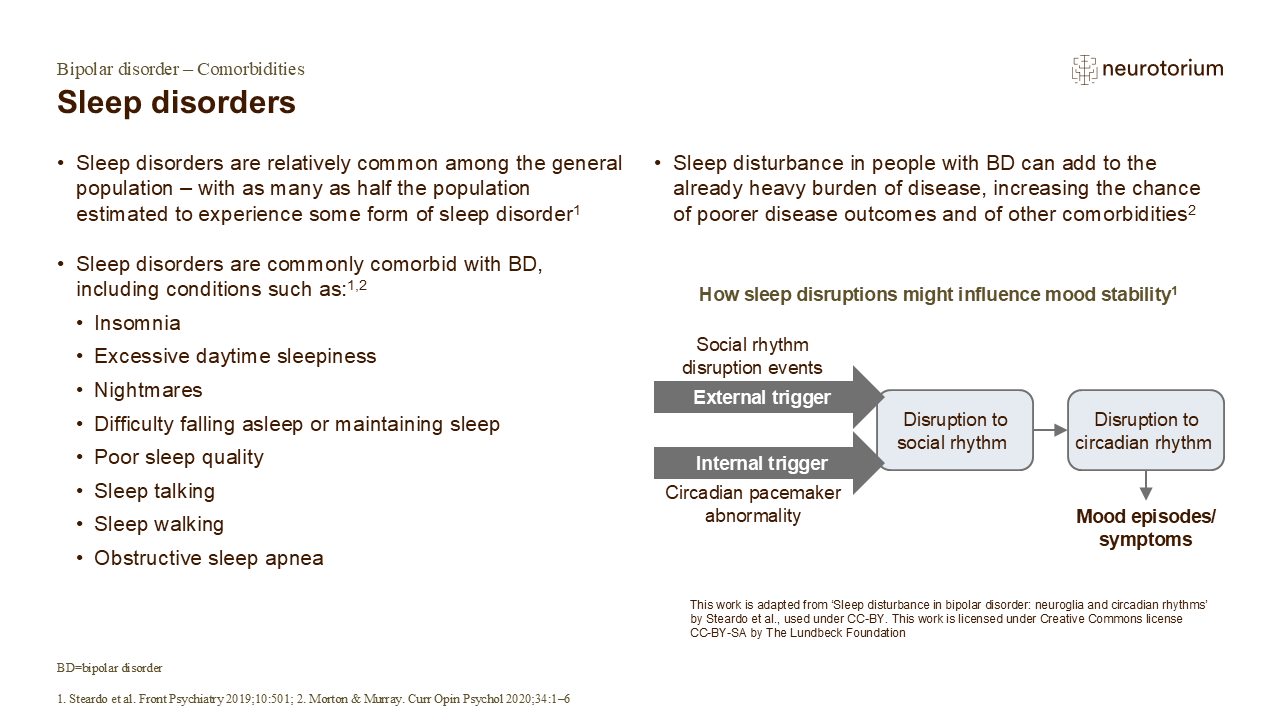
Managing sleep disorders in people with bipolar disorder involves assessment and then treatment.2 There are standardized measures of sleep that can be used to screen for sleep disorders, and sleep diaries can be useful for ongoing monitoring.2 Some therapies for bipolar disorder may also have a benefit on sleep patterns by their interaction with circadian rhythm, e.g., interpersonal and social rhythm therapy or light therapy.2 Ultimately, more research is needed to know how best to help patients with bipolar disorder who also experience sleep disorder.2
References:
1. Steardo L Jr, de Filippis R, Carbone EA, et al. Sleep disturbance in bipolar disorder: neuroglia and circadian rhythms. Front Psychiatry 2019; 10: 501.
2. Morton E, Murray G. An update on sleep in bipolar disorders: presentation, comorbidities, temporal relationships and treatment. Curr Opin Psychol 2020; 34: 1–6.