

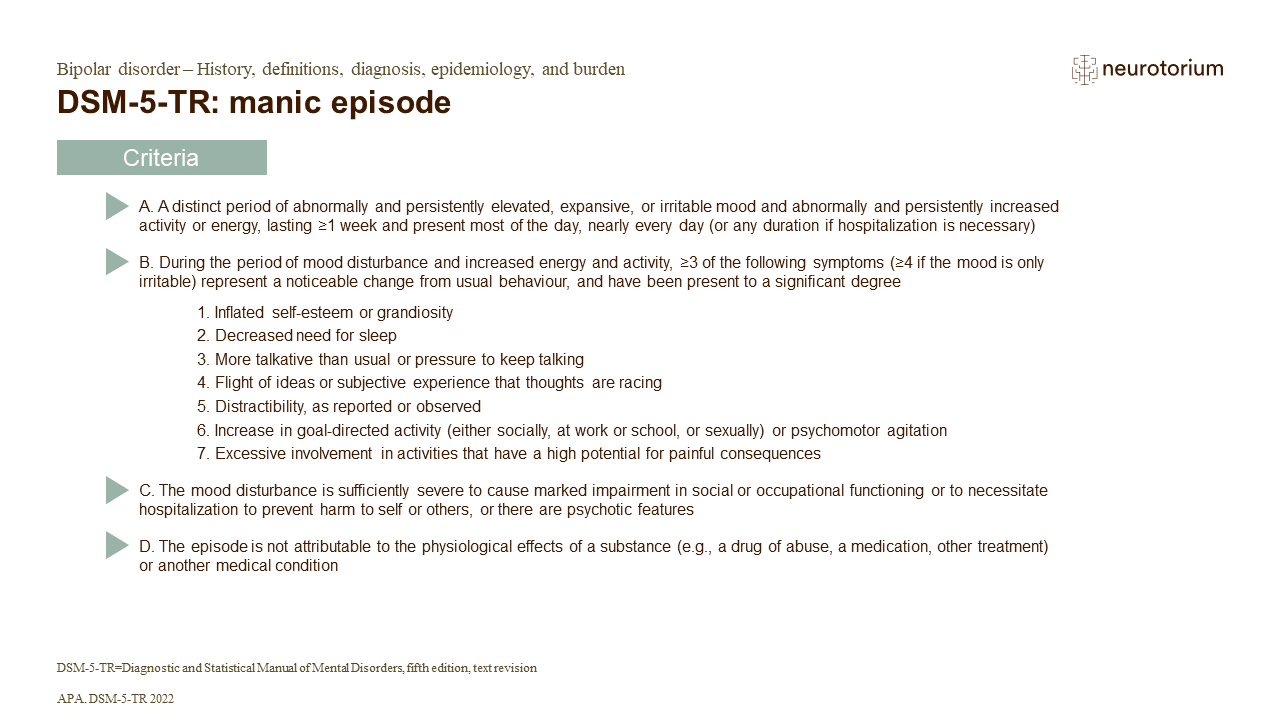
Notes from the DSM-5-TR state that a full manic episode that emerges during antidepressant treatment (e.g., medication, electroconvulsive therapy) but persists at a fully syndromal level beyond the physiological effect of that treatment is sufficient evidence for a manic episode and, therefore, a bipolar I diagnosis.1
A diagnosis of bipolar II disorder requires at least one criterion for hypomanic episode, and at least one criterion for major depressive episode to be met, and can only be made if there has never been a manic episode.1