

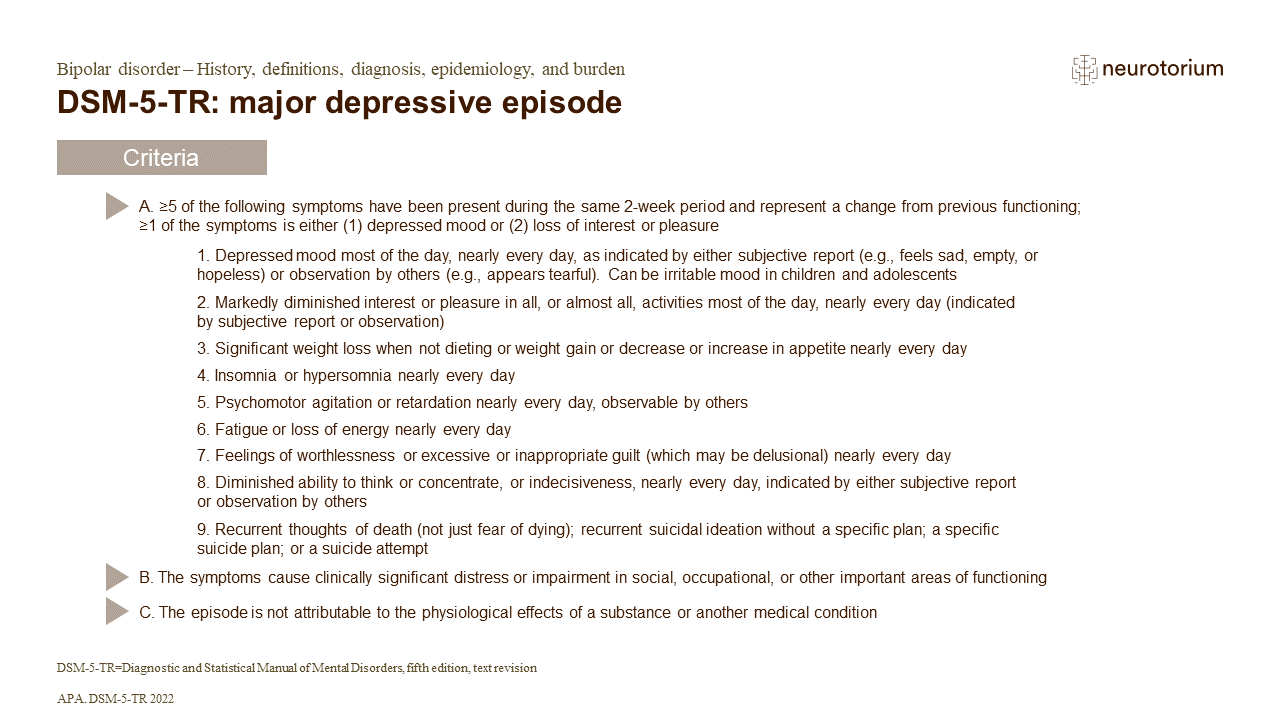
For Criterion A.3, failure to make expected weight gain should be considered when diagnosing children.1 Criterion A.7 should not be fulfilled based on self-reproach or guilt about being sick.1
Major depressive episodes are common in bipolar I disorder, but are not required for a diagnosis.1 Response to a significant loss (e.g., bereavement, financial, losses from a natural disaster) may include some of the symptoms listed in Criterion A, resembling a depressive episode.1 These symptoms may be understandable or considered appropriate to the loss; however, the presence of a major depressive episode in addition to the normal response to a significant loss should also be carefully considered.1 In this situation, a clinical judgement should be made, based on the patient’s history and cultural norms.1