

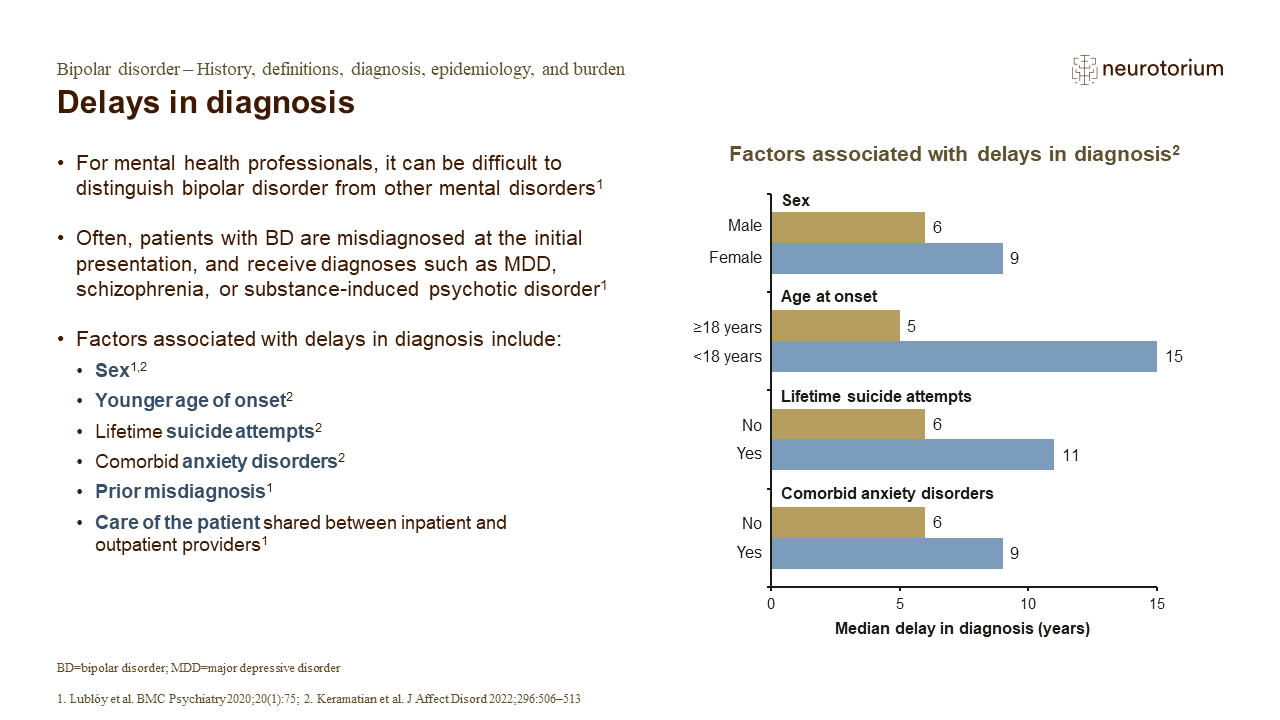
The diagnosis of bipolar disorder is often delayed, with an estimated median delay in one study of five years for bipolar I disorder, and eleven years for bipolar II disorder.2 Although the majority of patients contact psychiatric care for the first time in the outpatient setting, patients who do not experience delays in diagnosis are more likely to be diagnosed in the inpatient setting.1 This evidence suggests that less severe cases are more likely to present in outpatient settings, and often lack past events that are indicative of bipolarity, making a straightforward diagnosis difficult.1
References:
1. Lublóy Á, Keresztúri JL, Németh A, Mihalicza P. Exploring factors of diagnostic delay for patients with bipolar disorder: a population-based cohort study. BMC Psychiatry 2020; 20 (1): 75.
2. Keramatian K, Pinto JV, Schaffer A, et al. Clinical and demographic factors associated with delayed diagnosis of bipolar disorder: data from Health Outcomes and Patient Evaluations in Bipolar Disorder (HOPE-BD) study. J Affect Disord 2022; 296: 506–513.