

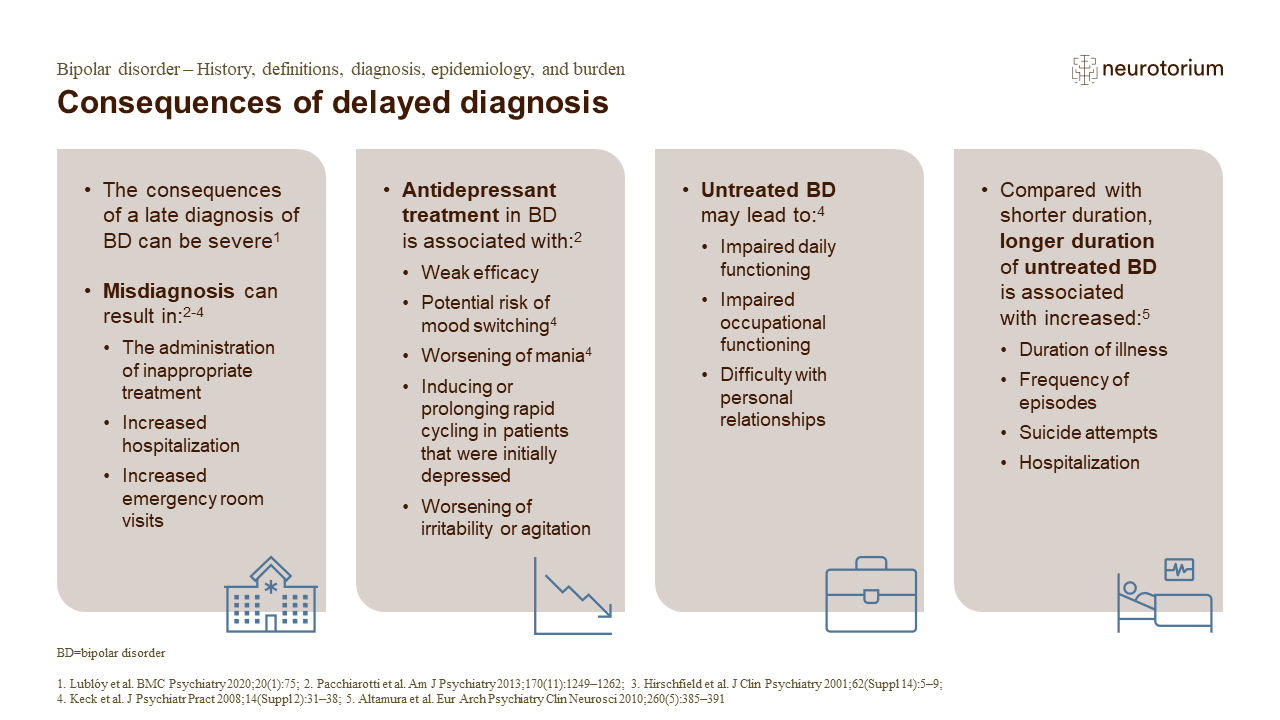
In addition to the impact on a patient’s symptoms and daily life, delayed diagnosis is associated with increased healthcare costs, morbidity, and mortality.1 Prior diagnosis of depression is common among patients with bipolar disorder.1 However, the use of antidepressant monotherapy in bipolar disorder has been associated with negative outcomes,2 highlighting the importance of preventing misdiagnosis. Untreated mania in patients with bipolar disorder can result in psychological, legal, and financial issues for patients.3 Despite this, patients with bipolar disorder are more likely to seek treatment for depression, rather than for (hypo)manic symptoms.3 Therefore, clinicians must consider the possibility of bipolar spectrum disorders for all patients seeking treatment for depression.3 Recommendations from the International Society for Bipolar Disorders (ISBD) Task Force state that the use of antidepressants to treat depressive components or phases of bipolar disorder should be considered carefully through evaluation of individual cases.2
References:
1. Lublóy Á, Keresztúri JL, Németh A, Mihalicza P. Exploring factors of diagnostic delay for patients with bipolar disorder: a population-based cohort study. BMC Psychiatry 2020; 20 (1): 75.
2. Pacchiarotti I, Bond DJ, Baldessarini RJ, et al. The International Society for Bipolar Disorders (ISBD) task force report on antidepressant use in bipolar disorders. Am J Psychiatry 2013; 170 (11): 1249–1262.
3. Hirschfeld RMA. Bipolar spectrum disorder: improving its recognition and diagnosis. J Clin Psychiatry 2001; 62 (Suppl 14): 5–9.
4. Keck PE Jr, Kessler RC, Ross R. Clinical and economic effects of unrecognized or inadequately treated bipolar disorder. J Psychiatr Pract 2008; 14 (Suppl 2): 31–38.
5. Altamura AC, Dell’Osso B, Berlin HA, et al. Duration of untreated illness and suicide in bipolar disorder: a naturalistic study. Eur Arch Psychiatry Clin Neurosci 2010; 260 (5): 385–391.