

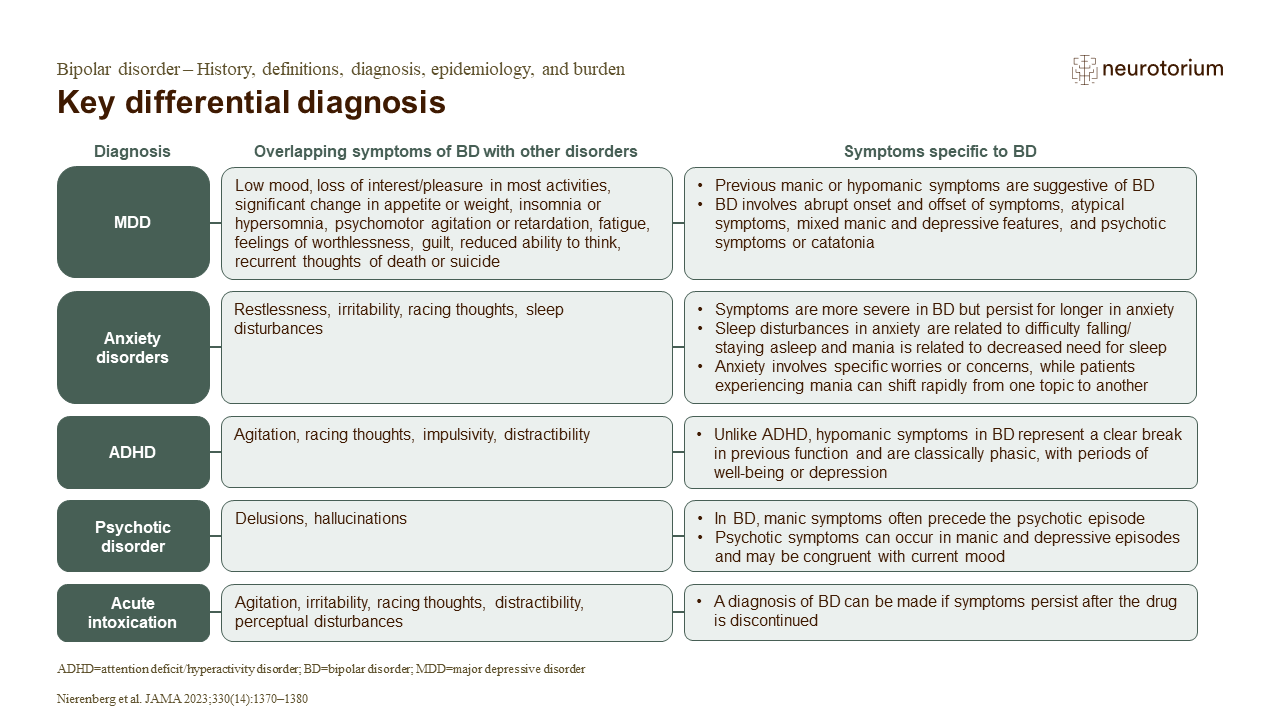
Depressive symptoms are similar between major depressive disorder and bipolar depression.1 For a correct diagnosis of bipolar disorder, clinicians must ask the patient and their families about previous instances in which the patient felt excessively energized with high levels of activity, decreased need for sleep, increased sexuality, and elevated or irritable mood.1
Comorbid anxiety is common in patients with bipolar disorder, and is more often associated with females, and rapid transition between depressive and manic states.1 Furthermore, drugs such as cocaine, amphetamines, hallucinogens, and corticosteroids may mimic or trigger manic symptoms.1 Drug-induced mania may occur in individuals with no previous mood episodes or family history of bipolar disorder, with symptoms that occur with a rapid onset, and are consistent with the effects of a particular drug (e.g., visual disturbances with psychedelic drugs).1