

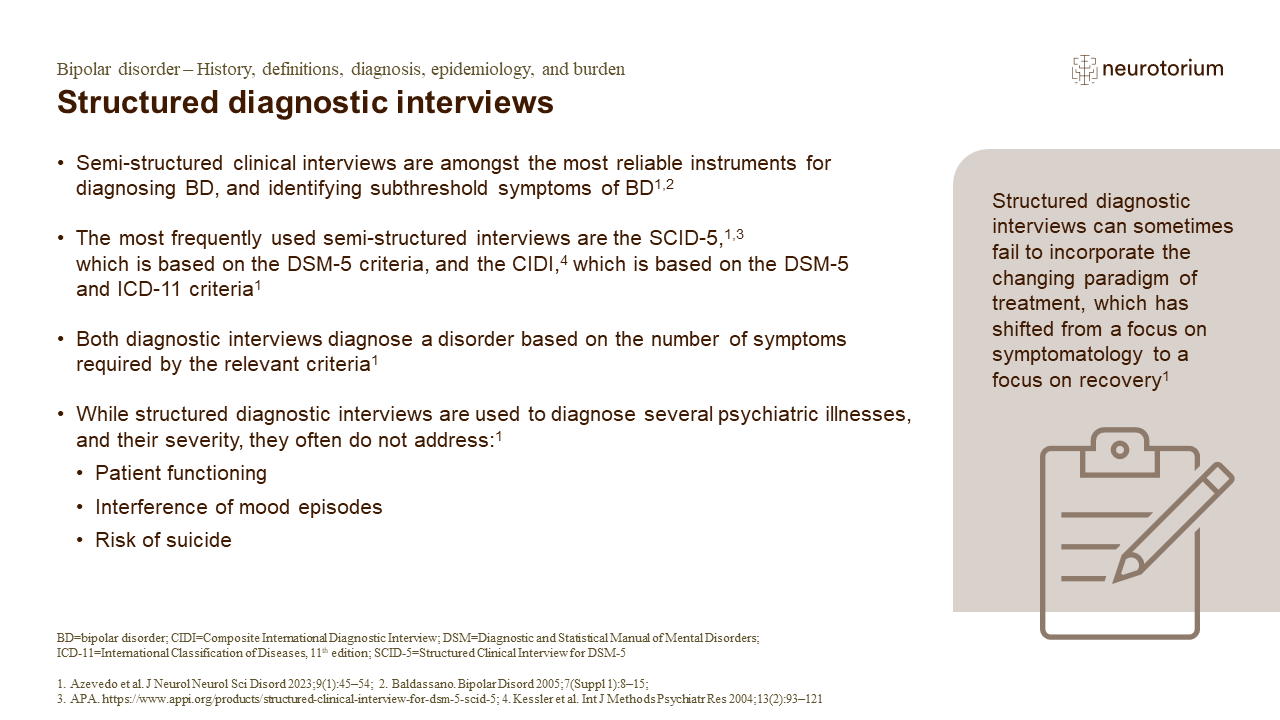
The Clinical Interview for Bipolar Disorder (CIBD) was developed to address a lack of structured diagnostic interviews that incorporate personal recovery, patient empowerment, and patient functioning.1 Supplementary questions were included in the interview to improve distinction between hypomanic and manic symptoms in the assessment of bipolar disorder.1 These supplementary questions also considered relevant psychosocial factors, such as whether the individual can manage their symptoms, and the extent to which symptoms disrupt daily functioning, during episodes and during everyday life.1 The CIBD also included a section to assess suicide risk and aid the clinician’s intervention.1 Feedback from experts has been positive regarding the inclusion of a suicidality scale, bipolar disorder specifiers, and clients’ empowerment scales in the CIBD – highlighting that such properties are often not found in other scales.1
References:
1. Azevedo J, Castilho P, Carreiras D, et al. Development of the Clinical Interview for Bipolar Disorder (CIBD) – rational and experts’ panel evaluation. J Neurol Neurol Sci Disord 2023; 9 (1): 45–54.
2. Baldassano CF. Assessment tools for screening and monitoring bipolar disorder. Bipolar Disord 2005; 7 (Suppl 1): 8–15.
3. APA. The Structured Clinical Interview for DSM-5®. Available at: https://www.appi.org/products/structured-clinical-interview-for-dsm-5-scid-5. Accessed 25 January 2024.
4. Kessler RC, Üstün TB. The World Mental Health (WMH) survey initiative version of the World Health Organization (WHO) Composite International Diagnostic Interview (CIDI). Int J Methods Psychiatr Res 2004; 13 (2): 93–121.