

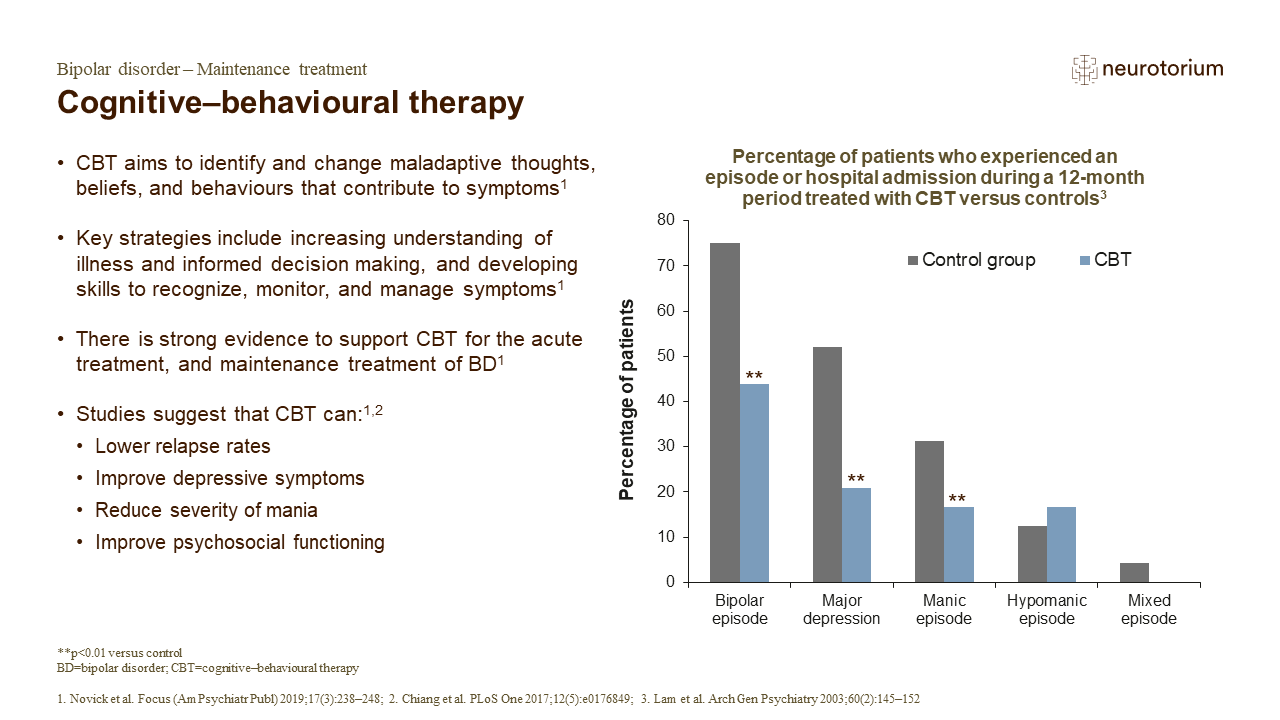
A meta-analysis of 19 randomized controlled studies, including 1,384 patients with bipolar disorder, found that studies primarily in bipolar I disorder reported a greater reduction in the rate of relapse after cognitive–behavioural therapy (CBT) than studies that included patients with bipolar I and bipolar II disorder.2 A possible suggestion for this observation may be the difference in disease course between bipolar I and bipolar II disorder.2 For example, the relapse rate for major depression tends to be higher in bipolar II disorder.2 Overall, CBT was associated with positive outcomes in patients with bipolar disorder, such as reduced levels of depression, reduced severity of mania, lower relapse rates, and improved psychosocial functioning.2
References
1. Novick DM, Swartz HA. Evidence-based psychotherapies for bipolar disorder. Focus (Am Psychiatr Publ) 2019; 17 (3): 238–248.
2. Chiang K-J, Tsai J-C, Liu D, et al. Efficacy of cognitive-behavioral therapy in patients with bipolar disorder: a meta-analysis of randomized controlled trials. PLoS One 2017; 12 (5): e0176849
3. Lam DH, Watkins ER, Hayward P, et al. A randomized controlled study of cognitive therapy for relapse prevention for bipolar affective disorder: outcome of the first year. Arch Gen Psychiatry 2003; 60 (2): 145–152.