

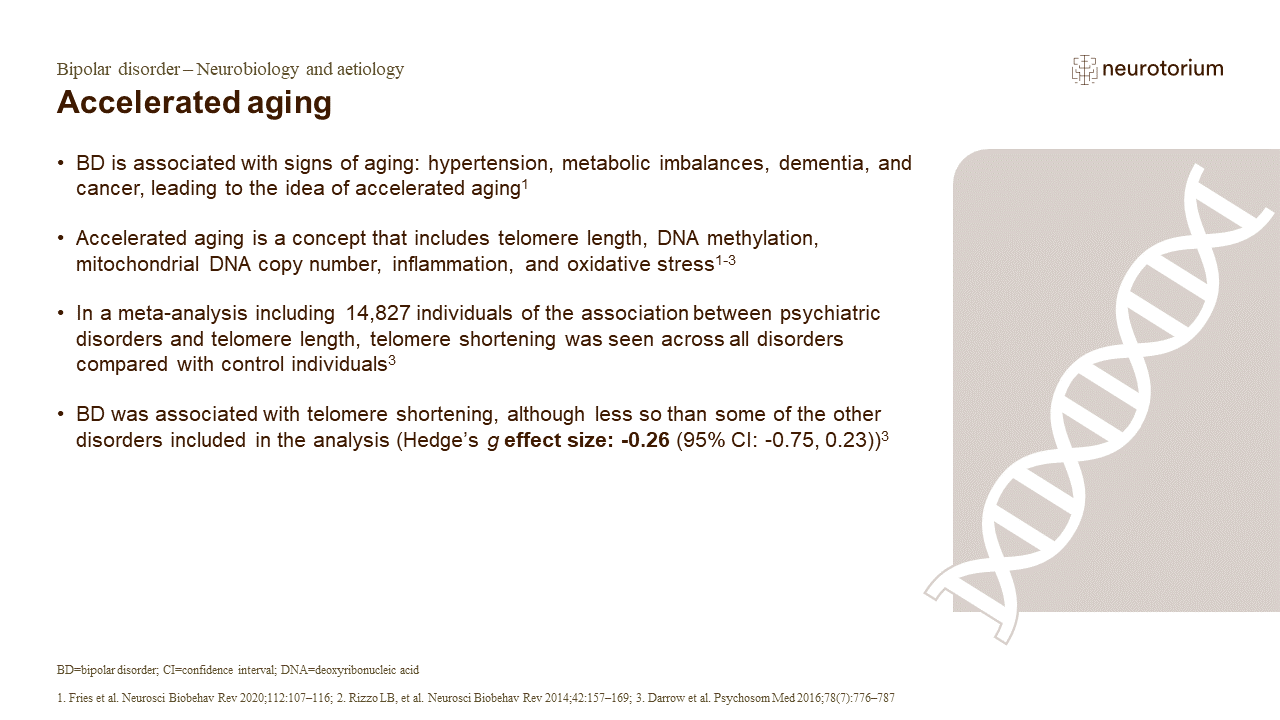
As summarized on the slide, bipolar disorder can be partly seen as a disease of accelerated aging.1 Understanding the molecular processes that drive this accelerated aging may, in the future, help patients delay the onset of – or avoid altogether – many of the comorbidities that typify bipolar disorder.1
References:
1. Fries GR, Zamzow MJ, Andrews T, et al. Accelerated aging in bipolar disorder: a comprehensive review of molecular findings and their clinical implications. Neurosci Biobehav Rev 2020; 112: 107–116.
2. Rizzo LB, Costa LG, Mansur RB, et al. The theory of bipolar disorder as an illness of accelerated aging: implications for clinical care and research. Neurosci Biobehav Rev 2014; 42: 157–169.
3. Darrow SM, Verhoeven JE, Révész D, et al. The association between psychiatric disorders and telomere length: a meta-analysis involving 14,827 persons. Psychosom Med 2016; 78 (7): 776–787.