

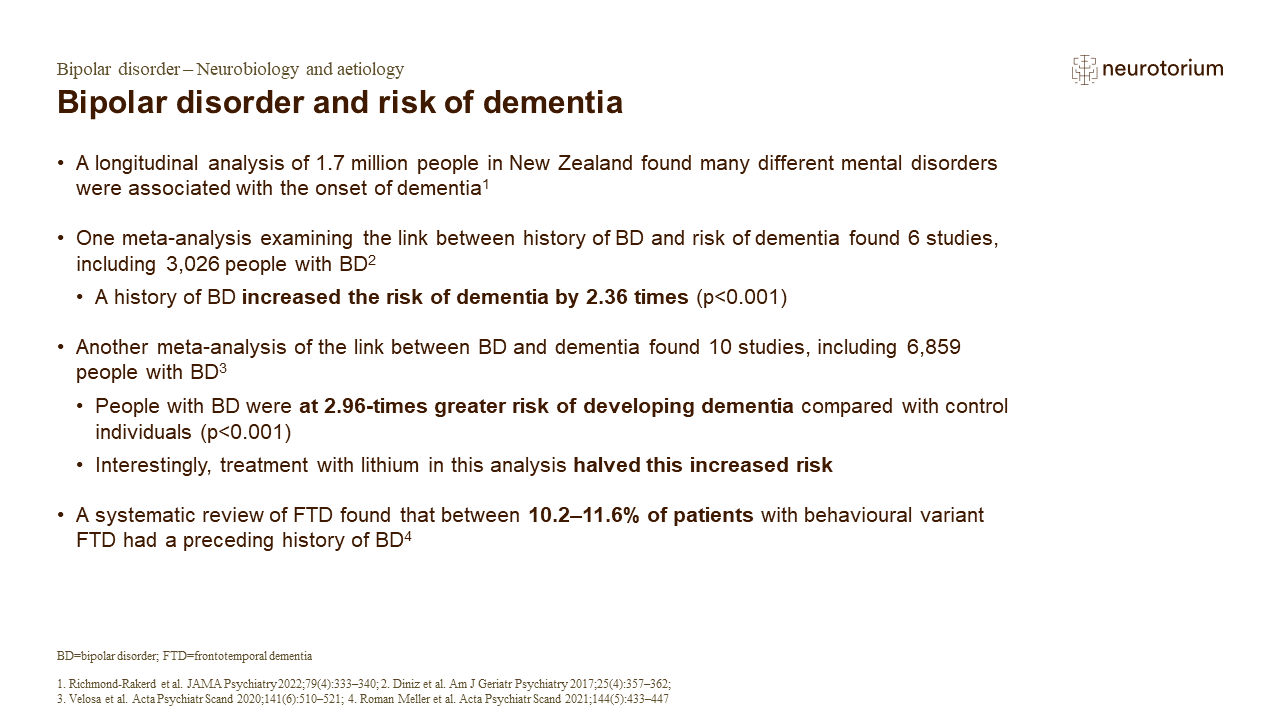
Mood disorders, including bipolar disorder, appear to increase the risk of dementia.1-4 More than this, the mood episodes in bipolar disorder appear to have an effect on cognitive functioning.5 One study found that, after cognitive functioning had declined during a manic episode, this functioning was improved in patients who experienced a sustained remission but not in patients who experienced recurrence of mood episodes.5
References:
1. Richmond-Rakerd LS, D’Souza S, Milne BJ, et al. Longitudinal associations of mental disorders with dementia: 30-year analysis of 1.7 million New Zealand citizens. JAMA Psychiatry 2022; 79 (4): 333–340.
2. Diniz BS, Teixeira AL, Cao F, et al. History of bipolar disorder and the risk of dementia: a systematic review and meta-analysis. Am J Geriatr Psychiatry 2017; 25 (4): 357–362.
3. Velosa J, Delgado A, Finger E, et al. Risk of dementia in bipolar disorder and the interplay of lithium: a systematic review and meta-analyses. Acta Psychiatr Scand 2020; 141 (6): 510–521.
4. Roman Meller M, Patel S, Duarte D, et al. Bipolar disorder and frontotemporal dementia: a systematic review. Acta Psychiatr Scand 2021; 144 (5): 433–447.
5. Kozicky JM, Torres IJ, Silveira LE, et al. Cognitive change in the year after a first manic episode: association between clinical outcome and cognitive performance early in the course of bipolar I disorder. J Clin Psychiatry 2014; 75 (6): e587–593.