

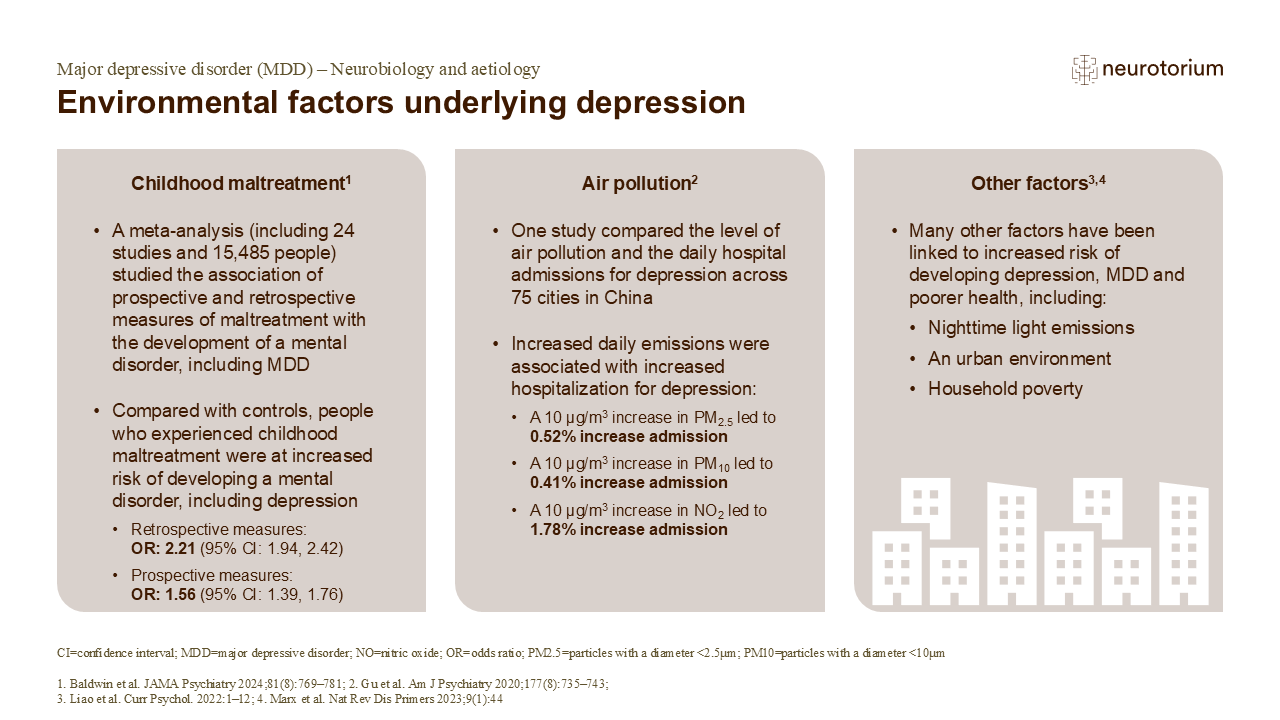
Apart from the environmental factors outlined on the slide, deficiencies in nutrients such as protein, B vitamins, vitamin D, magnesium, zinc, selenium, iron, calcium, and omega-3 fatty acids may also influence the risk of developing depressive symptoms; however, additional research is needed to elucidate the role of diet in MDD aetiology.5
References:
- Baldwin JR, Coleman O, Francis ER, Danese A. Prospective and retrospective measures of child maltreatment and their association with psychopathology: a systematic review and meta-analysis. JAMA Psychiatry 2024; 81 (8): 769–781.
- Gu X, Guo T, Si Y, et al. Association between ambient air pollution and daily hospital admissions for depression in 75 Chinese cities. Am J Psychiatry 2020; 177 (8): 735–743.
- Liao YA, Garcia-Mondragon L, Konac D, et al. Nighttime lights, urban features, household poverty, depression, and obesity. Curr Psychol 2022: 1–12.
- Marx W, Penninx BWJH, Solmi M, et al. Major depressive disorder. Nat Rev Dis Primers 2023; 9 (1): 44.
- Zielińska M, Łuszczki E, Dereń K. Dietary nutrient deficiencies and risk of depression (review article 2018–2023). Nutrients 2023; 15 (11): 2433.