

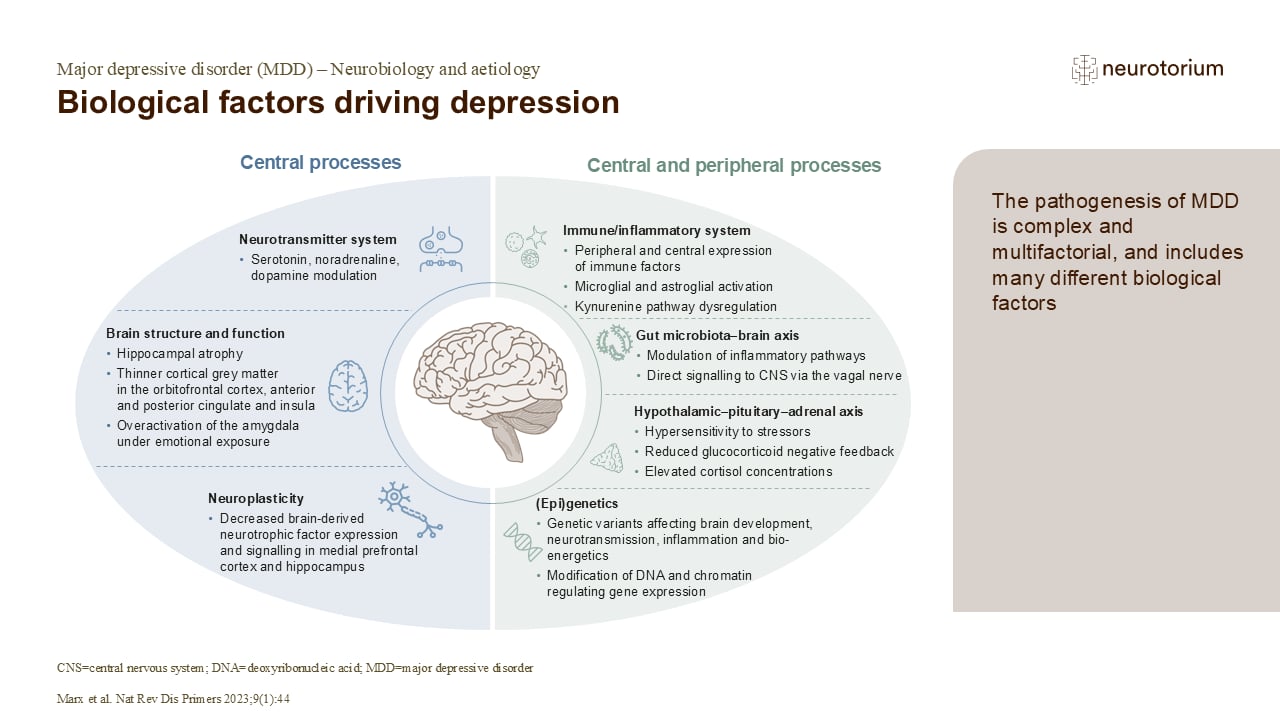
Inflammatory dysregulation may be an important factor driving major depressive disorder (MDD). A large meta-analysis showed increased levels of pro-inflammatory markers (e.g., interleukin-6 [IL-6], tumour necrosis factor-ɑ and C-reactive protein [CRP]) and reduced levels of anti-inflammatory markers (such as interleukin-4) in people with MDD (n=5,166) compared with controls (n=5,083).2 In addition, longitudinal studies of data from 58,256 participants have shown that elevated levels of pro-inflammatory markers (such as IL-6 and CRP) can predict the risk of MDD onset, and that this relationship is bidirectional i.e., that more severe depressive symptoms can predict higher future levels of IL-6 and CRP.3 Severe infections or autoimmune disorders are also associated with an increased risk of future MDD.1
References:
- Marx W, Penninx BWJH, Solmi M, et al. Major depressive disorder. Nat Rev Dis Primers 2023; 9 (1): 44.
- Osimo EF, Pillinger T, Rodriguez IM, et al. Inflammatory markers in depression: A meta-analysis of mean differences and variability in 5,166 patients and 5,083 controls. Brain Behav Immun 2020; 87: 901–909.
- Mac Giollabhui N, Ng TH, Ellman LM, Alloy LB. The longitudinal associations of inflammatory biomarkers and depression revisited: systematic review, meta-analysis, and meta-regression. Mol Psychiatry 2021; 26 (7): 3302–3314.