

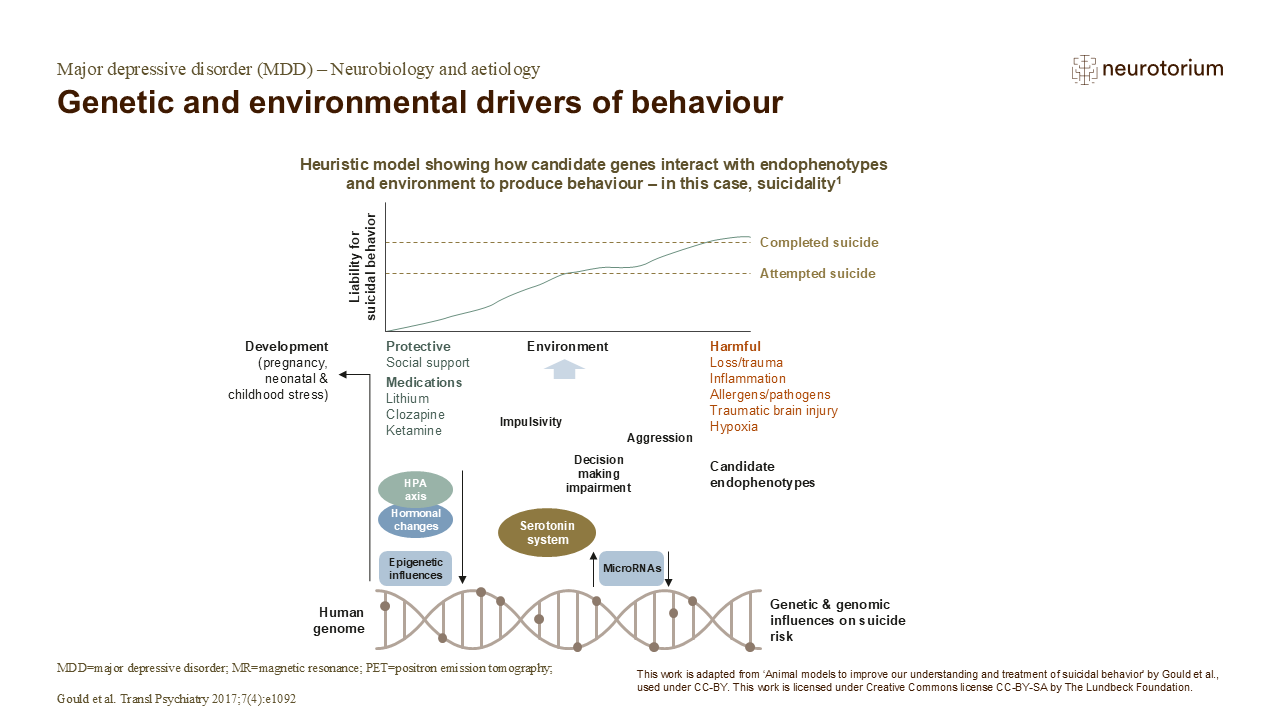
Decision-making is a complex process; additional translational research is required to elucidate the network and connectivity characteristics of identified variations in neural substrates, and the molecular underpinnings of these variations.1 Potential molecular factors influencing the risk of suicidality include:1
- Increased levels of inflammatory mediators
- Molecules produced by neurotropic pathogens, such as Toxoplasma gondii
- Decreased levels of the gonadal hormone testosterone
- High pollen count, with a large peak of atmospheric pollen during spring overlapping with highly replicated seasonal peaks in suicide rates
- Dysregulated production of several neuroactive compounds through the kynurenine pathway, which can affect emotions and behaviour; inflammatory cytokines have been shown to be potent inducers of the kynurenine pathway, with resultant downstream changes in glutamate neurotransmission
Reference: