

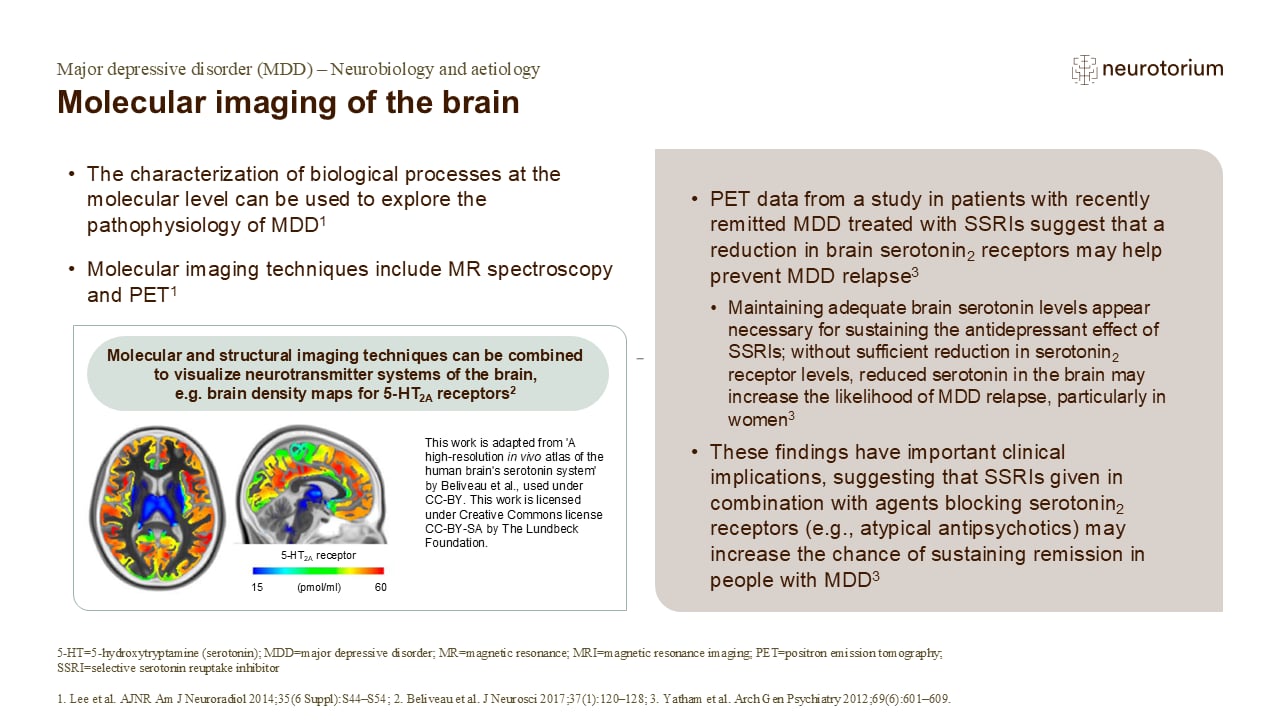
Molecular imaging techniques such as positron emission tomography (PET) can be used to explore the neurotransmitter systems of the brain in healthy individuals as well as in people with MDD, as outlined on the slide.1,2
In an open-label trial including 87 patients with MDD, PET imaging was used to quantify hippocampal 5-HT4 receptor binding before and after treatment with a selective serotonin reuptake inhibitor (SSRI), alongside MRI-based hippocampal volumetry.4 No significant change in mean hippocampal volume over the course of 8 weeks of SSRI treatment was observed.4 At Week 8, 5-HT4 receptor binding was negatively associated with hippocampal volume in women (p=0.002), while a non-significant positive association was observed in men (p=0.41); however, there was insufficient evidence for a sex-specific link between serotonergic signalling and hippocampal plasticity during antidepressant treatment.4
References:
- Lee TS, Quek SY, Krishnan KR. Molecular imaging for depressive disorders. AJNR Am J Neuroradiol 2014; 35 (6 Suppl): S44–54.
- Beliveau V, Ganz M, Feng L, et al. A high-resolution in vivo atlas of the human brain’s serotonin system. J Neurosci 2017; 37 (1): 120–128.
- Yatham LN, Liddle PF, Sossi V, et al. Positron emission tomography study of the effects of tryptophan depletion on brain serotonin2 receptors in subjects recently remitted from major depression. Arch Gen Psychiatry 2012; 69 (6): 601–609.
- Jensen KHR, Dam VH, Köhler-Forsberg K, et al. Changes in hippocampal volume, 5-HT4receptor binding, and verbal memory over the course of antidepressant treatment in major depressive disorder. J Psychiatr Res 2025; 181: 197–205.