

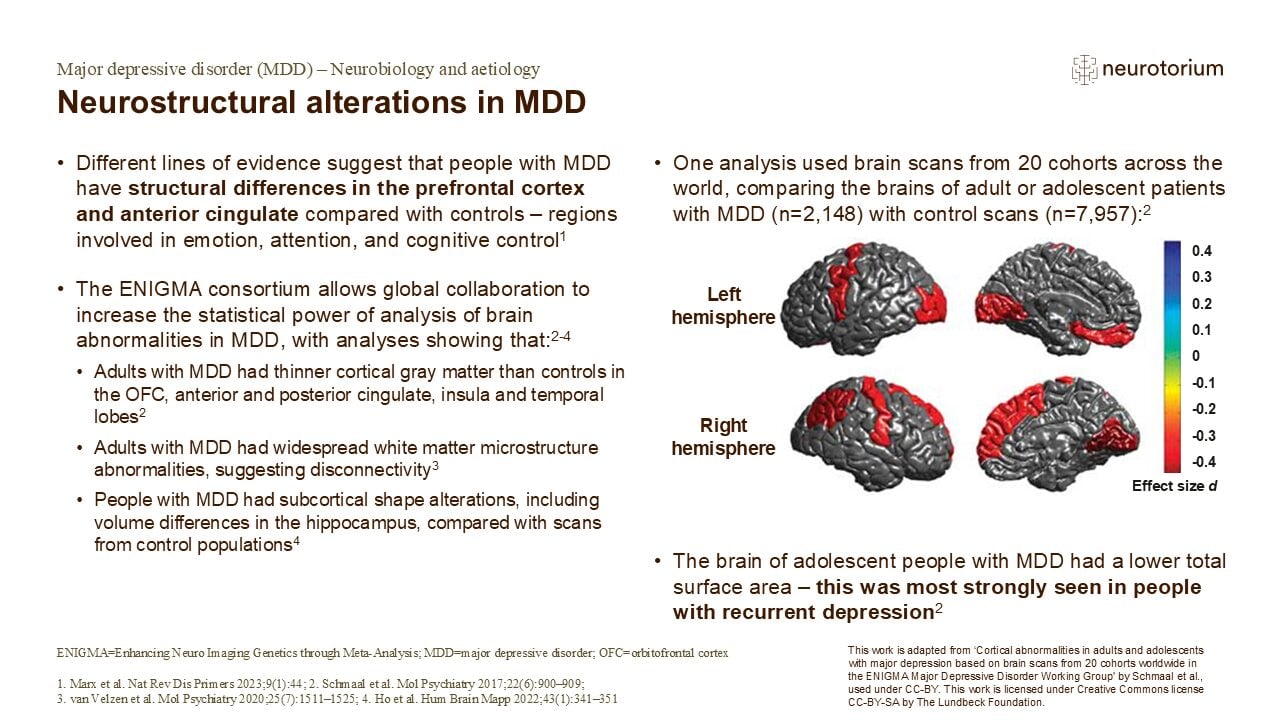
As outlined on the slide, major depressive disorder (MDD) is associated with multiple neurostructural alterations.1-4 Some of these changes may be preventable or reversible through treatment: longitudinal analyses have shown small increases in hippocampal volume and cortical thickness in people with MDD who have achieved remission compared with people with MDD who have not experienced remission.1
References:
- Marx W, Penninx BWJH, Solmi M, et al. Major depressive disorder. Nat Rev Dis Primers 2023; 9 (1): 44.
- Schmaal L, Hibar DP, Sämann PG, et al. Cortical abnormalities in adults and adolescents with major depression based on brain scans from 20 cohorts worldwide in the ENIGMA Major Depressive Disorder Working Group. Mol Psychiatry 2017; 22 (6): 900–909.
- van Velzen LS, Kelly S, Isaev D, et al. White matter disturbances in major depressive disorder: a coordinated analysis across 20 international cohorts in the ENIGMA MDD working group. Mol Psychiatry 2020; 25 (7): 1511–1525.
- Ho TC, Gutman B, Pozzi E, et al. Subcortical shape alterations in major depressive disorder: findings from the ENIGMA major depressive disorder working group. Hum Brain Mapp 2022; 43 (1): 341–351.