

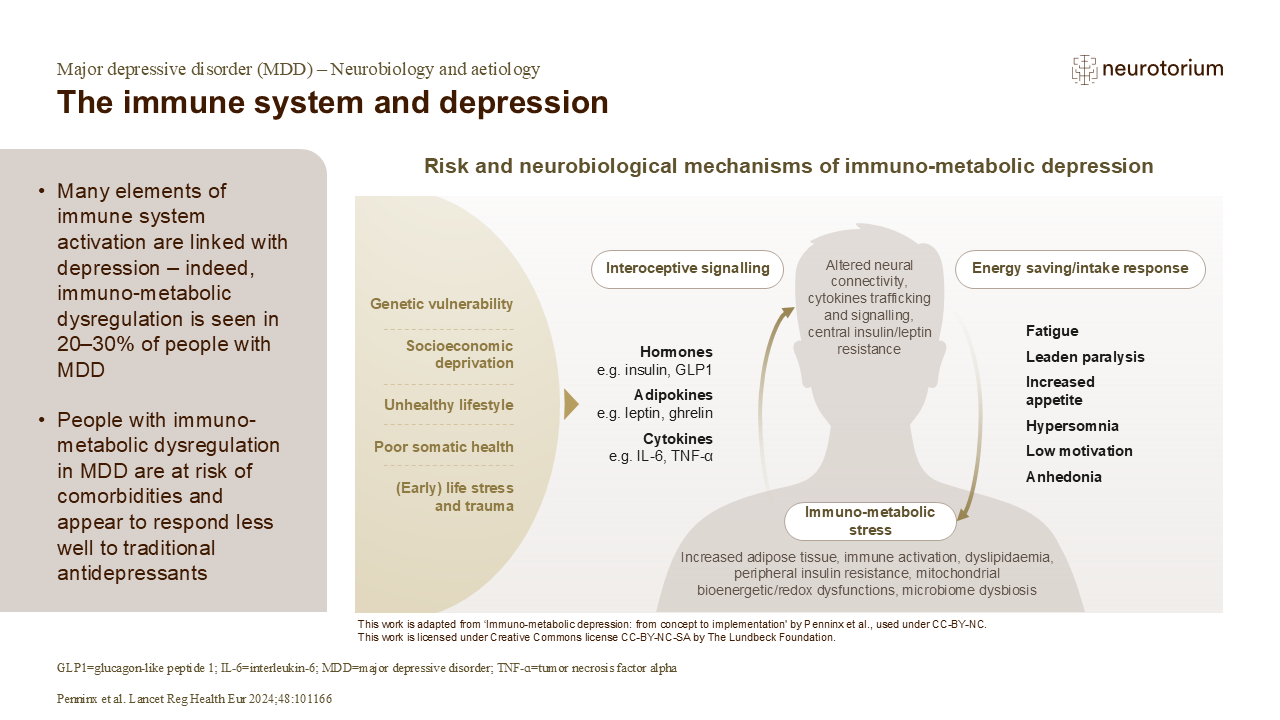
Interoceptive signals provide the brain with information on the balance between energy supply and demand, and the brain responds by triggering appropriate physiological and behavioural reactions intended to save energy or increase energy intake.1 Various factors, including genetic predisposition or environmental challenges (e.g., excessive nutritional intake or stress/trauma) can disrupt this internal homeostasis.1 For example, increased levels of inflammatory markers may result in central insulin or leptin resistance, with the brain misreading interoceptive signals regarding body energy status, and triggering excessive energy-saving or calorie intake-increasing responses, such as increased appetite coupled with reduced activity.1 These may further exacerbate the dysregulation (e.g., further increase in inflammatory signalling), creating a self-sustaining detrimental cycle.1
Reference: