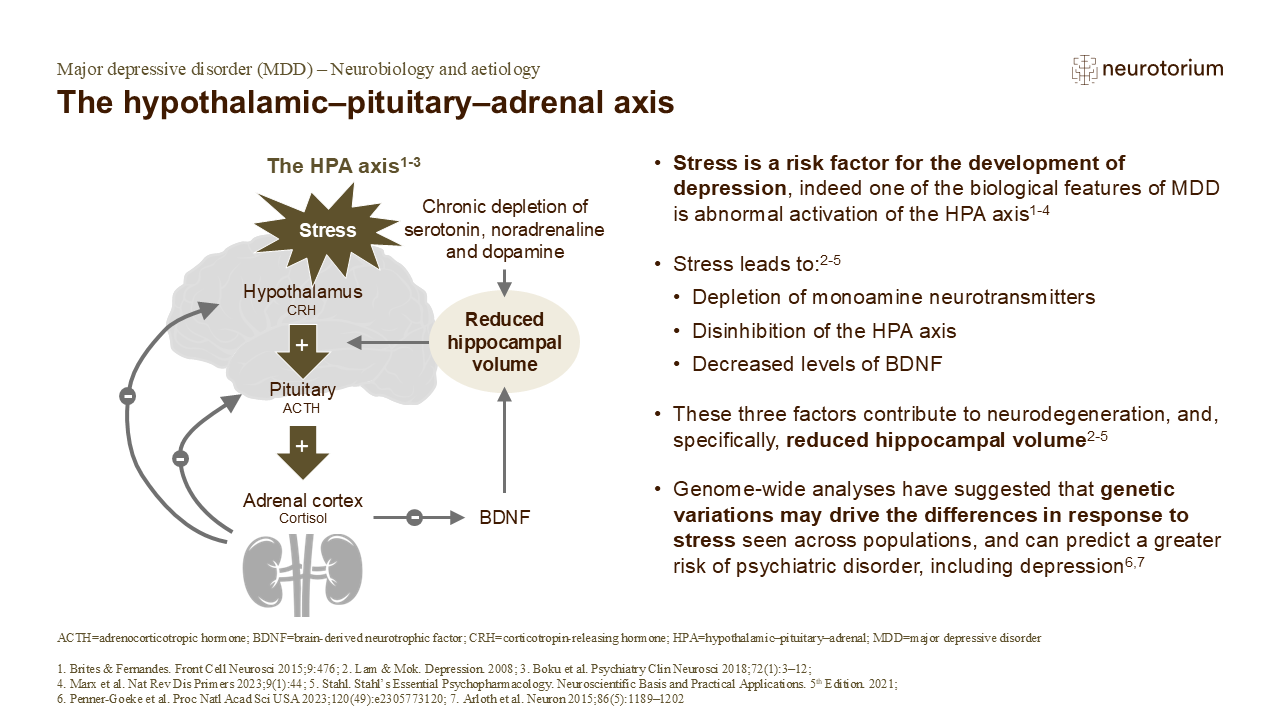
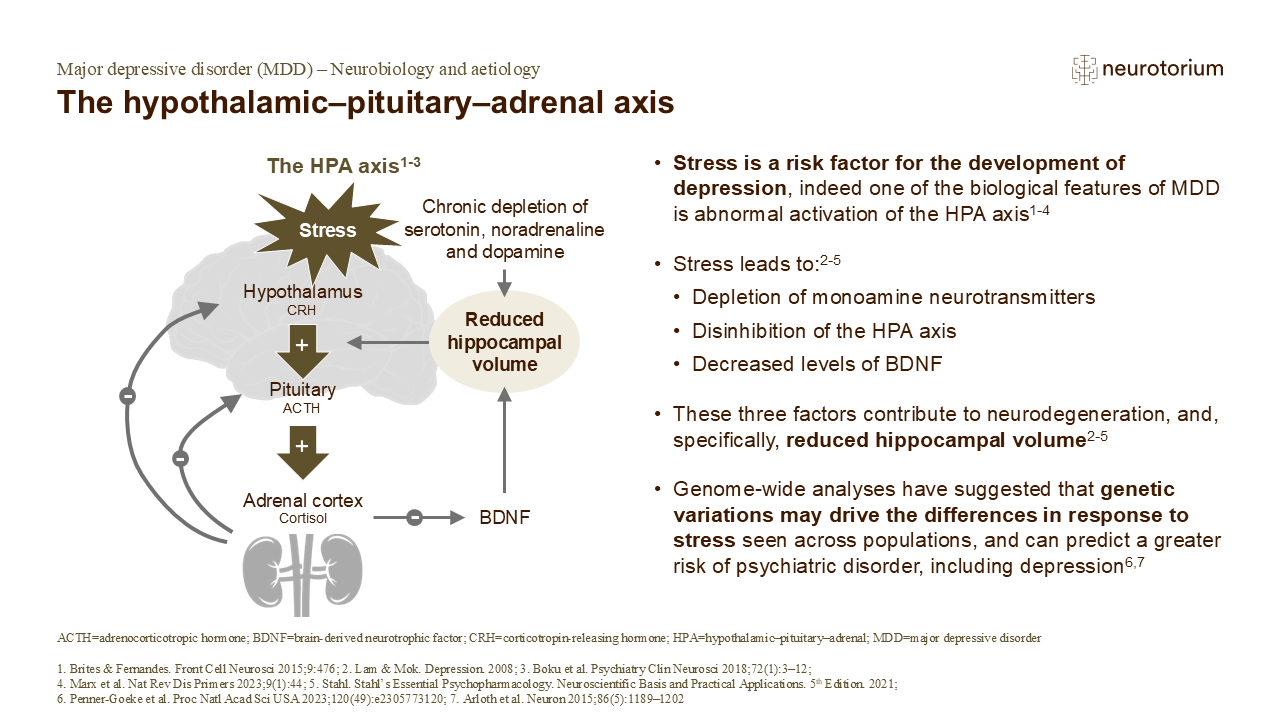
The hypothalamus–pituitary–adrenal (HPA) axis appears to be crucial in the development of the symptoms of depression.1 Patients with depression frequently have high circulating levels of cortisol,8 the hormone released from the adrenal cortex.5 Providing evidence for the connection from the other direction, patients with Cushing’s syndrome (characterised by a long-term increase in the levels of glucocorticoids, including cortisol)9 often show symptoms of depression, symptoms which are relieved when the cortisol overactivity is treated.8
Long term HPA overactivity has neurotoxic effects, particularly on the hippocampus.2 One proposed mechanism for the neurotoxic effects of cortisol is via the molecule BDNF (brain-derived neurotrophic factor), which normally sustains the viability of neurones.2,5 Chronic elevated cortisol reduces BDNF levels, which can lead to loss of neurones in the brain, particularly the hippocampus.2,3,5 Interestingly, treatment with antidepressants appears to restore the monoamine depletion seen as a result of chronic stress; this restoration can increase BDNF levels (and other trophic factors) and, potentially, restore some of the changes to the brain seen in depression.3,5
References:
- Brites D, Fernandes A. Neuroinflammation and depression: microglia activation, extracellular microvesicles and microRNA dysregulation. Front Cell Neurosci 2015; 9: 476.
- Lam RW, Mok H. Depression. Oxford University Press. 2008.
- Boku S, Nakagawa S, Toda H, Hishimoto A. Neural basis of major depressive disorder: beyond monoamine hypothesis. Psychiatry Clin Neurosci 2018; 72 (1): 3–12.
- Marx W, Penninx BWJH, Solmi M, et al. Major depressive disorder. Nat Rev Dis Primers 2023; 9 (1): 44.
- Stahl SM. Stahl’s Essential Psychopharmacology. Neuroscientific Basis and Practical Applications. 5th Edition. © Cambridge University Press, 2021.
- Penner-Goeke S, Bothe M, Rek N, et al. High-throughput screening of glucocorticoid-induced enhancer activity reveals mechanisms of stress-related psychiatric disorders. Proc Natl Acad Sci USA 2023; 120 (49): e2305773120.
- Arloth J, Bogdan R, Weber P, et al.; Major Depressive Disorder Working Group of the Psychiatric Genomics Consortium PGC. Genetic differences in the immediate transcriptome response to stress predict risk-related brain function and psychiatric disorders. Neuron 2015; 86 (5): 1189–1202.
- Murphy BE. Steroids and depression. J Steroid Biochem Mol Biol 1991; 38 (5): 537–559.
- National Institute for Health and Care Excellence. Cushing’s syndrome. December 2024.