

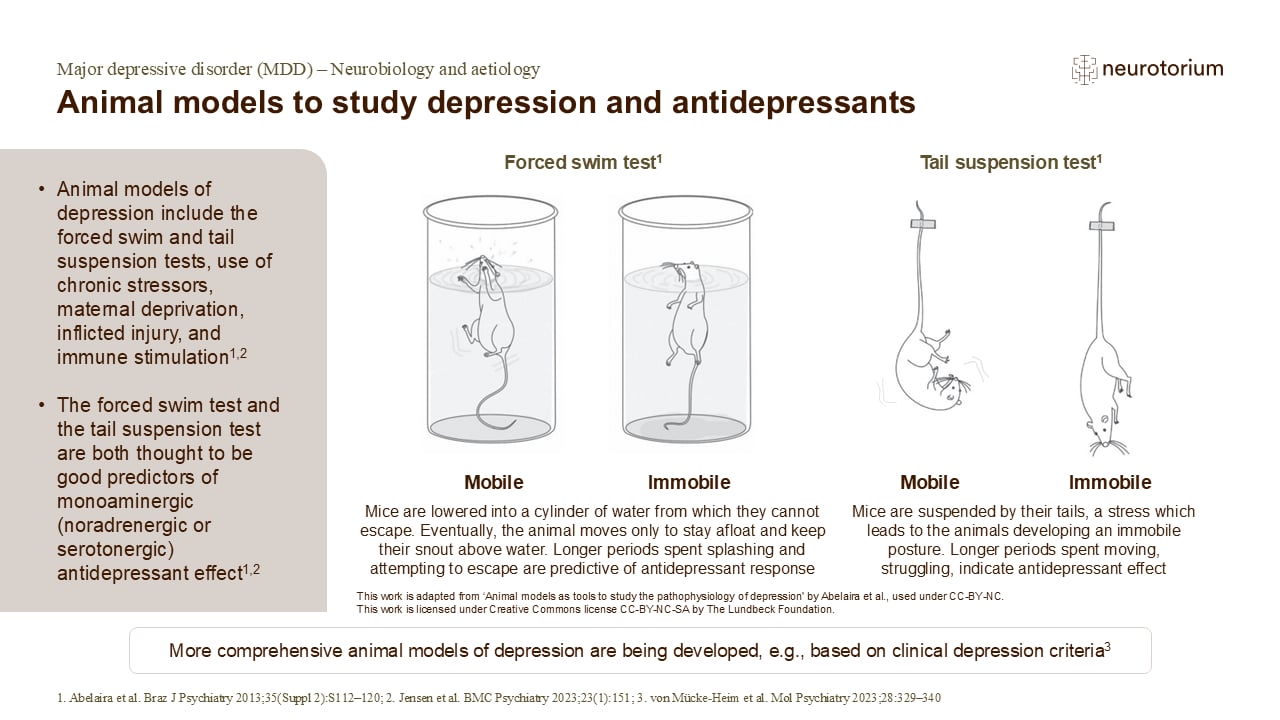
Animal (e.g., mice) models to study depression (typically the forced swim test [FST], the tail suspension test [TST] and the sucrose preference test) are mostly based on the induction of biological or behavioural changes seen in people with MDD using a psychosocial or biophysical stressor.3 This is due to the widespread assumption that non-human animals are unable to experience depression in its phenomenological and biological entirety; however, they display behaviours similar to symptoms of MDD observed in humans.3 These depressive-like behaviours are induced by causative factors (e.g., environmental, genetic), can be quantified by standardized behavioural tests and should respond to established antidepressants.3 However, the relationship between the rodent behaviours in these tests and the symptoms of depression in humans is not obvious (i.e., they lack face validity).4
Animal models continue to be crucial for the study of depression.4 The translatability of findings from animal models of depression to humans with MDD can be improved by the application of clinical depression criteria along with Research Domain Criteria to provide a biobehavioral reference syndrome for rodent models of depression.3 A more sophisticated animal model of depression would be based on species-specific evidence such as minimum duration of depressive phenotype, significant sociofunctional impairment, core biological features of depression, and depressive-like symptoms (e.g., loss of energy or fatigue, lack of concentration or indecisiveness, psychomotor agitation or retardation, sleep disturbances, weight changes or diminished interest or pleasure in activities).3
References:
- Abelaira HM, Réus GZ, Quevedo J. Animal models as tools to study the pathophysiology of depression. Braz J Psychiatry 2013; 35 (Suppl 2): S112–120.
- Jensen KHR, Dam VH, Ganz M, et al. Deep phenotyping towards precision psychiatry of first-episode depression – the Brain Drugs-Depression cohort. BMC Psychiatry 2023; 23 (1): 151.
- von Mücke-Heim I-A, Urbina-Treviño L, Bordes J, et al. Introducing a depression-like syndrome for translational neuropsychiatry: a plea for taxonomical validity and improved comparability between humans and mice. Mol Psychiatry 2023; 28: 329–340.
- Bale TL, Abel T, Akil H, et al. The critical importance of basic animal research for neuropsychiatric disorders. Neuropsychopharmacol 2019; 44 (8): 1349–1353.