

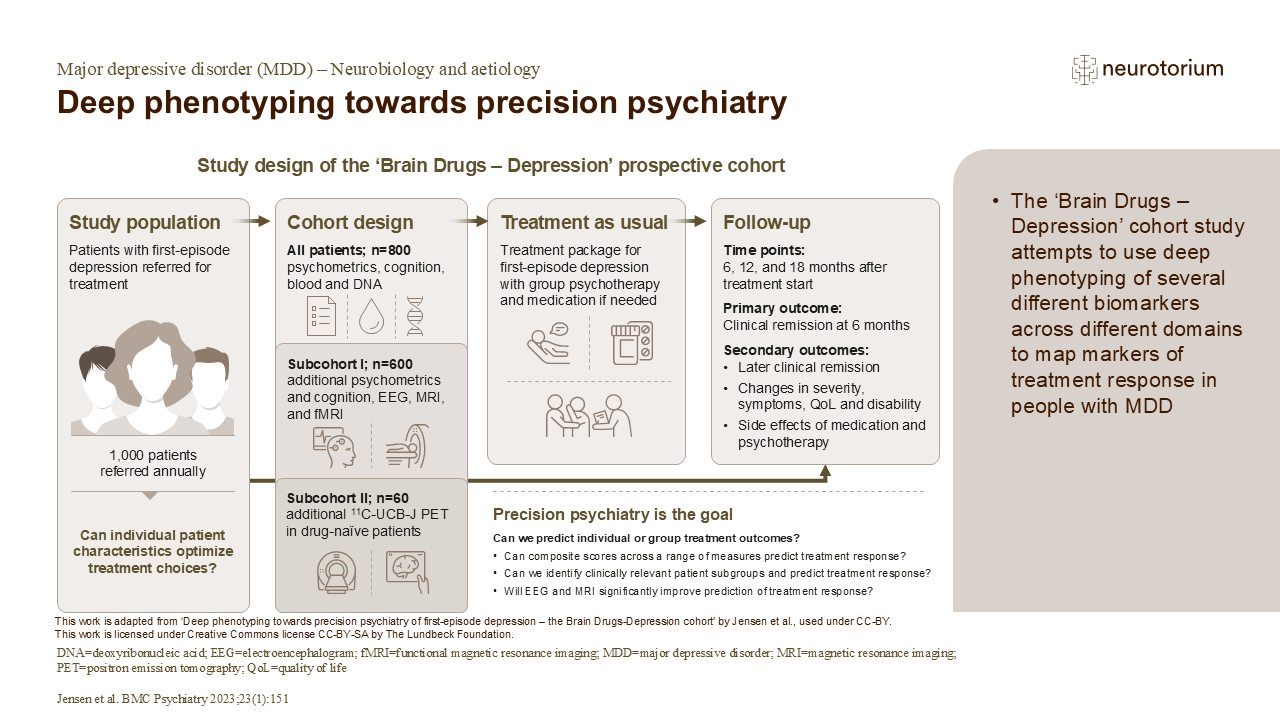
Clinically relevant markers that could help guide treatment decision-making in first-episode of major depressive disorder (MDD) continue to be scarce.1 The discovery of new treatments and patient care optimization is further complicated by the heterogeneity of MDD disease mechanisms and of its biological and psychological causes.1 Deep phenotyping followed by a stratification of patients’ response to MDD treatment based on objective and replicable psychosocial, biochemical or neurobiological characteristics may help progress from a ‘one size fits all’ approach to interventions tailored to patients’ individual profiles, with an optimized resource allocation for high-risk patient groups.1
The ‘Brain Drugs – Depression’ prospective cohort study aims to identify clinically relevant biomarkers for MDD treatment through combining the clinical, cognitive, psychometric and biological (i.e., genetic and blood biochemistry) data of adults diagnosed with first-episode MDD with information from Danish national health and social registers.1 The overall objective of the study is to propose treatment response algorithms, aid treatment decision-making and improve the care of patients with MDD.1
Reference: