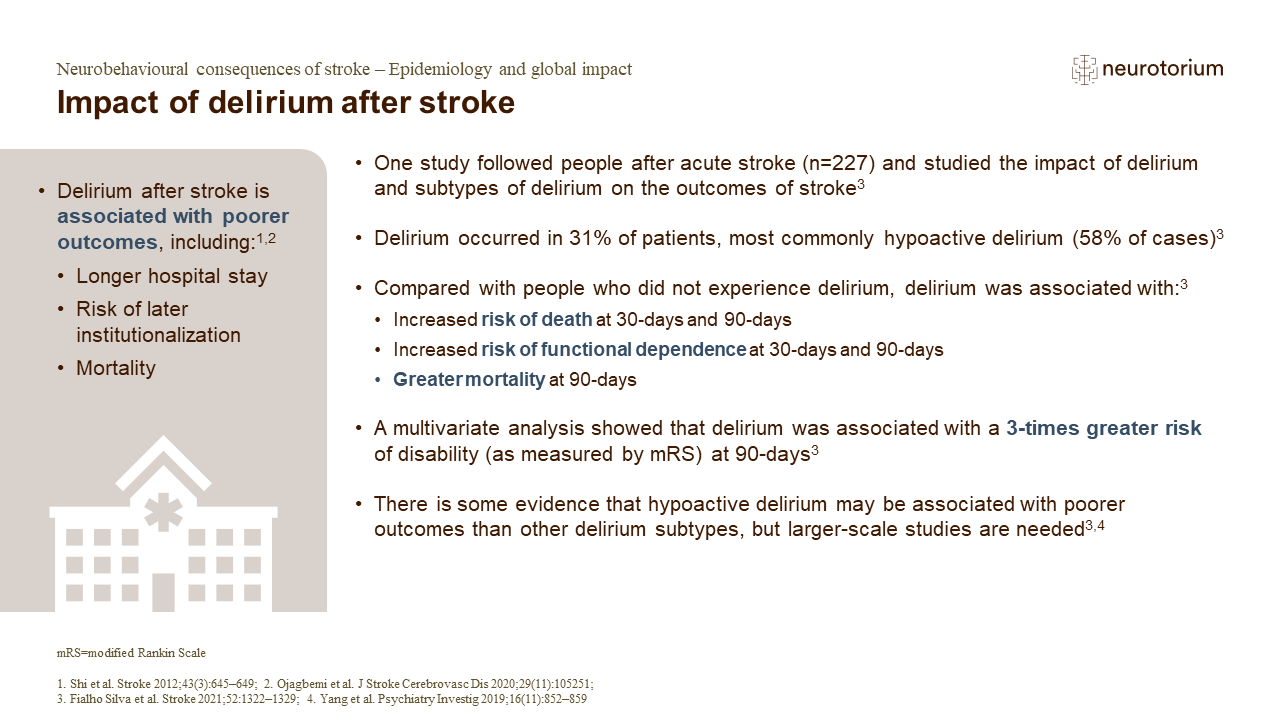
Delirium is common in stroke, and is associated with poorer outcomes for the patient.1,3 As well as delirium, attenuated delirium or sub-syndromal delirium after stroke has been studied, and may be a useful indicator of risk of cognitive impairment after stroke.5 In the study detailed on the slide, of the 71 people who experienced post-stroke delirium, the majority (58%) experienced hypoactive delirium.3 A detailed analysis suggested that both hyperactive and hypoactive delirium subtypes were associated with worse outcomes than no delirium, but the analysis lacked the statistical power necessary to draw conclusions.3 Another similar study, compared outcomes in people after stroke (n=943) between those who experienced delirium and those who did not.5 Of the 95 people who experienced post-stroke delirium, 36% experienced hyperactive delirium and 26% experienced hypoactivity delirium.5 While similarly lacking in statistical power, this study compared outcomes between delirium subtypes and found that those people with hypoactive delirium had significantly longer hospitalisation times compared with other delirium subgroups.5
Impact of delirium after stroke