

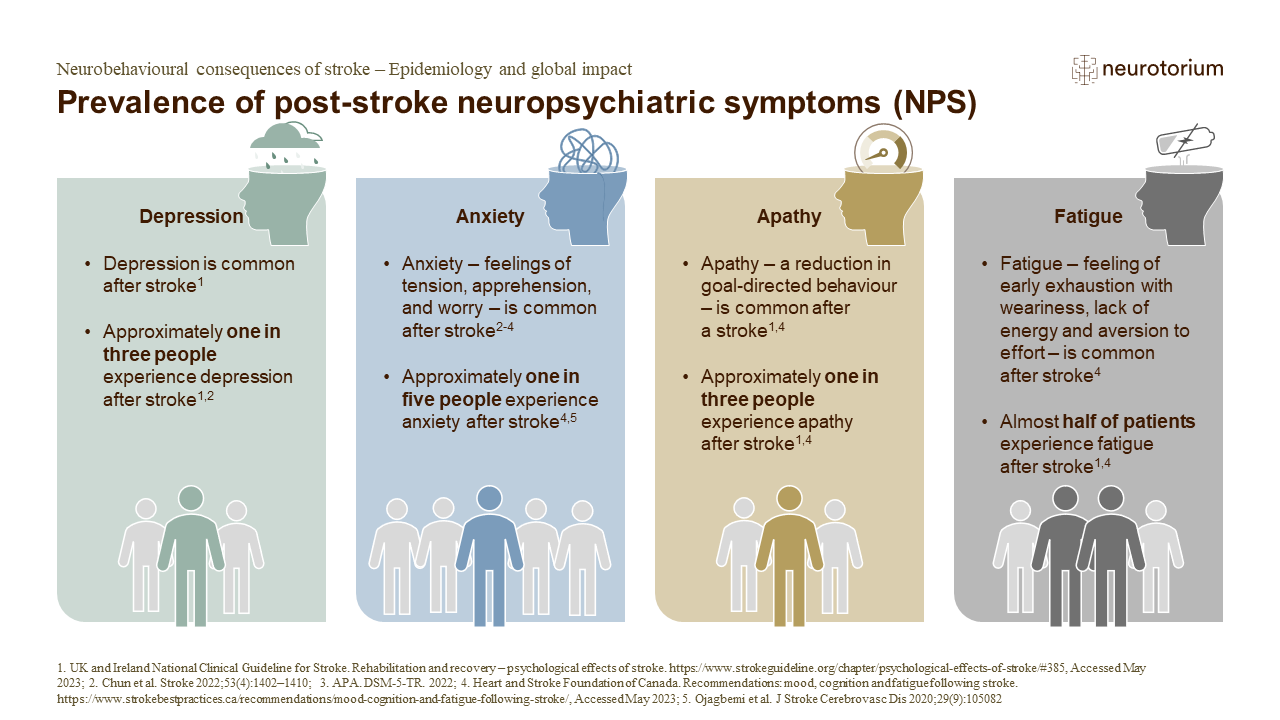
As outlined on the slide, after a stroke many people go on to experience neuropsychiatric symptoms including depression, anxiety, apathy, and fatigue.1 Furthermore, many people who experience a stroke also experience sub-threshold psychological distress – a stroke can often be a major life event, and some degree of emotional distress is a normal reaction.1 Healthcare professionals should be aware of the risks of patients developing these symptoms after stroke, and should take these symptoms into account when developing a clinical management plan.1
References:
1. UK and Ireland National Clinical Guideline for Stroke. Rehabilitation and recovery – psychological effects of stroke. Available at: https://www.strokeguideline.org/chapter/psychological-effects-of-stroke/#385. Accessed May 2023.
4. Heart and Stroke Foundation of Canada. Recommendations: mood, cognition and fatigue following stroke. Available at: https://www.strokebestpractices.ca/-/media/1-stroke-best-practices/csbpr2019_mcf_module_master_en.pdf?rev=636e800ddfce480e80c48512c5f36427. Accessed May 2023.