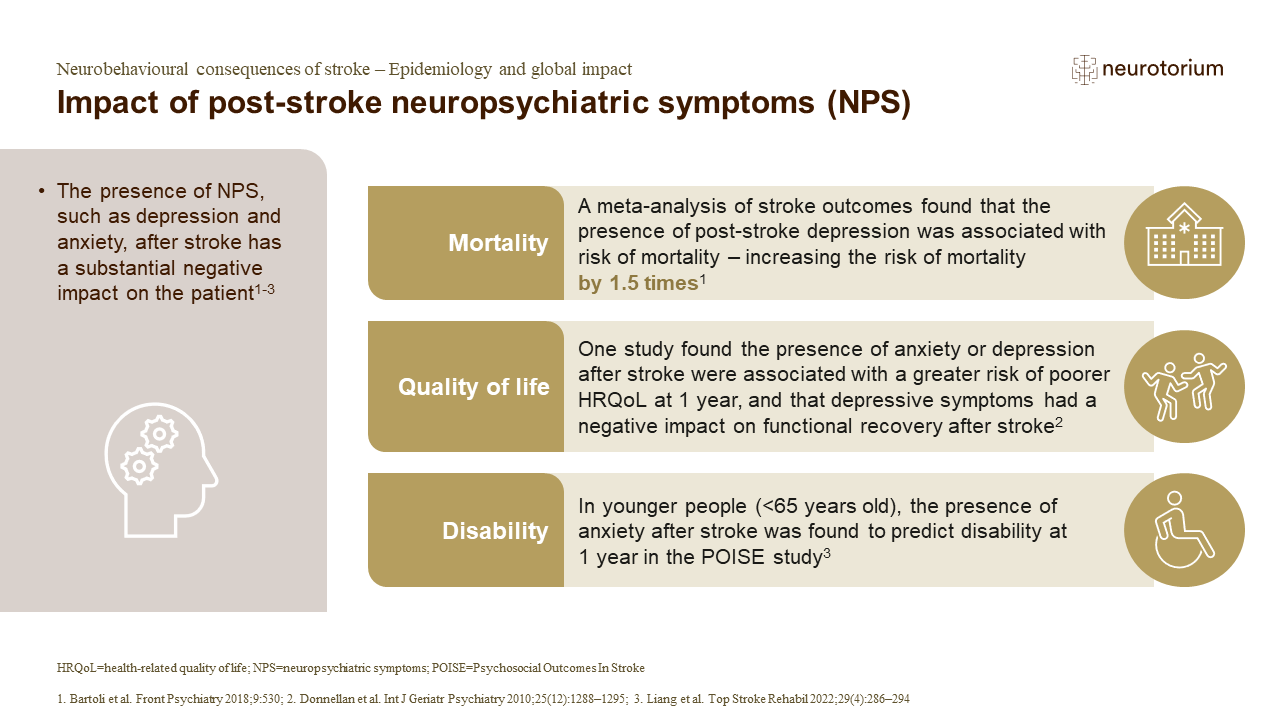
The Psychosocial Outcomes In Stroke (POISE) study followed 441 younger patients (aged <65 years) after stroke, analysing the association between anxiety and depression at baseline (measured by the Hospital Anxiety and Depression Scale, HADS) with ongoing disability (measured by the World Health Organization Disability Assessment Scale version II, WHODAS-II) 12-months after stroke.3 In this sample, 25% of patients had baseline anxiety, and 14% baseline depression.3 Whilst baseline anxiety was found to predict greater impairment in ‘cognition’, ‘getting along’, and ‘participation’ at 12 months, there were no significant correlations between baseline depression and later disability.3 The authors speculate that the lack of an association of depression with disability may have been because of the low percent of patients recruited into the study with depression at baseline, and because they attempted to correct for potential factors mediating the relationship between depression and disability, such as the presence of a spouse, income status, and the presence of a supporting family or social network.3
Impact of post-stroke neuropsychiatric symptoms (NPS)