

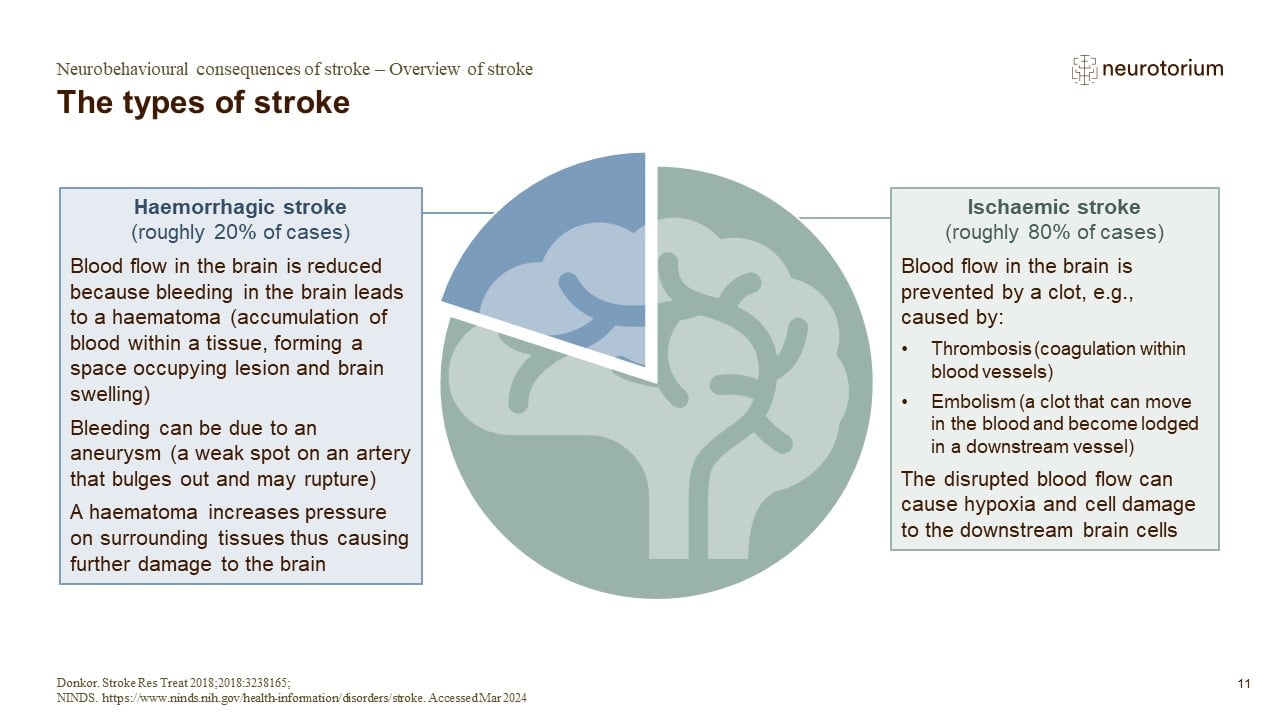
Strokes are categorized as either haemorrhagic or ischaemic (sometimes referred to as cerebral infarction).1 Although prevalence rates vary, roughly 80% of strokes are ischaemic and the remaining 20% are haemorrhagic.1,2 However, data from low- and middle-income countries have found rates of haemorrhagic stroke to be as high as 34%.1 Differential diagnosis is performed using clinical assessment and imaging techniques such as computed tomography (CT) scans.2 Because the treatment of ischaemic and haemorrhagic strokes can be quite different, finding the cause of the stroke is a crucial clinical step.2
References:
2. NINDS. Available at: https://www.ninds.nih.gov/health-information/disorders/stroke. Accessed March 2024.