

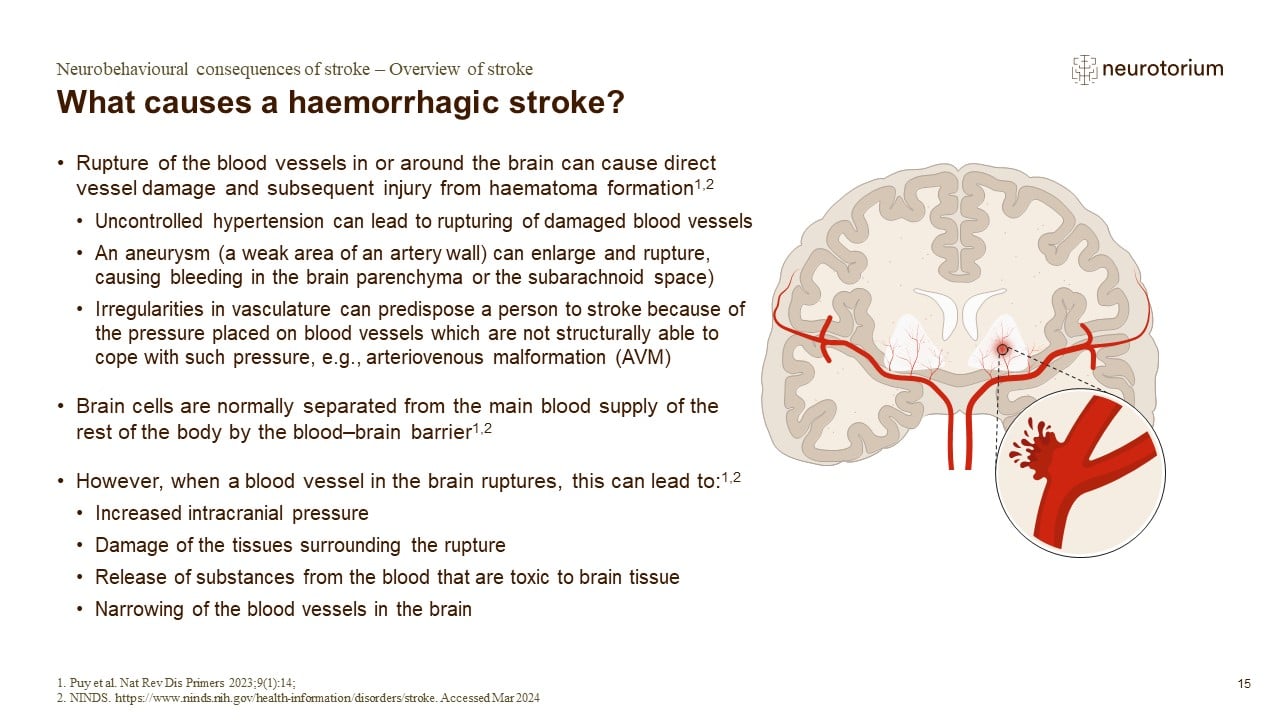
Haemorrhagic strokes are most commonly caused by an intracerebral haemorrhage, whereby the rupturing will likely be predated by many years of hypertension, but can also be caused by subarachnoid/subdural or intraventricular haemorrhage.2 Whilst the different causes of bleeding have different sets of clinical considerations, the treatment for a haemorrhagic stroke is dependent on finding the source of bleeding in the brain, and controlling it.2 Surgical approaches that have been developed include methods of stabilizing aneurysms, and the use of shunt catheters to divert the flow of fluid in the brain.1,2
References:
2. NINDS. Available at: https://www.ninds.nih.gov/health-information/disorders/stroke. Accessed March 2024.