
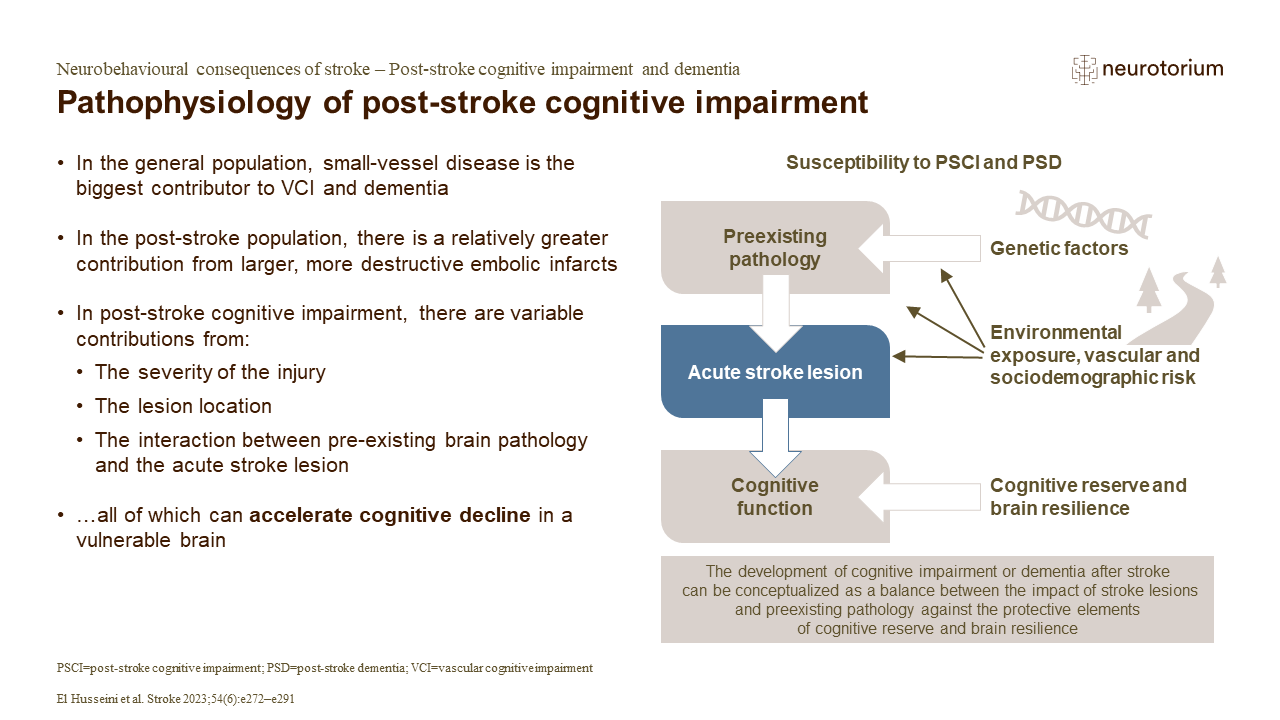
An individual’s brain reserve/resilience are important factors in determining the risk of cognitive impairment after stroke.1

  • Brain reserve is the difference between the degree of brain damage observed in an individual and the clinical manifestation of that damage.
  • Brain resilience is a combination of the capacity of the brain to mitigate the effects of damage accumulated over time.

Reference:
1. El Husseini N, Katzan IL, Rost NS, et al.; American Heart Association Stroke Council; Council on Cardiovascular and Stroke Nursing; Council on Cardiovascular Radiology and Intervention; Council on Hypertension; and Council on Lifestyle and Cardiometabolic Health. Cognitive impairment after ischemic and hemorrhagic stroke: a scientific statement from the American Heart Association/American Stroke Association. Stroke 2023; 54 (6): e272–e291.