

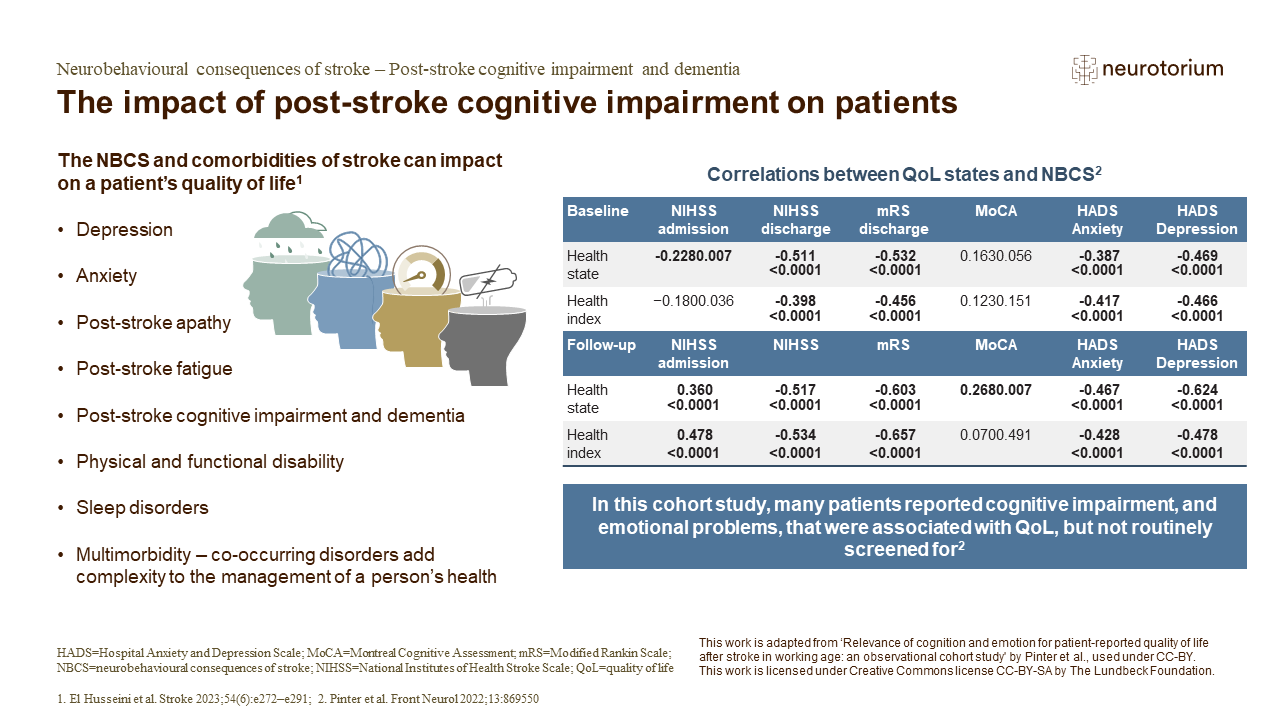
Cognitive impairment after stroke is common, and can impact a patient’s quality of life.1-3 A systematic review aimed to investigate to what extent post-stroke cognitive impairment impacts on patients’ activities and participation outcomes.3 Data were extracted from 62 publications, including a total of 7,817 patients.3 Small but significant associations were seen between multiple different domains of cognitive functioning and domains of quality of life or functioning.3 This association reinforces the importance of cognitive screening after stroke, and helping patients deal with any cognitive consequences that they experience.3
References:
1. El Husseini N, Katzan IL, Rost NS, et al.; American Heart Association Stroke Council; Council on Cardiovascular and Stroke Nursing; Council on Cardiovascular Radiology and Intervention; Council on Hypertension; and Council on Lifestyle and Cardiometabolic Health. Cognitive impairment after ischemic and hemorrhagic stroke: a scientific statement from the American Heart Association/American Stroke Association. Stroke 2023; 54 (6): e272–e291.
2. Pinter D, Fandler-Höfler S, Fruhwirth V, et al. Relevance of cognition and emotion for patient-reported quality of life after stroke in working age: an observational cohort study. Front Neurol 2022; 13: 869550.
3. Stolwyk RJ, Mihaljcic T, Wong DK, et al. Poststroke cognitive impairment negatively impacts activity and participation outcomes: a systematic review and meta-analysis. Stroke 2021; 52 (2): 748–760.