

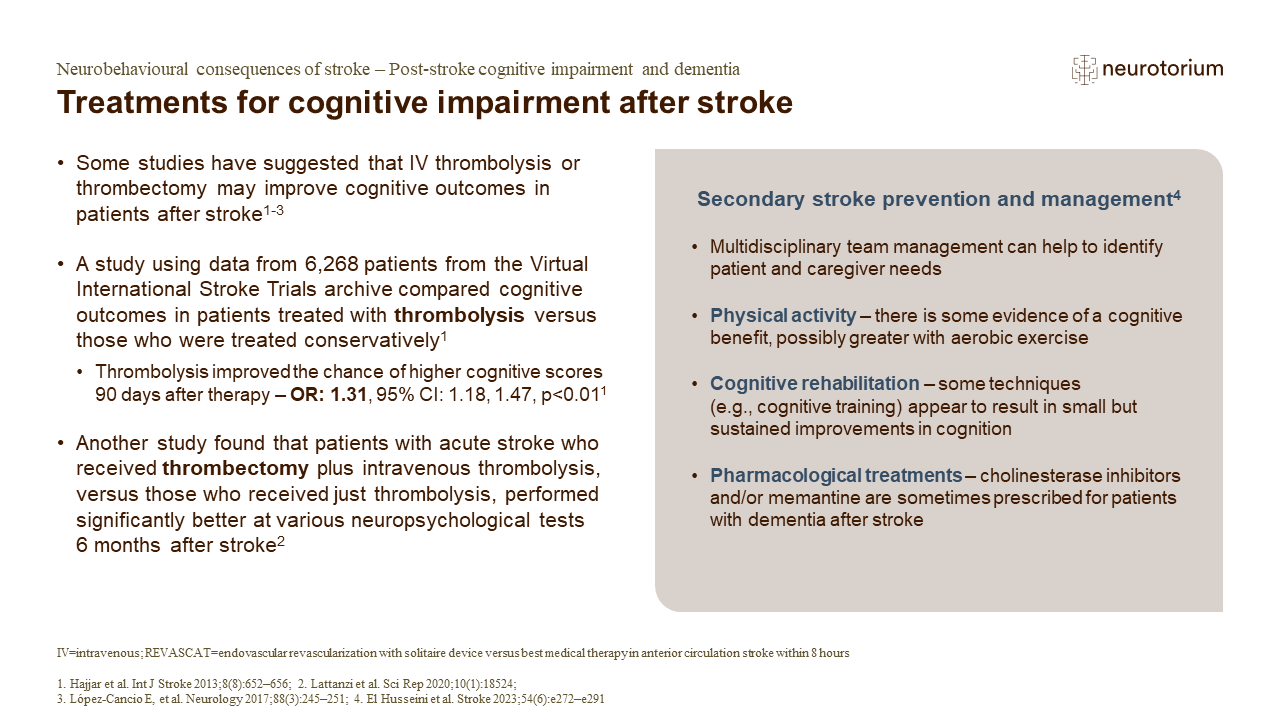
As outlined on the slide, part of the management of post-stroke cognitive impairment involves optimizing a patient’s cognition alongside helping the patient to manage symptoms and safely return to their life.4 Some treatment approaches appear to provide some benefit to cognitive function, however, many studies in stroke do not consider cognition as an endpoint.4
References:
1. Hajjar K, Fulton RL, Diener HC, et al. Does the cognitive measure Cog-4 show improvement among patients treated with thrombolysis after acute stroke? Int J Stroke 2013; 8 (8): 652–656.
2. Lattanzi S, Coccia M, Pulcini A, et al. Endovascular treatment and cognitive outcome after anterior circulation ischemic stroke. Sci Rep 2020; 10 (1): 18524.
3. López-Cancio E, Jovin TG, Cobo E, et al. Endovascular treatment improves cognition after stroke: a secondary analysis of REVASCAT trial. Neurology 2017; 88 (3): 245–251.
4. El Husseini N, Katzan IL, Rost NS, et al.; American Heart Association Stroke Council; Council on Cardiovascular and Stroke Nursing; Council on Cardiovascular Radiology and Intervention; Council on Hypertension; and Council on Lifestyle and Cardiometabolic Health. Cognitive impairment after ischemic and hemorrhagic stroke: a scientific statement from the American Heart Association/American Stroke Association. Stroke 2023; 54 (6): e272–e291.