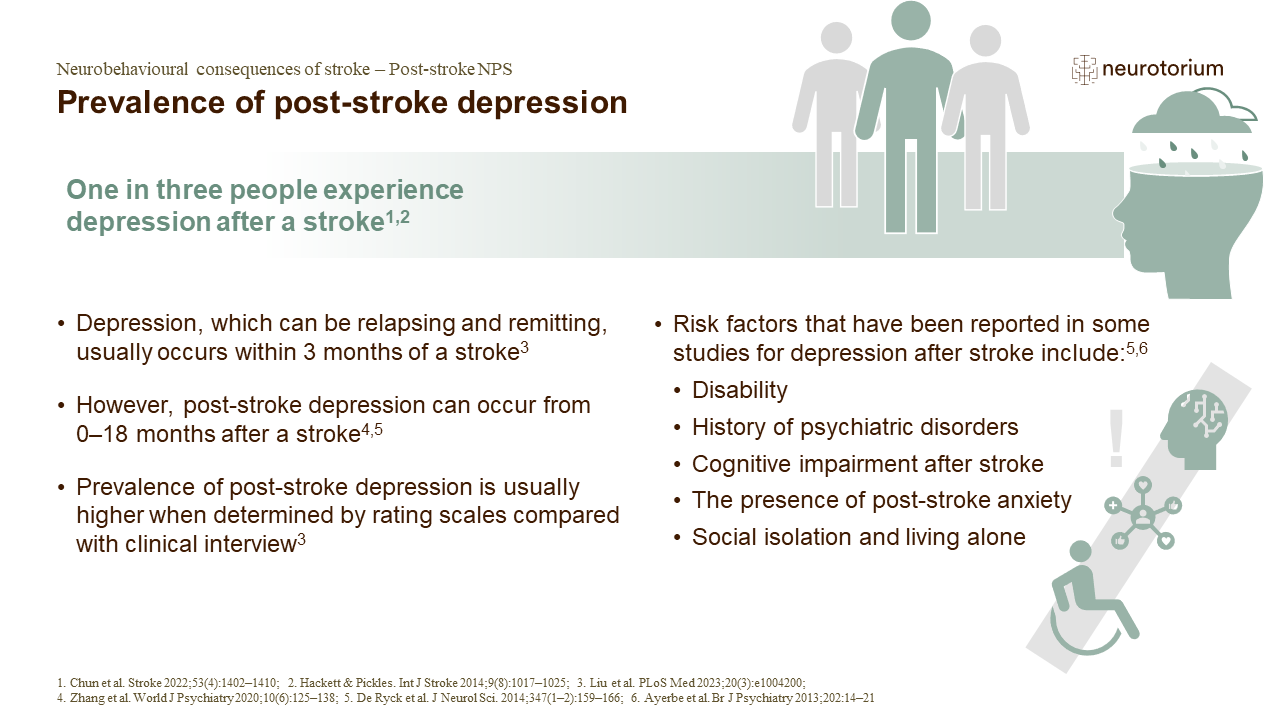
As outlined on the slide, depression is a common symptom after a stroke. Compared with roughly 3.4% of the general population,7 approximately 30% of people experience depression after a stroke.1,2
References:
1.Chun HY, Ford A, Kutlubaev MA, Almeida OP, Mead GE. Depression, anxiety, and suicide after stroke: a narrative review of the best available evidence. Stroke 2022; 53 (4): 1402–1410.
2.Hackett ML, Pickles K. Part I: frequency of depression after stroke: an updated systematic review and meta-analysis of observational studies. Int J Stroke 2014; 9 (8): 1017–1025.
3.Liu L, Xu M, Marshall IJ, et al. Prevalence and natural history of depression after stroke: a systematic review and meta-analysis of observational studies. PLoS Med 2023; 20 (3): e1004200.
4.Zhang S, Xu M, Liu ZJ, Feng J, Ma Y. Neuropsychiatric issues after stroke: Clinical significance and therapeutic implications. World J Psychiatry 2020; 10 (6): 125–138.
5.De Ryck A, Fransen E, Brouns R, et al. Poststroke depression and its multifactorial nature: results from a prospective longitudinal study. J Neurol Sci 2014; 347 (1–2): 159–166.
6.Ayerbe L, Ayis S, Wolfe CD, Rudd AG. Natural history, predictors and outcomes of depression after stroke: systematic review and meta-analysis. Br J Psychiatry 2013; 202: 14–21.
7.GBD 2019 Mental Disorders Collaborators. Global, regional, and national burden of 12 mental disorders in 204 countries and territories, 1990–2019: a systematic analysis for the Global Burden of Disease Study 2019. Lancet Psychiatry 2022; 9 (2): 137–150.