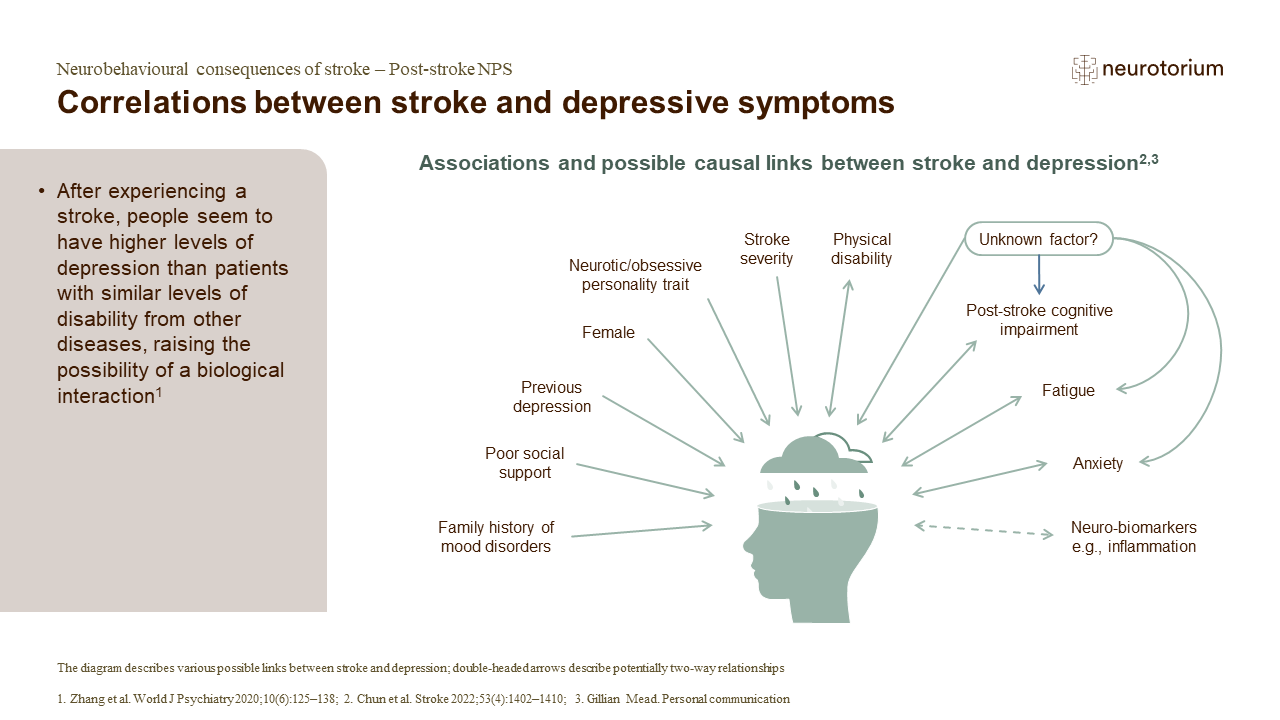
As shown on the slide, there are many potential points of interaction between the disease processes of stroke and depression.1,2 Whilst a systematic review published in 2000 found no support for an association between the risk of depression and the site of brain lesion caused by stroke,4 more recent studies and data have reignited the debate.5 Conclusions are difficult because methodological differences between studies of brain lesions in post-stroke depression make comparisons and synthesis of the existing data challenging.6
References:
1.Zhang S, Xu M, Liu ZJ, Feng J, Ma Y. Neuropsychiatric issues after stroke: Clinical significance and therapeutic implications. World J Psychiatry 2020; 10 (6): 125–138.
2.Chun HY, Ford A, Kutlubaev MA, Almeida OP, Mead GE. Depression, anxiety, and suicide after stroke: a narrative review of the best available evidence. Stroke 2022; 53 (4): 1402–1410.
3.Gillian Mead. Personal communication.
4.Carson AJ, MacHale S, Allen K, et al. Depression after stroke and lesion location: a systematic review. Lancet 2000; 356 (9224): 122–126.
5.Nickel A, Thomalla G. Post-stroke depression: impact of lesion location and methodological limitations – a topical review. Front Neurol 2017; 8: 498.
6.Bhogal SK, Teasell R, Foley N, Speechley M. Lesion location and poststroke depression: systematic review of the methodological limitations in the literature. Stroke 2004; 35 (3): 794–802.