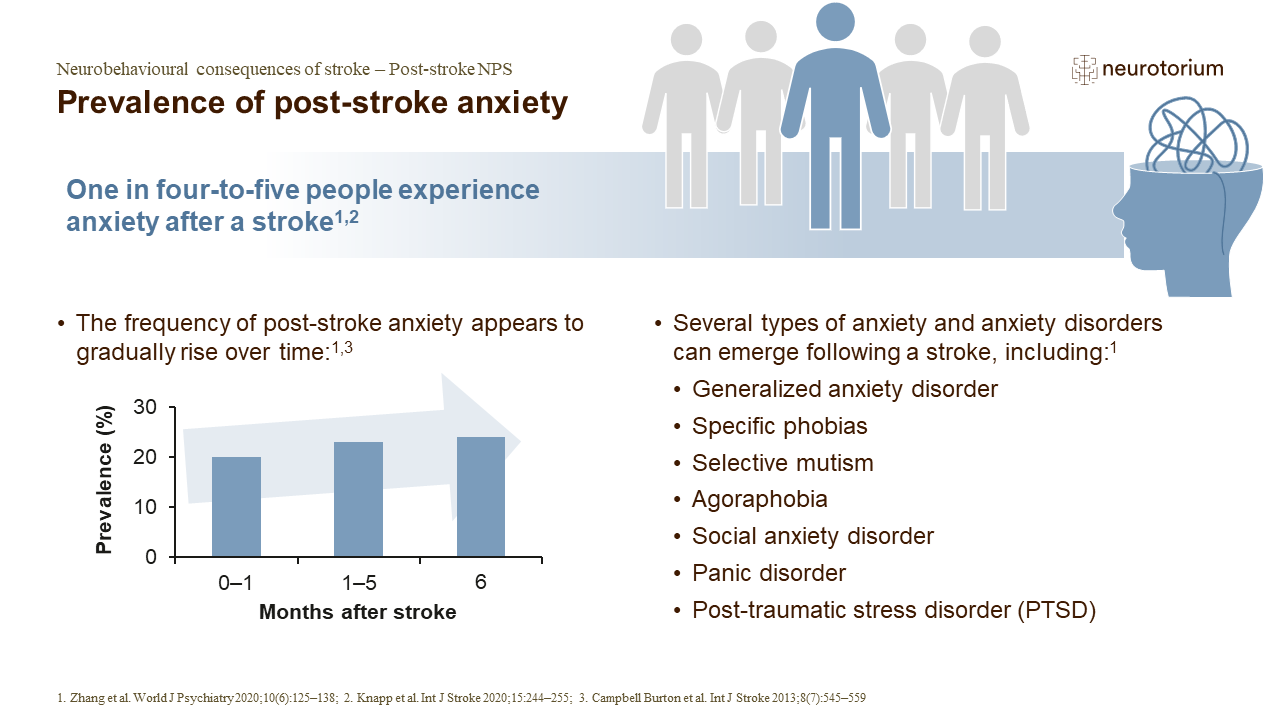
As outlined on the slide, anxiety is common after a stroke, experienced by roughly 20–25% of people post-stroke,1,3 compared with approximately 3.8% of the general population.4 The anxiety disorders which can accompany stroke share the core clinical anxiety symptoms of uneasiness, persistent worry, and fear.1,5 Many anxiety disorders also include symptoms that resemble neurological symptoms, e.g., numbness, tingling, chronic pain, and disturbed sleep.1
References:
1.Zhang S, Xu M, Liu ZJ, Feng J, Ma Y. Neuropsychiatric issues after stroke: Clinical significance and therapeutic implications. World J Psychiatry 2020; 10 (6): 125–138.
2.Knapp P, Dunn-Roberts A, Sahib N, et al. Frequency of anxiety after stroke: an updated systematic review and meta-analysis of observational studies. Int J Stroke 2020; 15: 244–255.
3.Campbell Burton CA, Murray J, Holmes J, et al. Frequency of anxiety after stroke: a systematic review and meta-analysis of observational studies. Int J Stroke 2013; 8 (7): 545–559.
4.GBD 2019 Mental Disorders Collaborators. Global, regional, and national burden of 12 mental disorders in 204 countries and territories, 1990–2019: a systematic analysis for the Global Burden of Disease Study 2019. Lancet Psychiatry 2022; 9 (2): 137–150.
5.American Psychiatric Association. Diagnostic and Statistical Manual of Mental Disorders – fifth edition – text revision. American Psychiatric Association; 2022.