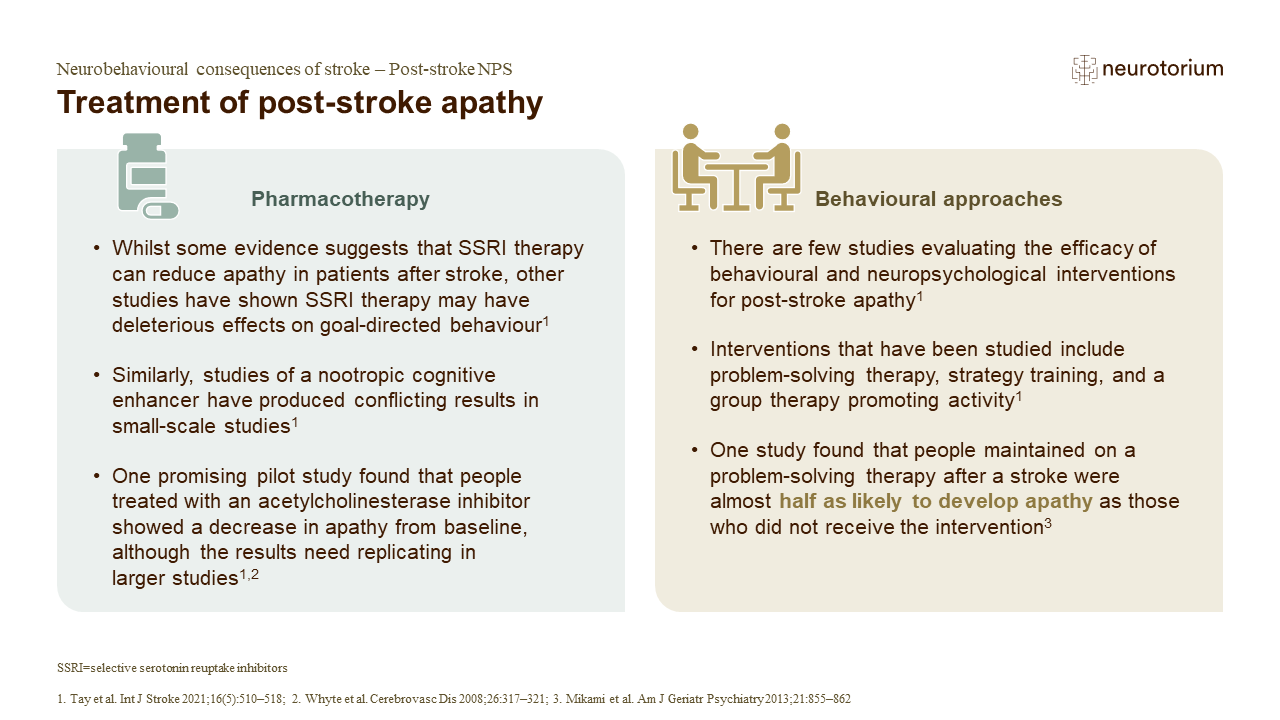
There is a lack of high-quality studies of treatments for post-stroke apathy.1 Other than the potential of pharmacotherapy and behavioural approaches to treating post-stroke apathy, transcranial magnetic stimulation has shown promise in a small sample of patients (n=13).1 Such small-scale studies require validation with larger, well-designed investigation.1
References:
1.Tay J, Morris RG, Markus HS. Apathy after stroke: diagnosis, mechanisms, consequences, and treatment. Int J Stroke 2021; 16 (5): 510–518.
2.Whyte EM, Lenze EJ, Butters M, et al. An open-label pilot study of acetylcholinesterase inhibitors to promote functional recovery in elderly cognitively impaired stroke patients. Cerebrovasc Dis 2008; 26: 317–321.
3.Mikami K, Jorge RE, Moser DJ, et al. Prevention of poststroke apathy using escitalopram or problem-solving therapy. Am J Geriatr Psychiatry 2013; 21: 855–862.
4.Sasaki N, Hara T, Yamada N, et al. The efficacy of high frequency repetitive transcranial magnetic stimulation for improving apathy in chronic stroke patients. Eur Neurol 2017; 78: 28–32.