

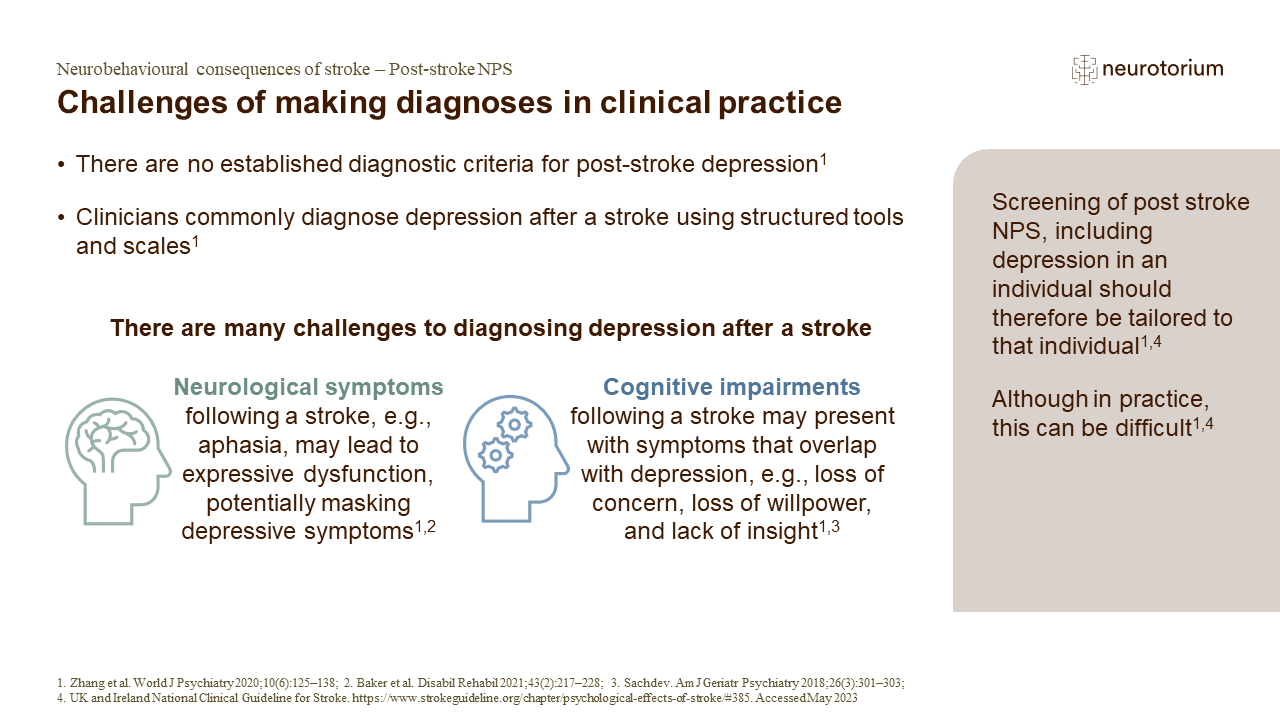
Making an accurate diagnosis of post-stroke neuropsychiatric symptoms, including depression can be challenging, partly because of the overlap in symptoms and partly because the symptoms of stroke can mask some neuropsychiatric symptoms.1,4 A further complication comes from the possibility that psychological disturbances could pre-date the stroke; this can have an impact on the course of a stroke and the recovery period, highlighting the importance of diagnosis and clinical management of post-stroke neuropsychiatric symptoms.4
4.UK and Ireland National Clinical Guideline for Stroke. Rehabilitation and recovery – psychological effects of stroke. Available at: https://www.strokeguideline.org/chapter/psychological-effects-of-stroke/#385. Accessed May 2023.