

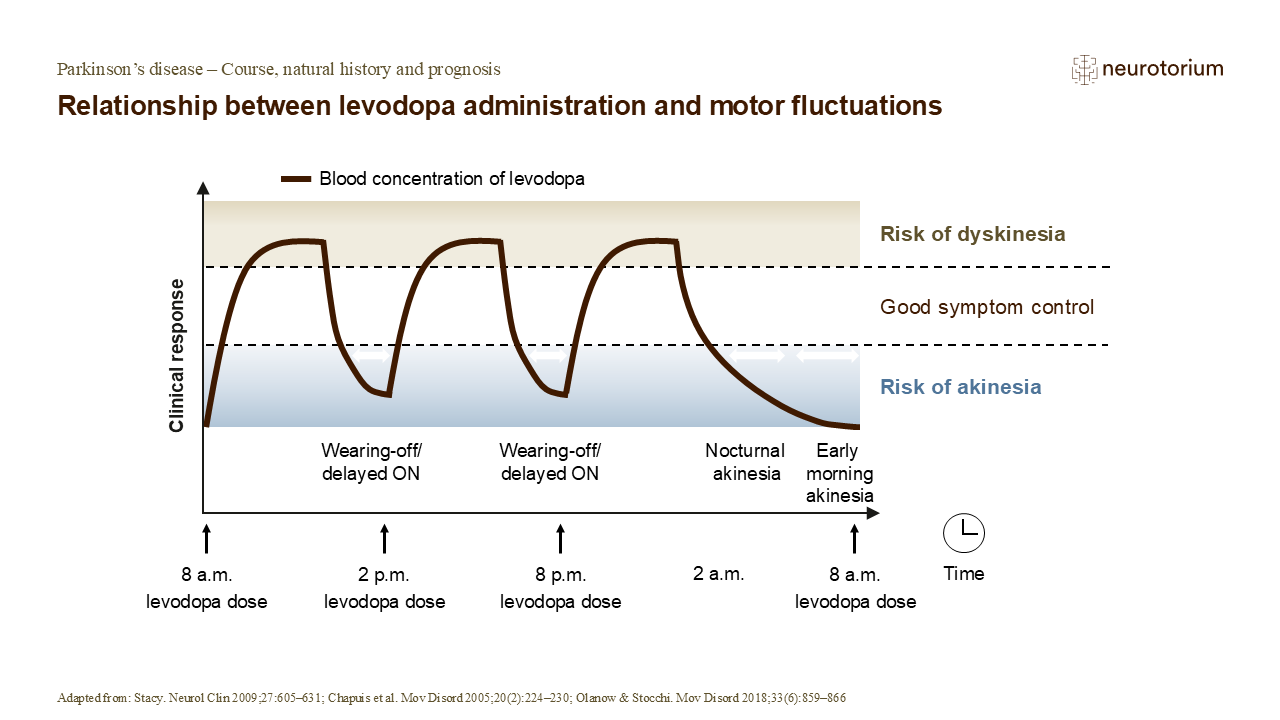
As the extent of neurodegeneration in the substantia nigra becomes greater, its capacity to produce dopamine diminishes to the point where patients require larger doses of levodopa to maintain normal function.4 Motor complications, such dyskinesia and motor fluctuations, can greatly worsen the quality of life during mid to late PD.2 A priority for the management of PD during this time is to optimise the administration of dopaminergic medication, minimising time spent in ‘OFF’ states (e.g., return of motor symptoms).5 Strategies to combat OFF periods include the use of longer-acting levodopa formulations and other medications (e.g., dopamine agonists or monoamine oxidase inhibitors) or, in selected situations, device-aided therapies (e.g., infusions of dopaminergic medications and deep brain stimulation).6
References:
1.Stacy M. Medical treatment of Parkinson disease. Neurol Clin 2009; 27 (3): 605–631.
3.Olanow CW, Stocchi F. Levodopa: a new look at an old friend. Mov Disord 2018; 33 (6): 859–866.