

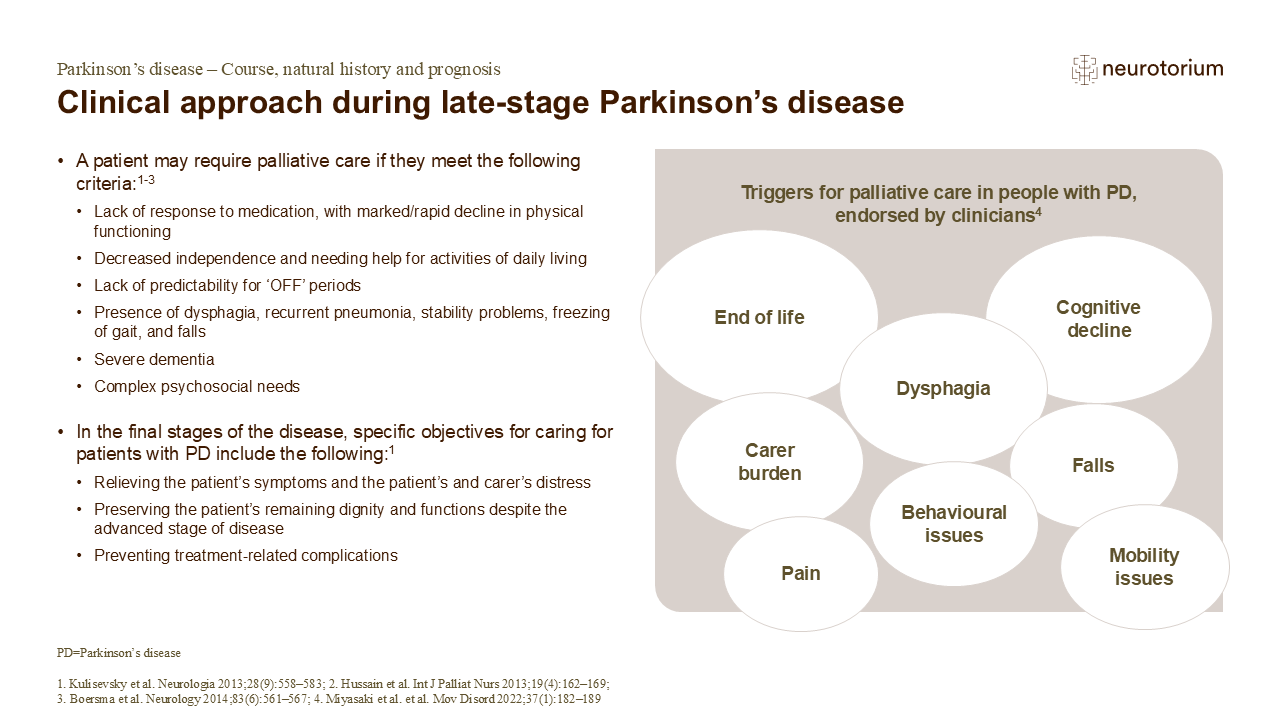
During late-stage PD, the ability of patients to control their symptoms diminishes as their dopaminergic medication becomes less effective.1-3 This lack of symptom control can potentially cause severe mental and physical disability due to the array of motor and non-motor symptoms that develop during late-stage PD.1-3 These symptoms can be a source of emotional distress to both the patient and their caregivers.1-3
Although clinicians may be tempted to provide additional therapies to existing regimens in order to combat late-stage symptoms, one of the goals of treating advanced PD is actually to simplify overall treatment.1 The aim here is to reduce some of the adverse effects of drug therapies, such as drowsiness, confusion, agitation, and hallucinations.1