

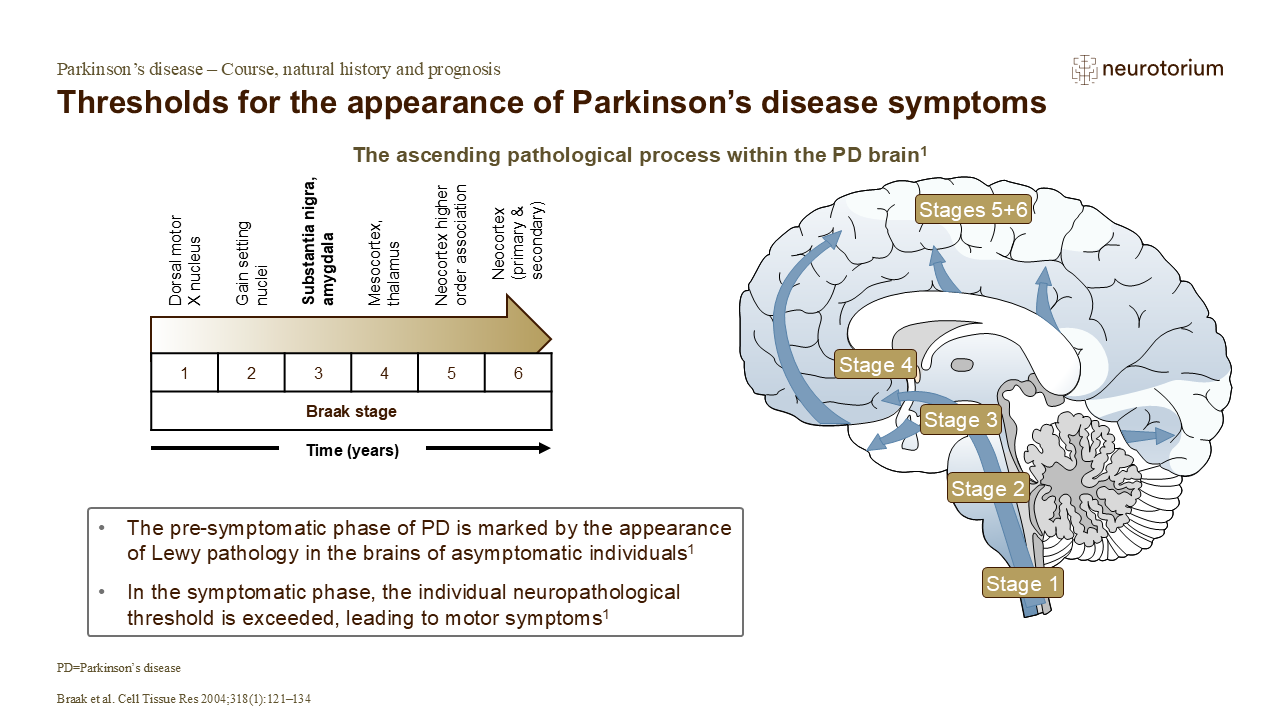
During Stage 1 of PD, many individuals experience a loss of smell (hyposmia) and/or suffer from constipation.2 In addition, sleep may become disordered or disturbed, accompanied by crying out, punching, or kicking during rapid eye movement (REM) sleep,2,3 and people may experience shoulder pain.4 However, some of these features, such as constipation, may not be very specific, as they can also occur in many otherwise healthy people.1 Stages 3 and 4 mark the transition from prodromal stage to clinically overt PD, as the disease spreads from the brainstem up into the midbrain and forebrain.1 The classic symptoms of PD – bradykinesia, tremor, and muscular rigidity – start to appear as the substantia nigra loses its capacity to produce dopamine, and intrinsic compensatory mechanisms are overwhelmed.5,6 Gradually, initial clinical symptoms worsen while new ones start to appear.5 Resting tremors may begin to affect both sides of the body, rather than just one, and normal balance becomes increasingly difficult to maintain.5
3.Kalia LV, Lang AE. Parkinson’s disease. Lancet 2015; 386 (9996): 896–912.