

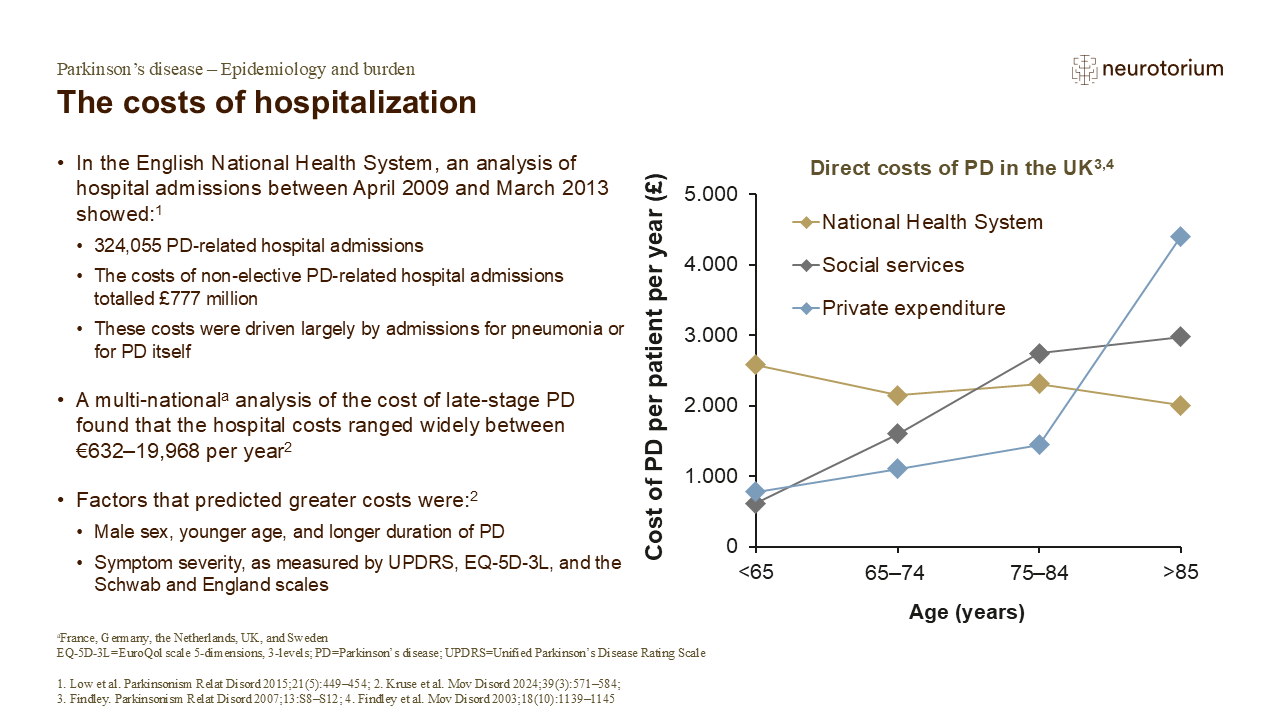
Direct costs include those associated with the use of healthcare resources, such as inpatient/outpatient care, and drugs.3,5 A UK survey evaluated the costs associated with the use of healthcare services in 432 patients diagnosed with PD.3,4 Overall, the direct costs of PD care increased with advancing age, driven mainly by the worsening severity of symptoms.3,4 As PD progresses, patients may develop co-morbidities, requiring the use of additional healthcare resources, and many patients will eventually enter residential/nursing home care.3,4
Inpatient care is a major component of the direct costs of PD.5 These are mostly emergency admissions, leading to longer hospital stays when compared with age-matched individuals without PD.1
3.Findley LJ. The economic impact of Parkinson’s disease. Parkinsonism Relat Disord 2007; 13: S8–S12.