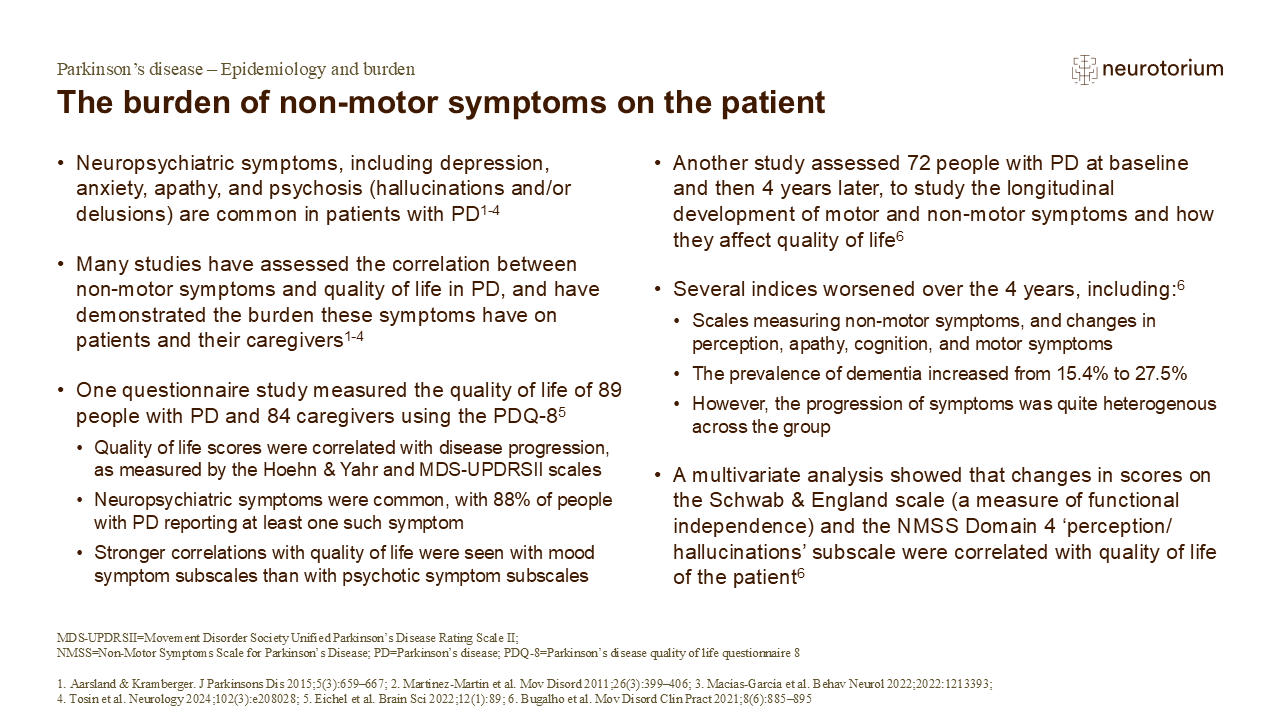
Given the negative effect of non-motor symptoms such as neuropsychiatric symptoms on a patient’s quality of life, symptom management should consider how best to improve non-motor symptoms and thereby improve the quality of life of patients and their caregivers.4 However, more research is needed to understand which therapeutic interventions can best help for different non-motor symptoms.5
References:
1.Aarsland D, Kramberger MG. Neuropsychiatric symptoms in Parkinson’s disease. J Parkinsons Dis 2015; 5 (3): 659–667.
2.Martinez-Martin P, Rodriguez-Blazquez C, Kurtis MM, Chaudhuri KR; NMSS Validation Group. The impact of non-motor symptoms on health-related quality of life of patients with Parkinson’s disease. Mov Disord 2011; 26 (3): 399–406.
3.Macías-García P, Rashid-López R, Cruz-Gómez ÁJ, et al. Neuropsychiatric symptoms in clinically defined Parkinson’s disease: an updated review of literature. Behav Neurol 2022; 2022: 1213393.
4.Tosin MH, Goetz CG, Stebbins GT. Patient with Parkinson disease and care partner perceptions of key domains affecting health-related quality of life: systematic review. Neurology 2024; 102 (3): e208028.
5.Eichel HV, Heine J, Wegner F, et al. Neuropsychiatric symptoms in Parkinson’s disease patients are associated with reduced health-related quality of life and increased caregiver burden. Brain Sci 2022; 12 (1): 89.
6.Bugalho P, Ladeira F, Barbosa R, et al. Progression in Parkinson’s disease: variation in motor and non-motor symptoms severity and predictors of decline in cognition, motor function, disability, and health-related quality of life as assessed by two different methods. Mov Disord Clin Pract 2021; 8 (6): 885–895.