

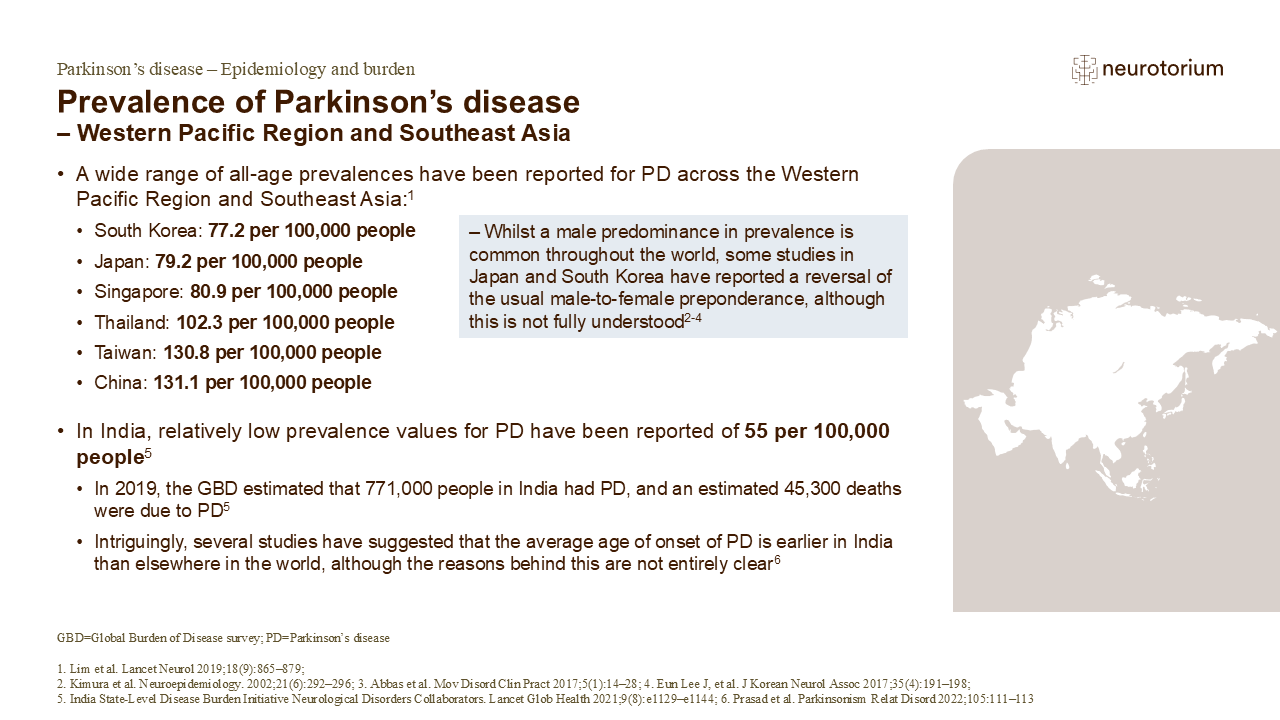
As detailed on the slide, the range of different reported prevalence values for PD in the Western Pacific Region and Southeast Asia are lower than those reported in Europe.1,7 Besides variability in methodology between studies, there are other factors that could contribute to the prevalence differences between East and West.3 Smoking, for example, and the availability of different tobacco products varies across the world, and this could impact prevalence statistics because nicotine is thought to be neuroprotective.3 Tea and coffee consumption varies across the world, as do many other elements of diet linked to PD risk such as dairy products, and level and type of alcohol consumption.3 Whilst the lower prevalence of PD in Asian countries could be explained by these methodological and cultural differences, environmental and genetic differences could presumably also underlie the lower prevalence of PD in these regions.3
References:
1.Lim SY, Tan AH, Ahmad-Annuar A, et al. Parkinson’s disease in the Western Pacific Region. Lancet Neurol 2019; 18 (9): 865–879.