

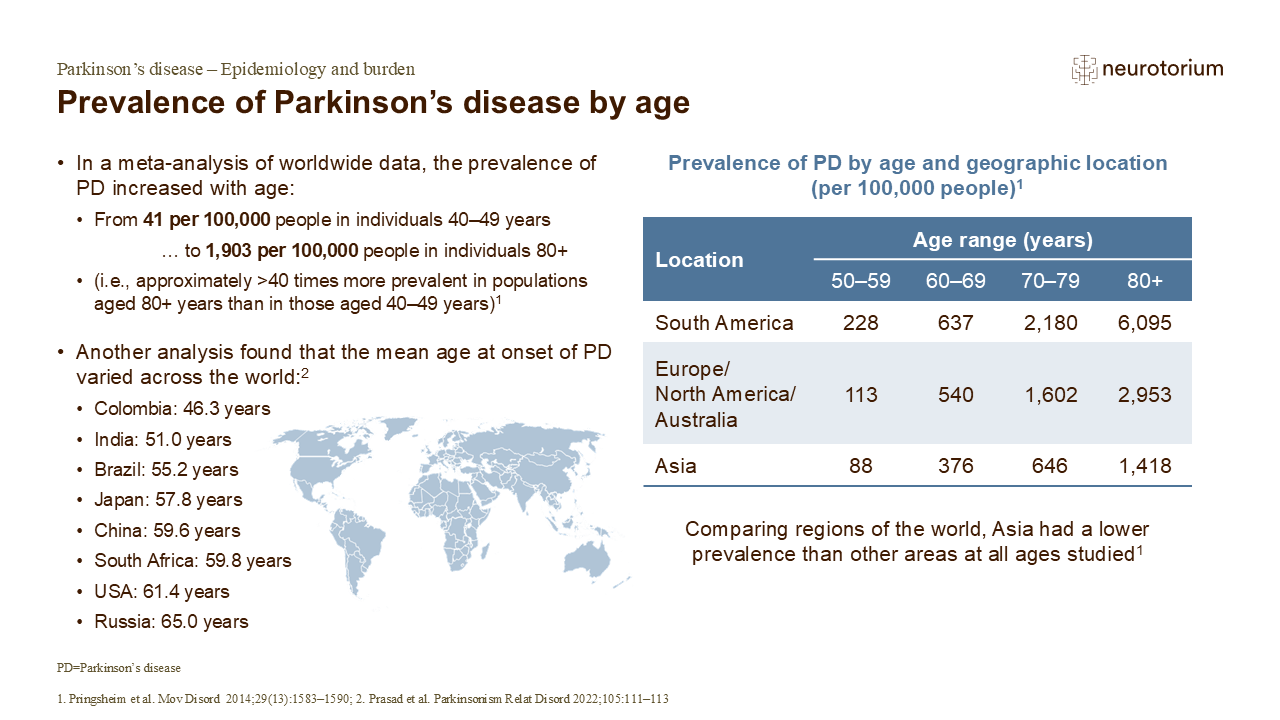
The prevalence of PD increases with advancing age.1 In a meta-analysis of worldwide prevalence data, PD was found to be >40 times more prevalent in populations aged ≥80 years than in those aged 40–49 years.1 Generally, PD is rare in individuals <40 years old.3
Normally, the slow and progressive nature of PD means that patients tend to live with the disease for many years.4 Therefore, the prevalence of PD tends to be highest in the most elderly (i.e., ≥80 years of age).1
In one analysis, for Asia as a whole – including South Asia, South-East Asia and the Middle East – the overall prevalence of PD was lower in those aged 70–79 years, than in Europe, North America, and Australia (646 per 100,000 versus 1,602 per 100,000, respectively).1