

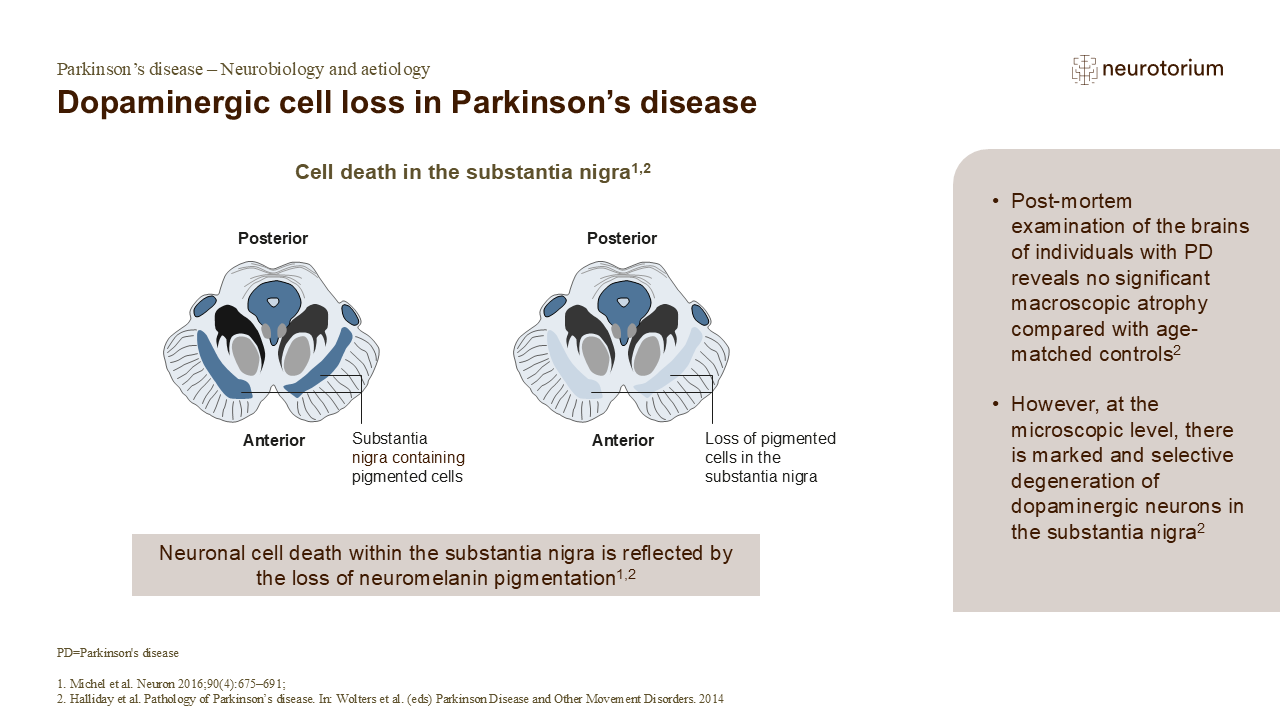
The overall level of atrophy of brain tissue does not seem to differ between patients with PD and age-matched controls.2 However, by the time a patient with PD develops motor symptoms, they will have suffered a moderate-to-severe loss of neuromelanin-pigmented, dopamine-producing neurons in the substantia nigra, which causes a severe depletion of dopamine in the striatum.2,3 The loss of dark pigmentation in the substantia nigra is easily visible in the pale, post-mortem brain tissue of affected individuals (see slide).2
2.Halliday GM, Murphy K, Cartwright H. Pathology of Parkinson’s disease. In: Wolters & Baumann (eds). Parkinson Disease and Other Movement Disorders. VU University Press, 2014.